Your decaying clothes are evidence of the lack of care to which you are constantly exposed.
Even if you say nothing, you are a mute witness to all the omissions that are made against you and under your name.
Your longevity is also synonymous with resilience. For, without being in a war zone, you see how much of your armor is falling apart. You are lacking in functional framework
But «you don’t break,» as the saying goes.
It is not uncommon to walk among your arteries, your asphalt skin and see your scars or how your skin falls off; we pass over the damaged pavement and you don’t say a word.
You only see how drivers try to «dodge» the holes that have formed on you to avoid damaging their vehicles.
This is how you cry, Ciudad Juárez. You, who take in thousands of migrants in your space, thousands of compatriots and foreigners because of your humanitarian quality.
Your territory is large and so is your population, you represent the largest municipality in the state, but justice has not been done to you, because as the years go by and the rulers change, you see how the resources you generate escape to the capital, as if it were a handkerchief blown away by the wind.
Your borderland-born and adopted children only complain, but none of them have started a rebellion movement to demand what you deserve.
Everything is politics they say… but even punks and rebels do politics. An act of rebellion against the system is also politics, so you need more fighting sons.
Although you used to be known as a land of the fierce, the barbarians of the north, only the name remained, because sadly you see how they became a people of squatters, while you continue to lose part of your body without being healed.
Mexican filmmaker Arturo Ripstein will visit this border, where he will receive a tribute and will be part of a conversation, as part of the celebrations that the Universidad Autónoma de Ciudad Juárez is celebrating for its 50 years of existence.
The first event to kick off the festivities will be a conversation with film director Arturo Ripstein, in which his wife and screenwriter, Paz Alicia Garciadiego, will also participate.
The discussion will take place on Friday, August 26 at the Gracia Pasquel Theater at 7 p.m. and another will take place on Saturday at 6 p.m. at the UACJ’s University Cinema Hall, where a tribute to the Mexican director will be held.
This tribute will also include the renaming of the UACJ’s movie theater after Mexican filmmaker Arturo Ripstein, which will be the first national and international theater to be named after this renowned Mexican filmmaker.
In addition, the UACJ will screen several of his works at the Cinito Universitario, such as El castillo de la pureza (Wednesday, August 23); El lugar sin límites (August 24); and on Sunday, August 27, they end with his most recent work, made in 2019, El diablo entre las piernas.
Renowned Mexican filmmaker Arturo Ripstein has undoubtedly left an indelible mark on the film industry with his distinctive approach and style. Throughout his career, Ripstein has directed a series of acclaimed films that explore human and social complexities with a unique touch. Here are some of his works:
Filmography:
Time to Die (1966): One of the first films directed by Ripstein, co-written by renowned writer Gabriel García Márquez, which deals with themes of revenge and fatality in a rural Mexican context.
El castillo de la pureza (1973): A masterpiece of Mexican cinema that follows the story of an obsessive man who keeps his family locked up at home to protect them from the «contamination» of the outside world.
La viuda negra (1977): Based on a real case, this film tells the life story of a woman who murdered several people out of inheritance. Ripstein addresses human nature and the dark side of desires.
Beginning and End (1993): An adaptation of Naguib Mahfouz’s novel of the same name that follows the life of a family over several decades in the midst of Mexico’s political and social changes.
Deep Crimson (1996): Inspired by a real murder case in Mexico City in the 1940s, this film follows the relationship between two men and a woman, exploring passion and violence.
El lugar sin límites (1977): Based on the novel by José Donoso, the film deals with life in a brothel in a small town, exploring themes of gender identity and personal struggles.
La perdición de los hombres (2000): An adaptation of a story by Juan Rulfo, this film follows a man confronting his inner demons and the violence that surrounds him.
The Reasons of the Heart (2011): A story of love and desire that explores human relationships and emotional motivations.
Bleak Street (2015): Inspired by a real case, this film tells the story of two elderly masked wrestlers who become involved in a tragic incident.
The Devil Between the Legs (2019): A film that deals with jealousy and sexual obsession, focusing on the relationship of a mature couple.
Arturo Ripstein has left an indelible mark on world cinema through his unique and provocative storytelling. His films have been acclaimed for their profound and critical approach to the human condition, which has established him as one of the most influential filmmakers in Mexico and beyond.
Trailer «El Diablo entre las piernas» (The Devil between the Legs)
As part of the UACJ’s 50th Anniversary celebrations, the ballet play «La fille mal gardeé» (The spoiled girl), a romantic comedy set in France, will also be presented this weekend, which they pointed out is a classic even older than The Nutcracker.
This staging will feature the participation of more than 40 dancers in action, and they pointed out that it is a completely new production, from the scenery to the costumes.
La fille mal gardeé will be presented on Saturday, August 26, at 7 p.m. and on Sunday, August 27, at 6 p.m., at the Gracia Pasquel Theater.
Tickets for this play will have a general cost of $100, which can be purchased at Sounds, DonBoletón or at the box office on the day of the event.
Settling in the United States for a «better life» is a recurring idea for people from Latin American countries in recent years. However, despite the «migrant waves», the Mexican population tops the list of people who tried to cross into the United States to obtain a «green card».
Compared to other Latin American countries, from 2020 to 2022, the number of Mexican migrants exceeded three times the number of encounters/deportations from Honduras and Guatemala, seven times those from El Salvador and eight times those from Venezuela, according to information from the U.S. Bureau of Customs and Border Protection (CBP).
National migrants rescued by INM personnel / Photo: Courtesy
This has meant for migrants who have tried to cross into the United States and settle, in addition to a tedious journey, making the same trip up to two or three times, due to the massive deportations or repatriations carried out by the U.S. government every year.
An example of this is that, from 2020 to 2022, the United States documented one million 801 thousand 26 «encounters» (deportations) of Mexicans, including men, women and children.
Although this does not necessarily correspond to the number of people deported, as the same person can be detained in these encounters on several occasions.
Title 8 and Title 42
In accordance with U.S. immigration law, deportations of migrants are carried out under Title 8 and Title 42 restrictions, the latter of which began to be implemented after the pandemic, as part of U.S. health measures to prevent the entry of foreign nationals.
Title 8 is a measure of the Immigration and Nationality Act (INA) enacted in 1952.
This restriction establishes that the Border Patrol detain and process migrants who cross the border irregularly, since the legal way to settle in the United States is through an asylum application, for various reasons.
It also states that if a person is removed under Title 8, they will be barred from entering the country for five years. In addition, these individuals will be detained in the U.S. until the U.S. can process their removal.
Two Mexican migrants were stranded for two days on a small island of the Rio Bravo in Ejido San Ramón/ Photo: Courtesy of INM
In the case of this measure, people who are expelled from the United States will no longer be able to process an asylum application to legally enter that country.
While Title 42 was a sanitary measure implemented as of March 21, 2020, for the expulsion of foreign persons, due to the Covid-19 alert worldwide.
Under this measure, migrants are immediately sent to Mexico, while through Title 8, people are temporarily detained in the United States until they can be sent to their countries of origin.
We are human and they call us Mexicans
According to information gathered by Circuito Frontera, the total number of deportations/encounters carried out by the United States in the last three years was 5 million 369,923, of people from Mexico, Honduras, Guatemala, El Salvador and Venezuela.
Of this total, Mexicans accounted for 33.5 percent, with 1,801,262 encounters in the same period of time.
During 2022, registered encounters of Mexicans by U.S. authorities were 823,57 with March, April and May registering the highest number of deportations. In those months, 82,361; 76,414 and 70,395 encounters were reported, respectively.
In addition, of this total, 751,559 correspond to single adult men and women; 40,820 to family groups; 28,31 to unaccompanied minors and 2,674 to accompanied minors.
This means that during the past year, U.S. authorities registered a total of 30,705 encounters of minors, which corresponds to 3.73 percent of the total deportations of Mexicans in 2022.
It is worth noting that the number of unaccompanied minors has been increasing since 2020, as 34,126 encounters were reported in that year; 147,945 in 2021 and 152,880 in 2022.
Tijuana is the preferred place for Mexicans to cross into Mexico
Circuito Frontera interviewed Jesús Peña, PhD researcher at the Department of Social Studies of the Colegio de la Frontera Norte based in Ciudad Juarez, who reported that, according to the Mexican Border Migration Survey (EMIF) in the northern region, neither Ciudad Juarez nor the state of Chihuahua in general were among the main crossings used by Mexicans to enter the United States.
Said that the survey represents the deported Mexican population over 18 years of age who were captured at 12 INM border repatriation points, including the Guadalajara and CDMX airports.
He explained that, according to this survey, from July to December of last year, the U.S. government deported 87,340 Mexican adults between the ages of 18 and 45 to Mexico through the northern border.
Study also showed that of the people who crossed into the United States during 2022, was a total of 67,520 entered the country the same year.
The specialist mentioned that the main cities were Tijuana with 28 percent; Mexicali and Tamaulipas with 9 percent, as well as Nogales and Río Colorado with 5 percent
He explained that 7 out of 10 of the Mexican returnees interviewed indicated that they tried to settle in the United States to work.
One of the questions asked in the survey was how they chose the city where they would cross into the United States, and the first reason was the ease of crossing, with 35 percent, and the second reason was the destination, with 19 percent.
He also mentioned that according to the EMIF, during the past year a phenomenon that had not been recorded for decades was observed: the increase in the number of Mexican women migrants.
The specialist emphasized that this phenomenon had not been observed since 1995.
According to the survey, 16 percent of the crossings of deported Mexican nationals corresponded to women, while in other decades this figure did not even reach 8 percent.
In addition, the survey revealed that 25 percent of the people surveyed said they would attempt to cross into the United States in the next 7 days; 7 percent in three months; 63 percent answered that they would not cross in at least 3 and 6 months, while 2 percent said they did not know.
Also, only 4.3 percent said they tried to apply for asylum in the United States. Of this total, 20 percent said that after applying for asylum they were afraid to return to Mexico.
Of those 20 percent, 64 percent said they were afraid of returning to Mexico because of the climate of insecurity and violence in the country.
Mexicans sought to settle in the United States with tourist visas
Due to the problems faced by migrants who decide to pay for a «coyote» to enter the United States, in addition to the restrictions imposed by that country, the Mexican population in mobility sought other options such as «entering» through a tourist visa.
This was announced by Jesús Peña, PhD researcher at the Department of Social Studies of the Colegio de la Frontera Norte (COLEF) based in Ciudad Juárez.
The specialist indicated that this information was gathered through the Mexican Border Migration Survey (EMIF).
He also explained that Chihuahua was one of the states where there were fewer crossings of the Mexican migrant population. However, this does not necessarily mean that migration decreased, but rather that they sought alternatives such as the processing of tourist visas.
This was due to a series of factors such as avoiding a payment of at least 5 thousand dollars to organized crime by those involved in human trafficking, as well as the risks involved in this trip.
In this regard, it should be recalled that the United States maintains two modalities for the expulsion of foreigners from the country: Title 8 and Title 42.
Title 8 has been in force since 1952 and establishes that the Border Patrol may detain and process foreign nationals who enter the country in an irregular manner, and they will remain in detention until their removal from the country is processed.
The Title 42 measure is a sanitary restriction implemented as of March 21, 2020, for the removal of foreign nationals, due to the worldwide Covid-19 alert.
The researcher explained that, after the increase in restrictions, the Mexican population sought other alternatives, such as the use of tourist visas, which was also documented through the EMIF survey.
Also, the use of tourist visas to enter the United States was more notorious during the administration of the then president of that country, Donald Trump.
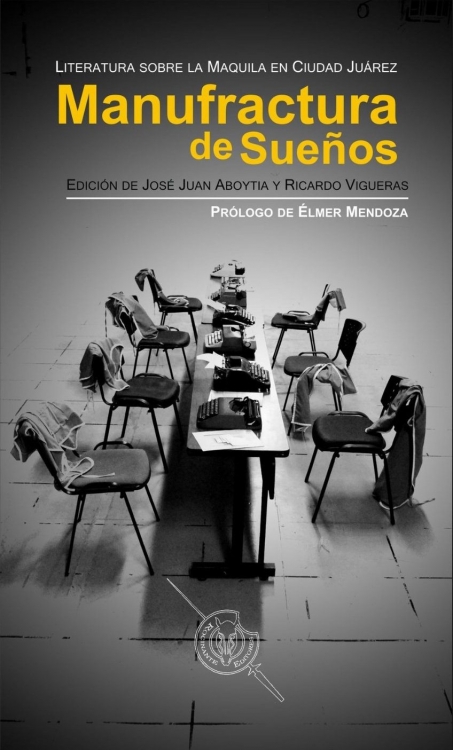
Este no es un cuento para leer… pero es una historia de maquiladora. «El Bulto» es un cuento publicado en una antología juarense donde participaron 33 escritores fronterizos y dos ilustradores franceses.
Integrado en la compilación “Manufractura de sueños”, la cual centra en la vida de la frontera y cómo viven (o sobreviven) los que nacen, viven o se quedan en Ciudad Juárez.
En esta ocasión te presentamos el audio-cuento “El Bulto”, basado en tres historias verdaderas. Escrito por Angélica Villegas y con la producción en audio por Alberto Chávez.
Si te interesa conocer más sobre “Manufractura de sueños” aquí te dejamos un poco de información.
Se trata de una obra que se tardó dos años, desde el inicio de la convocatoria hasta que se logra concretar la primera antología literaria que abordar el tema de la maquila en esta frontera, un proyecto realizado los co-editores José Juan Aboytia y Ricardo Vigueras, quienes forman parte del colectivo «Zurdo Mendieta».
Además, cuenta con el prólogo del reconocido escritor Elmer Mendoza, originario de Culiacán, Sinaloa, representante de la novela negra mexicana.
ÍNDICE
I. RELOJ CHECADOR
Arrullo (Blanca Cruz)
Monday, Monday (Consuelo Sánez)
Cándido (Ricardo Rodríguez Ruiz)
El primer día (José Antonio Blanco Córdova)
La nota (José Jasso)
II. MAQUILADONNAS
Juana de Asbaje, a la mujer que trabaje (Arminé Arjona)
Hay que seguirle (Mary Becerra)
La chica dorada (Mario García Jiménez)
Simile (Silvana Balderrama)
Caminante obrero
Petunia (Ameyalli Sánchez)
La fiebre de un sábado más (Karla Ordaz)
III. INVENTARIO DE SCRAP
Los encantos del desecho (Mari Tíber)
Pago por antigüedad (Bernabé Medina)
Pancho y su Adelita (Gabriela Carsi Díaz)
Lazo blanco, lazo negro (Agustín García Delgado)
El brindis (Guadalupe Alvarado Aguirre)
La colmena (Laura Jiménez)
Isela (Alejandro García Delgado)
IV. INTERLUDIO
Viva la vida (Edmond Baudoin y Troub’s)
V. EL OTRO UMBRAL DE LA NOCHE
La letra chiquita (José Juan Aboytia)
Wyxwayubas (Elpidia García Delgado)
La nave (Deimos Arredondo)
Fragmentos imposibles (Alfonso López)
VI. LA MAQUILA, CON SANGRE ENTRA
El bulto (Angélica Villegas)
Mimetismo urbano (Marco de Luna)
Lobos (Jesús José Silveyra Tapia)
Festival del 10 de Mayo (Miguel Ángel Chávez Díaz de León)
La princesa de Arbolillo (Ricardo Vigueras)
VII. VIERNES, DULCE DÍA
Viernes (Roberto Espíndola)
Caja negra (José Lozano Franco)
Tres cumbias y una oldie (Julio César García Acosta)
Ciudad Juárez, and the individual in general, experienced an increase in Covid-19 cases, according to experts from the College of Physicians, as well as in private practices is where it has been most noticeable, as the number of cases increased by up to 300 percent.
The Secretary of Health of the State Government confirmed 887 cases in the entity, during the period from August 30 to September 20, 2023.
In particular, epidemiological week 36 has registered 302 cases with initial symptoms, reflecting a 45.2 percent increase compared to the previous week (epidemiological week 35).
Despite this increase, deaths have decreased, as well as a change in the severity of the disease due to vaccination.
Up To date, hospitals report no hospital admissions due to complications from Covid-19, suggesting that the vaccines have had a positive impact in reducing the severity of infections, the health sector stated.
This increase in cases is attributed in part to activities related to the holiday period, as well as to the temperature variations experienced in recent weeks.
In this regard, Dr. Alonso Rios Delgado, president of the Medical College of Ciudad Juárez, said that the increase of Covid-19 cases in Ciudad Juárez is essentially linked to an increase in the neighboring American Union.
This interconnectedness underscores the need to address the pandemic in a coordinated manner between the two regions, just as it is essential to recognize that health management in Ciudad Juárez is diverse and varies between the public and private sectors.
The specialist explained that this is not a new infection, but rather the appearance of additional respiratory viruses in addition to the increase in Coronavirus cases. In some cases, an increase of 300 percent in consultations for respiratory diseases has been observed.
One of the worrying aspects is the impact on education, as he mentioned that there has been an increase in cases among students, especially in classrooms where there has been an variety of people. This has led to school absences with rates of up to 50 percent of students affected by respiratory illnesses.
He pointed out that approximately 70 percent of the population that goes to the health sector does so through private medical services.
Doctors’ offices and hospitals face a particular situation, since in addition to Covid-19, the presence of other respiratory viruses has been detected, which adds to the complexity of the situation.
Ríos Delgado emphasized the importance of getting tested for Covid-19, especially within the first five days of presenting symptoms, when the rapid test is more reliable.
Currently, the rapid test is the most commonly performed test, but it is important to keep in mind that after seven days of symptoms, false negatives are possible. Therefore, early detection is key to controlling the spread, he added.
Regarding the number of private clinics in Ciudad Juárez, the physician indicated that they are available in a wide variety of locations, including residential subdivisions and pharmacies.
Accessibility to private medical care is related to the economic capacity of the population and can vary widely. Ease of access is also related to the type of test performed; rapid tests are available in many private practices.
He expressed that, despite the availability of the public health sector, many people opt for private medical care because of the speed and convenience it offers. This is especially evident in a place like Ciudad Juárez, where the capacity of public hospitals may be limited.
RECOMMENDATIONS
State authorities announced that, despite the improvement in the severity of the cases, it is important to remember that the disease can still be complicated for some people, so vigilance is urged for any respiratory condition.
The State Health Secretary called on citizens to continue practicing preventive measures in all their daily activities. This includes the mandatory use of masks for those who present symptoms of respiratory infection, regardless of where they are.
Likewise, the importance of maintaining frequent hand hygiene, applying antibacterial gel and maintaining the cleanliness of common areas is emphasized. It is recommended to give air to enclosed spaces and follow respiratory manner measures when coughing or sneezing.
As part of the protective measures, the population is urged to go to the health units to receive the booster of the vaccine against Covid-19 or, if necessary, to start the vaccination schedule. Vaccination continues to be a fundamental tool to contain the spread of the virus and reduce its impact.
To maintain a healthy lifestyle, a balanced diet, adequate hydration with water and physical exercise are recommended. In addition, citizens are advised to go to health units for regular medical evaluations of their health status.
It is crucial that anyone experiencing respiratory symptoms seek medical attention and undergo a diagnostic test to confirm or rule out the presence of the virus.
And, in the event of a positive result, it is essential to follow medical advice and remain in isolation for the prescribed period of time to prevent the spread of Covid-19.
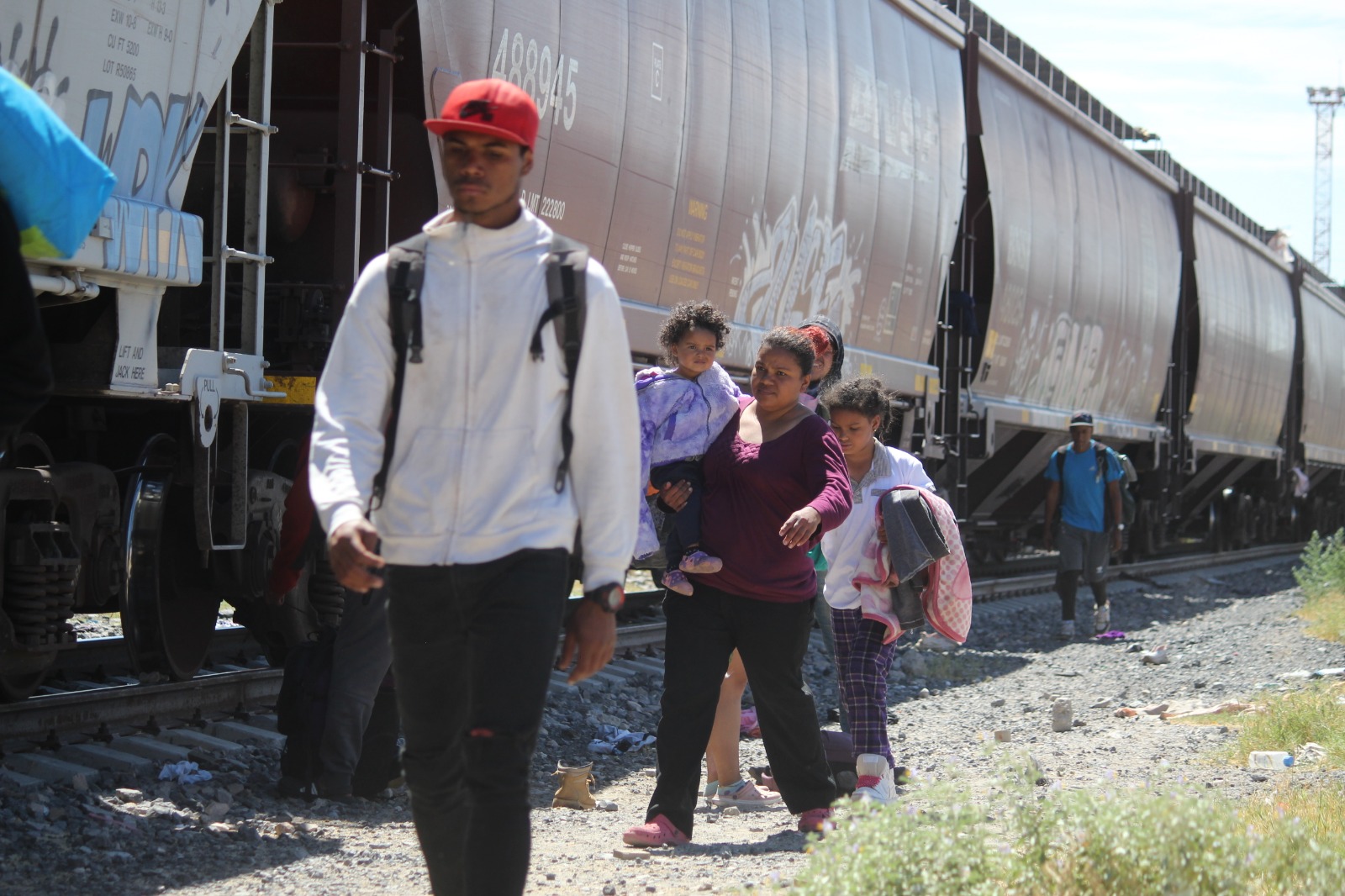
After the temporary suspension of Ferromex operations to the north of the country, more than a thousand migrants were stranded between Chihuahua and Ciudad Juárez.
In the midst of the growing migratory crisis affecting various regions of México, Ferromex reported that, so far, it has temporarily stopped a total of 60 trains, equivalent to the capacity of 1,800 trucks, on routes that cross the regions most impacted by this social and humanitarian problem.
Through a press release, the company announced that in San Francisco de los Romo, Aguascalientes, around one thousand people are in a similar situation, and on the route between Chihuahua and Ciudad Juárez, more than one thousand people are occupying the cargo gondolas.
.@Ferromex se ve obligado a suspender movimiento de trenes de carga para proteger la integridad de personas migrantes. pic.twitter.com/o2Znqozlhw
This decision is taken in response to the notorious increase of migrants who have concentrated in areas close to the railroad tracks, which represents a serious risk to their integrity when using freight trains as a means of transportation.
The company has taken this measure in an effort to prevent accidents and tragedies, as in recent days there have been close to half a dozen regrettable cases of injuries or deaths among groups of migrants who, individually or in families, have boarded freight trains on their route north, despite the serious danger this gives rise to.
The backlog of migrants in recent weeks has increased significantly. In the rail yard in Torreón, Coahuila, more than 1,500 people have been counted, while in Irapuato, Guanajuato, the figure exceeds 800.
In view of this situation, Ferromex has taken the difficult decision to temporarily suspend operations on the affected routes, prioritizing the protection of the physical integrity of the migrants.
The company will remain attentive to the measures determined by the authorities of the different levels of government to address this humanitarian crisis in an adequate and safe manner.
Migrants arriving by train to Ciudad Juarez in the area of the Eje Vial / Photo: Archive
It is important to note that Ferromex has also informed its customers about the temporary effects that the freight rail service will experience. This includes productive chains, supply and international trade, which could be affected by this suspension of operations on key routes.