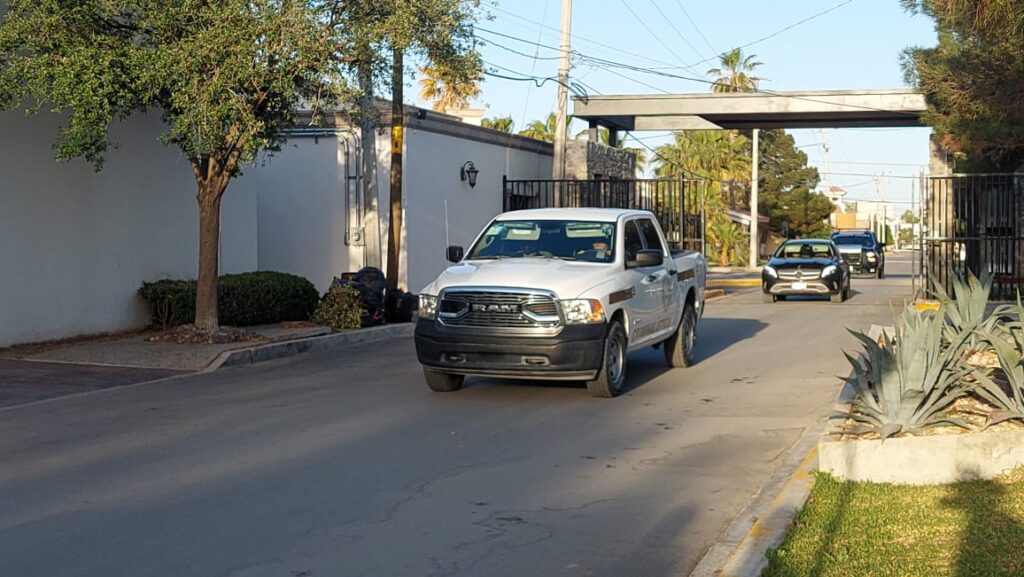
El viernes 27 de octubre, un video documentó cómo una unidad de la Dirección de Seguridad Vial atropelló a un perro y no se detuvo para brindar asistencia. Por este hecho, autoridades municipales informaron que el agente que guiaba la unidad recibió 36 horas de arresto y una multa de 50 UMAS como sanción.
Alma Arredondo Salinas, regidora de la Comisión de Ecología y Protección Civil, señaló que el agente no tomó ninguna acción inmediata para ayudar al animal herido ni para reportó el incidente.
La funcionaria subrayó la importancia de que los funcionarios públicos den ejemplo en su comportamiento y acciones, especialmente en asuntos relacionados con la seguridad vial y el trato a los animales.
Explicó que, tras una serie de investigaciones en las que participaron la Dirección de Seguridad Vial, el C7 de la Policía Estatal y otros organismos pertinentes, se logró identificar al agente que conducía la unidad involucrada en el incidente.
Dijo que el agente fue sancionado con 36 horas de arresto y está fuera de patrullaje, mientras se lleva a cabo una revisión más detallada de su conducta por parte de Asuntos Internos.
Mientras que la multa que se le interpuso al oficial fue de 50 UMAS (Unidad de Medida y Actualización), lo que corresponde a 5 mil 187 pesos, ya que según el INEGI, el valor de la UMA en este 2023 es de 103.74 pesos.
Además, la Comisión de Ecología tomó medidas con respecto al incidente, ya que se consideró un caso de maltrato animal.
La regidora señaló que, de acuerdo con la ley, la sanción por maltrato animal puede alcanzar hasta 50 Unidades de Medida y Actualización (UMAs). Sin embargo, debido a la demora en la identificación del agente responsable, la notificación de la sanción apenas se realizó.
Enfatizó que, desde el momento en que tuvo conocimiento del incidente, exigió que se aplicara una sanción ejemplar, ya que los funcionarios públicos deben dar ejemplo en sus acciones.
«No podemos permitir este tipo de comportamiento, menos aún cuando somos servidores públicos. Debemos ser un ejemplo a seguir en todas nuestras acciones», declaró.
Alma Arredondo Salinas, regidora encargada de la Comisión de Ecología y Protección Civil
Arredondo Salinas indicó que este caso pone en evidencia la necesidad de mejorar y cambiar el comportamiento de los ciudadanos, incluidos los funcionarios públicos, en relación con el maltrato animal y la responsabilidad en caso de accidentes en la vía pública.
Reiteró que espera que este hecho sirva como ejemplo y recordatorio de la importancia de tomar medidas adecuadas en situaciones similares en el futuro, así como exhortó a la comunidad a ser consciente de su responsabilidad y a actuar de manera ética y compasiva con los animales.
El lago del Parque Central es uno de sus principales atractivos. Este es uno de los espacios públicos más visitados por miles de juarenses, sin embargo, tras una serie de estudios realizados por el Instituto Federal de Defensoría Pública del Poder Judicial de la Federación se advirtió que cuenta con niveles de 2 mil 400 Unidades Formadoras de Colonias (UFC) de contaminación por una bacteria llamada E. Coli.
Cindy Bernal, asesora jurídica federal del Instituto Federal de Defensoría Pública del Poder Judicial de la Federación en Ciudad Juárez, dijo en entrevista con Circuito Frontera que el Parque Central cuenta además con una serie de omisiones por diversas autoridades.
Mencionó que, algunas de ellas, incluso ponen en peligro la vida de la flora y fauna de este espacio, pero también la salud de las personas que acuden a este lugar y los mismos trabajadores.
Expuso que luego de que se interpusiera un amparo colectivo, en donde participan al menos 22 personas, personal de la institución acudió al Parque Central para realizar una serie de estudios para la revisión de este espacio por parte de expertos en diferentes materias, encontrando omisiones para prevenir, restaurar y corregir la contaminación del aire, suelo, agua y del ambiente en general.
También hay un alto nivel de contaminación en el lago con una bacteria llamada E.Coli, la cual puede provocar enfermedades no solo a las especies que beben de esa agua sino también a las personas que se expongan a este líquido.
«Al final de cuentas es salvaguardar la integridad de las personas que acuden al Parque Central, literal el público en general del Parque Central y, como decía, de las especies que están ahí, porque independientemente de la contaminación, pues los cuidados de cada especie no están en las condiciones que deben tener», dijo.
Esta bacteria generalmente es inofensiva, sin embargo, en cantidades muy elevadas puede derivar en enfermedades graves como diarrea, infecciones urinarias, enfermedades respiratorias e infecciones del torrente sanguíneo.
ESCUCHA NUESTRA COLABORACIÓN CON PLATAFORMA INFORMATIVA
Bernal explicó que el nivel permitido según las normas mexicanas es de 600 Unidades Formadoras de Colonias (UFC). Sin embargo, los estudios realizados en el lago del Parque Central advirtieron que cuenta con niveles de contaminación de 2 mil 400.
La funcionaria indicó que además cuentan con antecedentes de que se han registrado varias muertes de animales en este lugar, entre ellos patos y conejos, así como actualmente la vida de Benito, la jirafa que habita en este parque, se encuentra vulnerable.
Expuso que se documentó una actitud compulsiva de Benito, en la que lamía los tubos de la sombrilla que tiene, lo cual no es saludable.
Además, encontraron que en el Parque Central se identificaron múltiples deficiencias, incluyendo la presencia de animales en riesgo, como son los perritos de la pradera, cuya situación no cumple con la normativa correspondiente, de acuerdo con la NOM-059-SEMARNAT-2010.
La asesora jurídica señaló que uno de los problemas principales es que el Parque Central no cumple con las características esenciales de un zoológico, lo que afecta negativamente el bienestar de los animales.
Benito lamía de manera repetitiva el tubo de la sombrilla que se le colocó / Foto: Cortesía Salvemos a Benito
Así como se ha observado una falta de estructuras adecuadas para las especies, una alimentación inadecuada y un entorno que no satisface las necesidades de la fauna en cuestión.
Recalcó que el Instituto Federal de Defensoría Pública tomó medidas legales, asimismo que en los estudios participaron peritos especializados en química, toxicología, fotografía, ingeniería civil y antropología social para documentar y respaldar sus reclamos.
Bernal explicó que el juicio de amparo indirecto busca obligar a las autoridades responsables a tomar medidas inmediatas para proteger la integridad y la vida de las especies del parque, así como para garantizar un trato digno a ellas de las especies y garantizar la protección ambiental.
Además, pretende prevenir actos de extinción, sufrimiento, traumatismo y dolor para los animales.
Conejos muertos en el Parque Central / Foto: Cortesía Salvemos a Benito
Añadió que las autoridades del Parque Central se enfrentan a la suspensión de plano, que les ordena acatar medidas inmediatas en un plazo de 24 horas para proteger a los usuarios, trabajadores y la vida de las especies.
Sin embargo, advirtió que las omisiones en este espacio podrían afectar no solo a la flora y fauna de este lugar, por lo que será necesario que el parque sea cerrado hasta que se resuelva adecuadamente la contaminación y se tomen las medidas necesarias.
The lake in Parque Central is one of its main attractions. This is one of the most visited public spaces by thousands of Juarenses, however, after a series of studies conducted by the Federal Institute of Public Defense of the Federal Judiciary, it was warned that it has levels of 2,400 Colony Forming Units (CFU) of pollution by a bacterium called E. Coli.
Cindy Bernal, federal legal advisor of the Federal Institute of Public Defense of the Federal Judiciary in Ciudad Juárez, said in an interview with Circuito Frontera that the Parque Central also has a series of omissions by various authorities.
He mentioned that some of them even endanger the life of the flora and fauna of this space, but also the health of the people who come to this place and the workers themselves.
That after a collective injunction was filed, in which at least 22 people participate, personnel from the institution went to the Parque Central to carry out a series of studies for the review of this space by experts in different subjects, finding omissions to prevent, restore and correct the contamination of the air, soil, water and the environment in general.
There is also a high level of contamination in the lake with a bacterium called E.Coli, which can cause diseases not only to the species that drink this water but also to people who are exposed to this liquid.
«At the end of the day it is to safeguard the integrity of the people who come to Parque Central, literally the general public of Parque Central and, as I was saying, of the species that are there, because regardless of the contamination, because the care of each species is not in the conditions they should have», he said.
This bacterium is generally harmless, however, in very high quantities it can lead to serious diseases such as diarrhea, urinary infections, respiratory diseases and bloodstream infections.
Bernal explained that the permitted level according to Mexican standards is 600 Colony Forming Units (CFU). However, the studies carried out in the Parque Central lake showed that it has pollution levels of 2,400.
The official indicated that they also have information that there have been several deaths of animals in this place, among them ducks and rabbits, as well as the life of Benito, the giraffe that lives in this park, is currently vulnerable.
Benito’s compulsive attitude was documented, in which he licked the tubes of the umbrella he has, which is not healthy.
In addition, they found that multiple deficiencies were identified in the Parque Central, including the presence of animals at risk, such as the prairie dogs, whose situation does not comply with the corresponding regulations, according to NOM-059-SEMARNAT-2010.
The legal advisor pointed out that one of the main problems is that the Parque Central does not comply with the essential characteristics of a zoo, which negatively affects the welfare of the animals.
Benito was repeatedly licking the tube of the umbrella that was placed over his head / Photo: Courtesy of Salvemos a Benito
As well as a lack of adequate structures for the species, inadequate feeding and an environment that does not meet the needs of the fauna in question.
He emphasized that the Federal Institute of Public Defense took legal measures, and that specialized experts in chemistry, toxicology, photography, civil engineering and social anthropology participated in the studies to document and support their claims.
Bernal explained that the indirect amparo lawsuit seeks to force the responsible authorities to take immediate measures to protect the integrity and life of the park’s species, as well as to guarantee dignified treatment of the species and ensure environmental protection.
It also seeks to prevent acts of extinction, suffering, trauma, and pain for the animals.
Dead rabbits in Parque Central / Photo: Courtesy of Salvemos a Benito
The authorities of the Parque Central are facing a flat suspension, which orders them to comply with immediate measures within 24 hours to protect users, workers and the life of the species.
However, he warned that the omissions in this space could affect not only the flora and fauna of this place, so it will be necessary for the park to be closed until the contamination is properly resolved and the necessary measures are taken.
**This story is part of the Northern Border Investigative Journalism Hub, a project of the International Center for Journalists in partnership with the Border Center for Journalists and Bloggers**
The Diocese of Ciudad Juárez accumulated land valued at more than 43 million pesos, granted by the municipality in donations and bailments, and with an extension of 12 times the size of the Azteca Stadium. However, some of these lands, destined for religious projects, lie in disuse, despite the fact that the law requires a period of two years for their use. In addition, urban planners and academics questioned the lack of transparency in the delivery of these lands and the backlog of public spaces that are not being used.
During four municipal governments from 2002 to 2018, the Diocese of Ciudad Juárez received 13 pieces of land in donation and in bailment with an extension of 85 thousand 772 square meters, which is equivalent to 12 times the extension of the Azteca Stadium’s field, located in México City, which measures 7 thousand 140 square meters and where 87 thousand 523 people can fit.
Of this total, six properties (four in bailment and two in donation) accumulate a cadastral value of 43.4 million pesos, according to the table of values of 2023. However, the amount could be higher, since the City Hall did not provide the addresses of the remaining seven properties, which in total cover an area of 44 thousand square meters, so it was not possible to determine their cadastral value.
And although these properties represent an important territorial extension and cadastral value that is the patrimony of the people of Juárez, some of these lands were never taken advantage of and used for the purpose for which they were lent and are in disuse, as it was possible to verify in field visits.
Activists and academics questioned the abandonment of these spaces in a context in which areas such as the southeast of the city face problems of lack of urban equipment and public spaces to meet basic needs of recreation, education, health, among others.
«Public facilities such as parks, schools, hospitals and other services, play a crucial role in the welfare of society and the quality of life of citizens (…) The donation of land for any other purpose than this issue of public facilities, I think it should be taken into consideration», said Vladimir Hernández Hernández, coordinator of the Doctorate in Urban Studies at the Universidad Autónoma de Juárez.
Likewise, Abelamar Chacón, coordinator of the Social Comptrollership area of Plan Estratégico, warned about the lack of transparency in the delivery of these properties, since the lists of beneficiaries are not public, despite the fact that article 77 of the Law of Transparency and Access to Public Information of the State of Chihuahua obliges the municipality to make them public.
«It is necessary to make the processes and the way in which public land is disposed of in Ciudad Juárez more transparent, clearer. I don’t know if there are some groups to whom it is given, maybe they already know the way. Let’s say, maybe the Diocese already knows and knows about these processes and goes and requests them», commented Chacón.
Academics and activists suggest that more urban equipment is needed in the city such as parks, schools, hospitals or squares / Photo: Angélica Villegas
Hernán Ortiz Quintana, coordinator of the group Ciudadanos Unidos por una Administración Pública (CIMAP), raises two concerns related to equity in the management of religious affairs and the use of donated land on a large scale, highlighting the need for clear and precise regulation to address these concerns.
«Is it being equitable with other displays of faith or with other religious expressions or is there favoritism or a preference or is there an analysis, of course? (…) The other point that should be considered, given that the amount donated is huge and there is no certainty about the use that is being given (to the land), it seems that there are even some properties that have been donated there for years and have not been used. It is necessary to regulate», considered Ortiz Quintana.
For the calculation of the value of the four lands given in commodatum to the Diocese of Ciudad Juárez, the locations were taken into account, provided through the requests for information by transparency with folios 080155921000465 and 080155922001427.
Diocese of Ciudad Juárez, located between Peru and Ignacio Mejía streets, in the Partido Romero neighborhood / Photo: Angélica Villegas
While the cadastral value of the two properties donated to the Diocese was obtained from the location indicated in the Cabildo session of November 3, 2016 and the trimestral reports, corresponding to October 10, 2016 and February 9, 2017, presented by councilwomen Irma Celia Medrano Flores and Jacqueline Armendáriz Flores, both from the Land Disposal Commission, during the 2016-2018 administration.
The donations
The donation of municipal land to the Catholic Church of Juarez was made during four municipal administrations, headed by mayors Jesús Alfredo Delgado Muñoz (2002-2004), José Reyes Ferriz (2007-2010), Enrique Serrano Escobar (2013-2016) and Armando Cabada Alvídrez (2016-2018).
According to the request submitted by Transparencia 080155922001427 and Cabildo minutes, the Municipality donated a total of 32 plots of land, 11 of which correspond to religious associations. Of these, nine were destined to the Diocese of Ciudad Juárez.
As mentioned before, it was not possible to know the value of seven lands granted in donation to the Diocese because the Municipality of Ciudad Juarez did not provide the information of their locations and this data is not public in its transparency section either. Although they did indicate that their extension was 44 thousand square meters.
Only in two cases the information is public in the minutes of the Cabildo session of November 3, 2016. According to the document, one of the lands was for an area of 10 thousand 270 square meters, located between Monte Trigo and Montes del Cantal streets, in the Urbivilla del Cedro subdivision.
The other municipal property, located between Paseo de San José and Boulevard Fundadores streets, in the Parajes de San José subdivision, has an area of 4,807 square meters. For a total of 59, 077 thousand square meters in the nine properties donated to the Diocese.
Temple on donated land, located between Paseo de San José and boulevard Fundadores streets, in parajes de San José subdivision / Photo: Google Maps
According to the 2023 value table, the value per square meter of the neighborhood where the last two lots mentioned are located is 1,100 pesos, so the properties have a value of 11 million 297,594 pesos and 5 million 287,953 pesos, respectively, for a total of 16 million 585,547 pesos.
While the other two properties that were donated to other religious organizations are: the National Council of the Assemblies of God AR, for a 500 meter lot and for the Light of the World AR Northern Jurisdiction, for a 4,89 square meter lot. Between the two, they only add up to 4,589 square meters, which is equivalent to 7.7 percent of the land donated to the Diocese.
The Bailments
The bailment is a free loan granted through a contract. In accordance with Article 2497 of the Federal Civil Code, the bailment is a contract in which one of the contracting parties grants the use of a non-fungible thing to another person free of charge, who has the obligation to return it individually.
The official web page of the Municipality of Ciudad Juárez explains that the bailment grants a municipal property to support the social purpose of civil associations and, in the case of individuals, to support their community objectives.
Under this premise, it is understood that the loan of a public space through a bailment is intended to generate a benefit for the community, since it is granted free of charge to the applicant.
In this tenor, the Diocese of Ciudad Juárez entered into contracts CM-182/2003, JUR/DG/1069/2008, CM-228/2014 and JUR/CM/401/2018 with the Municipality of Ciudad Juárez.
According to the information gathered, contract CM-182/2003 refers that the Diocese of Ciudad Juárez received a land in bailment for the construction of a green area and a botanical garden, in a land located at the intersection of Marcelo Caraveo and Prolongación Marcelo Caraveo streets, in the Ampliación Fronteriza neighborhood. Upon physical inspection of this site, no such site was located.
According to the table of values for fiscal year 2023, the price per square meter in this neighborhood is 400 pesos, which values this land at 809,084 pesos.
Location of the donation of a property at the intersection of Marcelo Caraveo and Prolongación Marcelo Caraveo streets in Ampliación Fronteriza neighborhood, which could not be located / Photo: Google Maps.
Under contract CM-228/2014/COMODATO-CM-09/2012, the Diocese received a 2,426.16 square meter plot of land, located on Avenida Henequén, starting at José Mateos Torres Street, in the Infonavit Solidaridad neighborhood, for the construction of a Catholic church. Although this space was not physically located either.
The value per square meter in this neighborhood is set at 1,100 pesos, so the value of the land is currently 2,668,776 pesos.
In 2012, the Diocese of Ciudad Juárez received a property of 2,426.16 square meters, located on Henequen Avenue, with starting point on José Mateos Torres Street, in the Infonavit Solidaridad neighborhood / Photo: Angélica Villegas
After a tour of the area, the site could not be located / Photo: Angélica Villegas
In another contract, JUR/DG/1069/2008, the Municipality lent land for the construction of a church, located at Río Amacuzac and Camino Viejo a La Rosita, in the Las Arcadas subdivision, with a total area of 5,646.53 square meters. In this case the property was located.
Currently, this space has a cadastral value of 6 million 775 thousand 836 pesos, with a value per square meter of 1,200 pesos.
This property has a dimension of 5 thousand 646.53 square meters and the place is located on Río Amacuzac Street / Photo: Angélica Villegas.
Additionally, according to contract JUR/CM/401/2018, for the construction of a community center a land of 16 thousand 598.51 square meters was delivered in colonia Manuel Doblado. Although neither the streets nor the exact location are specified.
During a tour of the area, the community center was not located, in addition to the fact that the place where the temple would be built is a vacant lot.
According to the 2023 table of values for the Manuel Doblado neighborhood, the price of this property is valued at 16 million 598 thousand 510 pesos / Photo: Angélica Villegas
The land is safeguarded for a State Government Treatment Plant / Photo: Angélica Villegas
This last land, according to a response provided by Transparencia, in the request 037122018, would have a cadastral value of 375 pesos per square meter, which would mean that the property has a value of 6 million 224 thousand 441 pesos.
However, according to the table of cadastral values of Ciudad Juárez, corresponding to 2023, in the Manuel Doblado neighborhood, the price per square meter is set at one thousand pesos, which values the current land at 16 million 598 thousand 510 pesos.
Screenshot of the Table of Unitary Values of Land and Construction for the Fiscal Year 2023 of the Municipality of Juárez.
Through these agreements, the religious organization received in loan four plots of land: one of 2 thousand 22.71 square meters in 2003, another of 5 thousand 646.53 square meters in 2008, one of 2 thousand 426.16 square meters in 2014 and a last one of 16 thousand 598.51 square meters in 2018. Together, they total 26 thousand 693.91 square meters with a cadastral value of 26 million 852 thousand 206 pesos.
Controversy generated by the granting of land to the Church
This last piece of land in the Manuel Doblado neighborhood, granted on loan free of charge to the Catholic Church, generated controversy during its vote in Cabildo, during the 59th Cabildo Session, on December 26, 2017, as at least four aldermen of the City Council positioned themselves against it.
There were even those who accused the then municipal president, Armando Cabada Alvídrez, of benefiting the Catholic Church through these contracts, since a year and a half after starting his first administration he had given them two pieces of land in donation and one more was under discussion to be given in Bailment.
Councilwoman Janet Francis Mendoza Berber voted against the proposal because, although she said that her family has always professed the Catholic religion, it «called her attention» that during the first year of the administration of the then mayor, Armando Cabada Alvídrez, this was the third time that the Diocese of Juárez was «privileged» with a piece of land.
«The two previous occasions, a year ago, were donations and, this time, it is the third time in Bailment (…) I believe that what should be stipulated is that all religions should be given the opportunity. Ciudad Juárez is made up of people of different beliefs and religions. Then, all other religious associations should be given the opportunity (…) but I think we are going too far. It would be the third municipal land in favor of a religious association», he commented.
Meanwhile, Councilman José Alfredo González Quintana, pointed out that a gratuitous bailment contract is for an indefinite period of time, so it is as if it were a donation.
«When are they going to pass (prove) what is built on that property if it is for an indefinite period of time? We have to locate very well what is being done and we cannot donate land just for the sake of donating it, even if it is to religious institutions (…) It is very different to grant land to a civil association», he said.
«I consider that the Catholic Church can pay for a piece of land and thus contribute to our society that is so needy (…) We are a poor municipality. They (Diocese of Juárez) can contribute with us to improve the city. And if you look at it, it is a Catholic community center, it would not be open for everyone», said on that occasion the councilwoman and coordinator of the Disposal Commission, Irma Celia Medrano Flores, who voted against.
During this session, Councilman José Ávila Cuc, recalled that at the beginning of this administration (2016-2018), a piece of land had already been donated to the Diocese of Ciudad Juárez, for an area similar to 16 thousand square meters.
This land is in an area, where a calculation of commercial appraisals would conservatively cost 12 million pesos», he stated.
The councilors who spoke against the proposal questioned the municipal president about the probable favoring of the Catholic Church. However, finally the proposal was approved by majority vote.
Municipality may revert donations; unused land is being investigated
Francisco Rodríguez, former head of the Department of Alienations of the Municipality, explained in an interview at the end of last year, when he was still in office, that one of the requirements for the donation of land is that the benefited associations and organizations have a term of two years to implement the project for which the land was granted, otherwise the Municipality may revert the donation.
This requirement is stipulated in Article 78 of the Property Law of the State of Chihuahua.
«The maximum term within which the use of the real estate must begin shall be set, otherwise, it shall be understood that the term is two years», the law states.
Rodríguez explained that the donations, for the most part, are destined for charitable and non-profit purposes, such as schools, civil associations and support for vulnerable groups, but in order to carry it out, the organizations must comply with other requirements such as presenting an executive project describing the works to be carried out on the land and demonstrating their economic solvency for the execution of the same.
The Municipality’s website also lists other requirements such as submitting a certified copy of the articles of incorporation of the civil association requesting the land, a certified copy of the legal representative’s identity, an original cadastral plan of the municipal land and identification of the properties.
The law also states that once the donation request is submitted, the Cadastre Department performs a cadastral appraisal and a request for disincorporation is submitted to the Municipal Office; the Municipal Land Disposal Commission of the Municipality of Juárez reviews and issues a report, which must be approved by the City Council.
Once the donation is granted, Rodríguez explained, they establish a six-month term for the land to be deeded in the name of the beneficiary association.
The former official emphasized that the Municipality is responsible for verifying the physical progress of the works and verifying that they comply with the terms agreed in the donation contract signed by both parties.
He informed that during his administration, until the end of 2022, they had cancelled a donation to the Red Cross and another to an association dedicated to chastity.
He stated that the associations fail to comply with the terms mainly for economic reasons, although these reasons must be backed up with proof of economic solvency.
Regarding the donations made during the current municipal administration (2021- 2024), Héctor Rafael Ortíz Orpinel, secretary of the City Council, acknowledged that, at times, the abundance of documents becomes an obstacle for making informed decisions and, therefore, they are working on the schematization of the information.
«Look, what we have tried to do is an organization and, above all, the schematization of the documents that exist, because many times you have all the documents, but perhaps they are not in an order as they should be. We have been working very much in accordance with the new National Archive Law, where we have to see how to manage all the documentation and we are trying to align all our activities to that end», he commented.
Héctor Rafael Ortíz Orpinel, Secretary of the City Council of Ciudad Juárez / Photo: Courtesy Social Communication
He said that he was aware of donations made to civil or religious associations, but there were some cases in which the deadline granted by the Cabildo had already expired.
«What is being sought are those two points: One, to see if they are being given the destination that corresponds, and two, in some cases they are granted a time to be able to build or generate the condition for what the object for which they requested the land. There were cases in which that time had already elapsed and the land was alone, then the Municipality has opted for a figure that is the reversion, that is to say, that the land is returned to the municipal patrimony».
However, he stated that in some cases the non-compliance with the donation contract was due to the pandemic, so that, in due course, the associations had to stop or halt construction or contract stipulations and extensions were granted.
On this point, the Secretary pointed out that the decisions on land donations or concessions are not arbitrary or personal, but follow a meticulous procedure, where the Urban Development, Civil Protection, and Sindicatura Departments participate, which culminates in the Disposal Commission and finally in the city council, where the final decisions are made.
He mentioned that his knowledge up to that moment was that during the present administration, three properties had been reverted, without specifying to which organizations they had been donated. He added that they were investigating other lands that were left unused and abandoned.
Finally, he explained that the difference between donations and «comodatos» is that donations allow the property to pass completely to the name of the beneficiary association for its free use and «comodatos» keep the property under the domain of the Municipality and any construction on these lands is done for the benefit of the community.
Although for this investigation we also looked for the Government Director Oscar Murillo Delgado, who assumed his position last February 2023, and is the one who keeps all the documents of the Municipality of Juárez, his secretary referred us to the Secretary of the Municipality.
While the current head of the Department of Municipal Disposals, Iván Solorio Gallardo, refused to give an official statement and referred us to the Secretary of Government.
Councilwoman Ana Carmen Estrada García, coordinator of the Municipal Land Disposal Review Commission, received us in her office, but requested time to gather information, however, she cancelled the date of the interview.
Likewise, we requested an interview with the Municipal Trustee Esther Mejía, through her spokesperson, by means of messages and phone calls, without obtaining a response.
In the case of the commodatum contracts, Enrique Torres Valadez, councilor of the Municipal Land Disposal Review Commission of the 2021-2024 administration, indicated that when a property is granted in commodatum for an undetermined period of time, they are given a term of up to two years to start operations.
When they are made for an indefinite period of time, a term is established, precisely so that they can carry out the constructions, so that they can carry out their entire project, and if it is not working within the estimated period of two years, then they are required precisely to give an explanation in this respect and, if necessary, initiate the procedure for reversion of the same,» he said in an interview in December of last year.
While, in Article 25 of the Property Law of the State of Chihuahua, concessions on state and municipal real estate, except for exceptions provided for in other legal provisions, may be granted for a term of up to 50 years, which may be extended once or several times, at the discretion of the concessionaire public entity, without exceeding the aforementioned term, taking into account both for its granting and its extensions.
The applicant must present the amount of the investment, the amortization term of the investment made; the social and economic benefit for the region or locality; the need for the activity or service to be rendered; compliance by the concessionaire with the obligations of the concessionaire and the provisions of the specific laws by which the concession was granted, as well as the amount of the reinvestment to be made for the improvement of the facilities or service rendered.
While it is the responsibility of the mayor and the City council, according to Article 29, section XXVII, of the Municipal Code for the State of Chihuahua, it is the responsibility of the municipal presidents to «administratively declare the nullity, expiration or termination of contracts, permits or licenses and administrative concessions; as well as to enforce the right of reversion of municipal land, when the purchasers fail to comply with the obligation to build within the term and for the value indicated».
They ask for transparency and to attend to the backlog of public spaces
Activists, academics and public officials interviewed agreed on the imperative need to regularize and make transparent the management of municipal lands, in order to provide legal certainty to citizens regarding the destination of public lands.
Article 77 of the Law of Transparency and Access to Public Information of the State of Chihuahua states that the obligated subjects must make transparent the donations made to third parties in money or in kind, the catalog of disposition and guide of documentary archive, in addition to the minutes of ordinary and extraordinary sessions, as well as the opinions and recommendations issued, as the case may be, by the advisory councils.
Also the concessions, contracts, agreements, permits, licenses or authorizations granted, specifying the holders of such, specifying their purpose, name or company name of the holder, validity, type, terms, conditions, amount and modifications, as well as whether the procedure involves the use of goods, services and/or public resources, according to section XXVI.
But the administrations do not make this information transparent and it is still not in the public domain.
Abelamar Chacón, coordinator of the Social Controllership area of Plan Estratégico, emphasized that the main concerns lie in the lack of transparency on the part of the municipality, and that there is no guarantee that public land is used for the benefit of the entire community, in a context where the demand for public spaces remains unsatisfied.
«Here the problem is that the government is disincorporating municipal land so lightly when there is such a backlog of public space. The fact that the Municipality has public land, with municipal land that is not for sale, is for the Municipality to use for the benefit of the people of Juarisco, with necessary equipment (…) However, here we rarely see new parks, sports areas or plazas», he stated.
«There is an important backwardness in areas such as the southeast, however, as a consequence of the historical mismanagement that continues today, the mismanagement of public land, the bad administration of public land and its alienation and disincorporation for the benefit of individuals», he commented.
He spoke about the importance of complying with current legislation and being totally transparent to avoid «favoritism».
«It would seem that municipal administrations end up being like a real estate office, squandering public land and leaving no space for the people of Juarisco», he added.
Vladimir Hernández Hernández, coordinator of the Doctorate in Urban Studies at the Universidad Autónoma de Juárez, reiterated his position to use municipal land to address the backlog in urban equipment that exists in Ciudad Juárez and use these spaces in other needs of the community in general such as education, health care or recreation.
Screenshot of the latest update of the Interactive Map of Health Units prepared by the Municipal Institute of Research and Planning (IMIP).
Hernán Ortiz Quintana, director of the Citizens for a Better Public Administration Project (CIMAP), said that even though there are laws on the procedures for the donation and provision of land, it is necessary to establish regulations and clear criteria for the allocation of land to religious events to avoid discretionality and opacity in the process.
He added that, although the right to freedom of faith is established in the Universal Declaration of Human Rights and in Article 1 of the Mexican Constitution and the cession of land to the Diocese of Ciudad Juarez can be understood as an exercise of that right, he questioned whether this action by the City Hall is equitable with respect to other manifestations of faith.
«The other religious manifestations, as it can be from Christianity, Protestantism or even the cult of Santa Muerte will not have access to it? Because then it is not being seen with the same criteria to all faiths and it is failing, let’s say in guaranteeing this freedom of creed», he commented.
Finally, he considered that there is a lack of certainty about the use of the donated lands, since some of them could have been in the hands of the religious manifestations for years without an apparent use.
On the other hand, some local voices have questioned this type of agreements, highlighting that the commodatum, in practice, is equivalent to a donation, which raises doubts about the equity and the need to regulate these actions.
«It is practically a donation», stated by the then councilor of the City Council of the 2016-2018 administration, José Alfredo González Quintana.
El aroma del cempasúchil se vuelve más intenso, el clima frío anuncia la proximidad de los difuntos y la prisa se apodera de quienes preparan los altares.
Este es un día único en el que los seres queridos que fallecieron regresan de entre los muertos y el camino debe estar iluminado para que no se pierdan.
Se trata de una tradición profundamente arraigada en la cultura mexicana, una fecha en la que se cree que los difuntos regresan de entre los muertos para visitar a sus familiares.
Pero además, no es solo una celebración, sino también una oportunidad para recordar y mantener viva la memoria de quienes ya no están físicamente con nosotros.
Esta tradición mexicana es una costumbre para Bryan y su familia, quienes año tras año, levantan su altar con velas, una biblia, un rosario, los platillos favoritos del difunto y el típico pan de muerto.
Bryan y su madre durante una visita al panteón / Cortesía
Mientras que cada vela, cada pan de muerto y cada flor son gestos que expresan el profundo cariño que sienten por Don René, quien falleció hace tres años.
Entonces, cada 2 de Noviembre, él y su familia visitan el panteón San Rafael, ubicado a las afueras de Ciudad Juárez, a donde acuden para honrar a su padrastro.
En este lugar, limpian su tumba, la adornan con flores y le cuentan que aún lo tienen presente en sus corazones.
“Lo recuerdo como una buena persona muy alegre, pero de carácter fuerte; un poquito enojón, pero siempre de un gran corazón. Una muy buena persona que dio todo lo que pudo dar, sin esperar nada a cambio”, contó Bryan.
En este lugar descansa el señor René desde hace 3 años / Foto: Cortesía
El joven platicó que esta fecha la considera una ocasión especial, ya que les permite recordar y sentir la cercanía de su ser querido, aunque también conlleva un sentimiento de tristeza.
“Tenerlo aquí con su fotografía, flores veladoras, pan de muerto y agua, todo lo necesario para que mi familiar fallecido se siga sintiendo querido, en el altar o en el panteón”, dijo.
La fotografía de Don René se encuentra siempre presente en la casa de Bryan / Foto Cortesía
Para muchas familias fronterizas, el Día de Muertos es una fecha que mezcla el amor, la alegría, la nostalgia, el miedo y el dolor. Sin embargo, los panteones, lejos de ser lugares lúgubres, se llenan de vida.
En muchas tumbas se pueden ver personas que contratan tríos musicales para tocar guitarras y entonar canciones que solían gustarle al difunto.
También hay algunos en donde cientos de comerciantes colocan sus negocios, donde se pueden encontrar puestos de comida, aguas, artesanías, entre otros, pero además flores y adornos para ponerle a los muertos.
Hace 33 meses, 19 migrantes fueron asesinados por policías mexicanos, quienes dispararon contra ellos y luego prendieron fuego a sus cuerpos, en Camargo, Tamaulipas. 16 eran guatemaltecos. De manera histórica, el caso llegó a sentencia. Después de este hecho, muchas cosas han cambiado, otras no. Por un lado la migración sigue, pero ahora hay un motivo para confiar en la justicia. La Red Jesuita con Migrantes los acompañó en este trayecto y cuenta a Plaza Pública las complejidades de este caso.
Este 30 de octubre de 2023, después de más de dos años de suspensiones y retrasos, el juez unitario de enjuiciamiento del Supremo Tribunal de Justicia del Estado de Tamaulipas, Patricio Lugo, sentenció a 11 policías estatales mexicanos a cumplir 50 años de prisión por su participación en la masacre que cobró la vida de 19 personas el 22 de enero de 2021.
Entre los fallecidos, 16 provenían de Guatemala, uno de El Salvador y dos de México. Según información de la Fiscalía, dos de ellos eran personas encargadas de llevar a los migrantes a territorio estadounidense.
Para el sistema de justicia mexicano lograr este fallo fue posible debido a que uno de los policías que participó en los hechos, Ismael Vázquez, se acogió al criterio de oportunidad y confesó lo sucedido ese día. Por su colaboración en el caso, fue el único condenado a 19 años.
Presentaron más de 60 testimonios y pruebas documentales para demostrar la culpabilidad de los 12 sindicados. Las acusaciones fueron: 11 señalados de homicidio calificado, los 12 de abuso de autoridad —delitos cometidos en el desempeño de funciones administrativas— y uno por el delito de informes falsos dados a una autoridad.
Ángela López, 52, madre de Marvin Alberto Tomás López, en la cocina de su casa, en Comitancillo, en compañía del padre, Hipólito Mauricio, 78, y el nieto Aldo Mateo, en marzo de 2021 cuando sucedió el entierro. / Simone Dalmasso.
Tanto para México como para Guatemala, esta sentencia es emblemática e histórica pues se trata de la primera condena a elementos del Estado por una masacre de migrantes.
Desde Guatemala, el abogado de la Red Jesuita con Migrantes (RJM), Ángel Escalante, ha acompañado y asesorado legalmente a las familias de los 16 guatemaltecos fallecidos, en conjunto con la Fundación para la Justicia y el Estado Democrático de Derecho, con sede en México.
Según explica, luego del fallo condenatorio el juez escuchó el testimonio de las familias de las víctimas para determinar los detalles de la condena, así como las medidas de reparación que el Estado vecino deberá tomar en favor de las familias afectadas.
Una tragedia, hace dos años
María Marcelina Mauricio, madre de Anderson Marco Antulio Pablo, recuerda que sintió que le «arrancaron el alma» el día que confirmó que su hijo era una de las víctimas fallecidas en la tragedia de Camargo. Para entonces estaba embarazada de su hija menor. Sin embargo, el impacto de la noticia tuvo repercusiones en su estado físico y emocional, al punto de afectar también a la bebé.
La niña, le dijeron los médicos, no viviría mucho tiempo. «Sentí que mi vida ya no tenía sentido sin él, pero gracias a Dios a estas alturas sigo con vida. Es muy duro, muy doloroso poder explicar lo que sentimos, lo que hemos vivido durante todo este tiempo», recuerda ahora, más de dos años después de aquel acontecimiento.
Anderson Marco Antulio tenía 16 años cuando emprendió el arriesgado viaje a Estados Unidos. Al igual que otras 15 personas guatemaltecas. En su mayoría no mayores de 35 años, hombres y mujeres jóvenes. Doce de ellos eran originarios de Comitancillo, dos más de municipios cercanos en San Marcos y otros dos provenían de Granados, Baja Verapaz.
Hermana de Anderson Marco Antulio, con la fotografía de su hermano repatriado después de dos años, en Comitancillo, San Marcos. / Eduardo Say
Ante la falta de orientación y la necesidad de apoyo, los padres y familiares de los fallecidos pidieron la ayuda de la RJM, una organización que brinda apoyo a personas en tránsito y que además de este caso brinda acompañamiento a más familias de migrantes guatemaltecos que han fallecido en condiciones inhumanas. Por ejemplo, la ocasión en que murieron más de 50 personas encerradas en un furgón que fue abandonado en Texas, o en el incendio ocurrido en una estación migratoria de Ciudad Juárez.
Lo primero que las familias les pidieron, recuerda José Luis González, el sacerdote jesuita coordinador de la Red, fue una oración.
«Marco Antulio Pablo nos llamó para ver si lo podíamos apoyar a él y demás familias. Le dijimos que sí y además le pedimos confirmar si se trata de sus hijos ¿Por qué están ustedes tan seguros de que son ellos? Después supimos por qué», relata.
Tanto Marco Antulio como otros de los familiares habían estado en comunicación con sus hijos, hermanos, padres que iban rumbo a Estados Unidos. Algunos recibieron llamadas y audios minutos antes de lo ocurrido. Eran mensajes que relataban lo que estaba sucediendo, cómo fueron atacados a balazos y cómo habían sido perseguidos, algunos de ellos se comunicaron mientras se ocultaban en matorrales.
El velorio de Anderson Marco Antulio Pablo, en el caserío La Nueva Esperanza. / Simone Dalmasso
El proceso judicial que se lleva a cabo desde Tamaulipas, México, confirma que, a groso modo, lo que ocurrió ese día fue que el grupo de migrantes que viajaba en una camioneta fue perseguido por policías, quienes dispararon contra ellos más de cien veces y posteriormente quemaron los cuerpos.
Luego volvieron al lugar para recoger los casquillos e intentar alterar la escena. Para sustentar esta cronología, se escucharon y tomaron en cuenta distintos medios de prueba. Los dispositivos móviles de los policías, por citar un ejemplo, demostraron mediante el sistema GPS que todos estaban presentes en el lugar de la tragedia en el momento en que las víctimas murieron.
Aunque se conocen los hechos de aquel día, lo que aún se desconoce es la razón que motivó a los policías a actuar de esa forma. En la Fiscalía de Tamaulipas existe una investigación abierta en contra de los autores intelectuales; sin embargo, aún no hay mayores detalles de este caso.
Olvidados por el Estado
Comitancillo es uno de los municipios del país en donde las estadísticas y condiciones de vida arrojan la conclusión de que allá, a 250 km de la capital, el Estado no ha invertido nunca.
Según el Instituto Nacional de Estadística (INE), en el área rural del municipio nueve de cada 10 personas viven en condiciones de pobreza. Además, el municipio presenta el Índice de Desarrollo Humano más bajo de todo el departamento de San Marcos.
Las tierras son montañosas y en ellas se cultivan alimentos como frijoles, maíz, durazno, manzana, entre otros. Pero más allá de eso, las alternativas económicas son limitadas.
Por ejemplo, cuenta González, desde hace muchos años las comunidades han pedido un instituto para que por medio de carreras técnicas los jóvenes puedan desarrollar habilidades y trabajar en su lugar de origen. Sin embargo, sus peticiones no son atendidas y más allá del trabajo de campo, no hay muchas oportunidades de desarrollo.
El área rural del departamento de San Marcos, que se caracteriza por su florida producción de trigo, coles de brusela y papa. / Simone Dalmasso
«La masacre no frenó la migración de Comitancillo. Casi todas las familias de las víctimas tienen hermanos que en estos dos años y medio, a pesar de la tristeza que les provocaba a sus papás y mamás y el miedo de que pudiera pasar otra cosa parecida, han viajado y ya están allá en Estados Unidos, han logrado pasar», explica el sacerdote jesuita, con la propiedad de quien durante más de dos años ha estado de cerca de las 16 familias de los migrantes asesinados.
Una de las madres que lloró la muerte de su hijo en Camargo emprendió la misma travesía dos años después de lo ocurrido. La migración en los últimos años, dice González, ha sido salvaje y la masacre no la ha detenido.
En Comitancillo las familias tienen al menos seis miembros. Y la mayoría de personas solamente alcanza cinco años de escolaridad, según datos oficiales.
En la lista de las víctimas de la tragedia en Camargo, la mayoría eran pobladores de Comitancillo. Cuatro de ellos provenían de los municipios de Catarina y Concepción Tutuapa, San Marcos; y Granados, Baja Verapaz. Lugares similares en cuanto a limitaciones de desarrollo.
Otilia Agustín Pérez, psicóloga de la RJM, se acercó a las familias de los fallecidos para acompañarlos en su proceso de duelo y observó las implicaciones emocionales en ellas, fruto de la falta de oportunidades de crecimiento en esa región.
«Vemos que los papás manejan mucha culpabilidad por haberles dado permiso o por no tener las condiciones económicas para poderlos apoyar en sus estudios o en algún emprendimiento, por ejemplo. Entonces es la realidad, no solo de Comitancillo sino de otros lugares», explica.
María Morán, 74, recibe consuelo de una vecina, durante el velorio de Adan Coronado Marroquín, en Comitancillo. / Simone Dalmasso
La tendencia en los jóvenes de Comitancillo, así como de otros lugares del país, es que parte primordial de sus proyectos de vida radica en migrar para poder ayudar económicamente a sus familias. Este deseo se incrementa cuando se dan cuenta de lo mucho que mejora la vida de sus vecinos o familiares que ya han migrado.
Sin embargo, el sueño no solo se limita a tener bienes materiales sino al deseo de vivir en condiciones dignas y tener acceso a servicios básicos como la salud. Santa Cristina García Pérez, por ejemplo, de 20 años, fue una de las víctimas en Camargo y su principal motivación para dejar Guatemala era buscar un trabajo con el cual poder costear una operación para corregir el labio leporino de su hermana menor.
Detrás de estos proyectos truncados, opina González, existe una gran responsabilidad del Estado por no garantizar que existan condiciones para un desarrollo adecuado.
Dos años en busca de justicia y resiliencia
Los últimos 33 meses fueron para las 16 familias una lucha por ser escuchados y tener acceso a un sistema de justicia que no está preparado para incluirlos adecuadamente en estos procesos. Los padres, madres e incluso hermanos han podido mantenerse informados y al tanto de los avances para identificar a los responsables de lo ocurrido gracias al acompañamiento legal brindado por la RJM en Guatemala y la Fundación para la Justicia y el Estado Democrático de Derecho, la cual trabaja desde México.
Desde el Estado de Guatemala, ni el Ministerio de Relaciones Exteriores ni alguna otra entidad les brindó este servicio, pese a que en 2021, el presidente Alejandro Giammattei realizó una serie de ofrecimientos a las familias y aseguró que recibirían acompañamiento del gobierno.
Pero ese apoyo recibido duró sólo unos meses. «Su ayuda fue básicamente con el traslado de los cuerpos a sus comunidades para los entierros, pero después hubo cosas muy curiosas. Por ejemplo, en un taller que realizamos con las familias, el Ministerio de Agricultura intervino para hablar con los familiares y entregarles una bolsita de semillas, que cabía en la mano de cada uno. Ellos se quedaron muy sorprendidos», relata González.
Ante la ausencia del Estado, fue la solidaridad de los pobladores de Comitancillo, e incluso el apoyo económico de migrantes radicados en Estados Unidos, lo que impulsó a las familias hacia mejores condiciones en los últimos años. Gracias a eso, todas han recibido ayuda para construir viviendas y mejorar su calidad de vida. La hermana de Santa Cristina, por ejemplo, fue operada después de la tragedia, cuando la noticia llegó a oídos de profesionales de la salud.
La hermana de Santa Cristina García Pérez observa en el televisor de la casa las imágenes de la llegada de los ataúdes en la fuerza aérea guatemalteca, en Ciudad de Guatemala. / Simone Dalmasso
Desde lo ocurrido, en México se iniciaron investigaciones para deducir responsabilidades por estos asesinatos. En Guatemala, en cambio, el Ministerio Público (MP) se desligó de la investigación aduciendo que debido a que los hechos ocurrieron en otro territorio, no era competencia de la entidad investigar. Sin embargo, realizaron operativos para identificar a los «coyotes» que trabajan en el territorio de Comitancillo.
Tener acceso al proceso judicial fue el primer gran desafío que enfrentaron las familias. Muchos de ellos son personas cuyo principal idioma no es el español, además de que no tenían experiencia previa o conocimiento de un proceso de este tipo. La primera reacción de los familiares ante lo ocurrido fue la resignación y la desidia. Solamente querían recibir los restos de sus seres queridos, darles una digna sepultura e intentar seguir con su vida.
Otros pocos sí insistieron en la importancia de esclarecer lo sucedido para evitar que algo como esto volviera a pasar.
Sumado a eso, debido a que a nivel nacional la cultura de denuncia no es la que predomina, vecinos y demás parientes cuestionaban la necesidad de «desgastarse» en un juicio para alcanzar justicia. «Se sentían desmotivados porque en su comunidad les decían: “¿Por qué tiene que seguir usted ese proceso que es muy cansado? Ya deje a su familiar en paz, no lleve ese proceso porque le va generar muchas enfermedades”», cuenta la psicóloga que les acompaña hasta la fecha.
También hubo temor a que la resolución del caso no fuese favorable para las víctimas y hubiera represalias para los familiares. «Los papás pensaban que si perdían el caso y los policías quedaban libres, iban a venir por ellos. En ese proceso manejaron mucha angustia y ansiedad, horas y noches sin poder dormir», relata González.
Depresión, desintegración familiar, alcoholismo, estrés e incluso problemas de salud les afectaron. El caso de Marcelina es una muestra de ello. Al nacer su hija menor no había muchas expectativas de vida para ella. Devolverle la salud no fue fácil; sin embargo, hoy es una niña de dos años que juega y ríe mientras sus padres, Marcelina y Marco Antulio Pablo, recuerdan lo duro que fue el trayecto hacia una sentencia condenatoria.
«Recordar esta tragedia nos pone nostálgicos —dice Marco Antulio—, el migrar no es un delito, es un derecho, pero lamentablemente las personas se sienten dueñas de un país, no lo somos».
El cortejo fúnebre acompaña a Santa Cristina García Pérez durante el largo recorrido desde la casa de sus padres hasta el cementerio. / Simone Dalmasso
En el juicio desde México, como constantemente sucede también en Guatemala, hubo una serie de retrasos para entrampar el proceso. Debido a que las audiencias se llevaban a cabo en Tamaulipas, el juez a cargo autorizó que las familias pudieran participar de ellas por medio de videoconferencias.
De esa forma podían estar al tanto de los avances. El abogado Escalante relata que no fue el Estado el que facilitó un espacio y recursos para que las familias pudieran conectarse a dichas audiencias, sino la RJM, quienes se convirtieron en los asesores legales de las familias desde los primeros días después de la tragedia, con apoyo de la Fundación para la Justicia.
En numerosas ocasiones, las audiencias fueron suspendidas o interrumpidas por distintas razones. Debido a la precariedad de los caminos, los cuales son de terracería, en montañas muy alejadas del casco urbano, para las familias movilizarse desde sus casas hasta el centro de Comitancillo implicaba una inversión importante de tiempo y recursos.
Asistir a las audiencias virtuales, por lo tanto, era sacrificar una jornada de trabajo y gastar en transporte. Por esas razones, explica Marco Antulio, este proceso se sintió como una lucha cuesta arriba, en donde todo parecía estar en contra de las familias.
«Las distancias y carencias económicas de las familias eran tan evidentes que para trasladarse algunas personas al lugar donde se eligió para las audiencias viajaban de dos a cuatro horas, otras debían pagar un vehículo particular que los llevase al centro de Comitancillo, que representaba un gasto entre 100 y 300 quetzales por persona. Además perder un día completo de trabajo implica no recibir unos 50 o 100 quetzales por persona», explica el abogado del caso.
No obstante, en ese vaivén, las familias formaron entre sí un grupo de apoyo para no desmotivarse y entender juntos las etapas del juicio. También entendieron la importancia de alcanzar una sentencia, con el único fin de obtener justicia y sobre todo evitar que esto se repita.
José Luis González, el sacerdote jesuita coordinador de la Red Jesuita con Migrantes de Guatemala. / Laura Garcia
«Hoy creo que pueden hablar del caso y percibo mucha resiliencia. Uno de ellos me dijo en una ocasión: “Yo ya he perdonado, no me alegra saber que los policías van a estar encerrados tantos años porque me imagino que ellos también tienen hijos, pero entiendo que tienen que pagar. El proceso es por justicia, no es una venganza”», dice González.
Una sentencia parteaguas
En horas de la mañana del 30 de octubre, el juez Patricio Luego leyó y explicó su sentencia final. De los 12 policías implicados, 11 fueron sentenciados a 50 años de prisión por homicidio, abuso de autoridad y delitos en el desempeño de funciones administrativas. Una de las acusadas, Mayra Vázquez, también fue sentenciada por falsedad de informes dados a la autoridad. Ella fue quien realizó el informe policial, el cual tenía una serie de inconsistencias. En México, la fiscalía solicitó una pena de 50 años por cada víctima; sin embargo, la legislación del país establece esa cifra como pena máxima.
El agente Ismael Vázquez, de 28 años, fue la pieza clave de la investigación pues sus declaraciones desmintieron los informes falsos y testimonios de sus compañeros.
El 30 de octubre fue emitida la sentencia de los 12 policías implicados, por homicidio, abuso de autoridad y delitos en el desempeño de funciones administrativas. / Fiscalía General de Justicia del Estado de Tamaulipas
En la sentencia, la cual consta de poco más de 1,000 páginas, se detalla como medida de reparación a las familias el pago de 335,709 pesos mexicanos —unos 145,000 quetzales— por cada víctima. Además, los sentenciados quedaron inhabilitados de poder ejercer cargos públicos por ocho años. A partir de hoy, los abogados defensores cuentan con diez días para presentar alegatos y pedir la reposición del juicio. Algunos de ellos ya han manifestado intención de hacerlo.
No existe un registro exacto de cuántos guatemaltecos mueren en su camino hacia Estados Unidos, debido a las condiciones infrahumanas en las que viajan, ataques de parte del crimen organizado, abusos policiales, secuestros o asaltos, entre otras circunstancias. En los últimos años, no dejan de registrarse tragedias de esta magnitud. Pero ninguna de estas muertes se ha esclarecido y, mucho menos, llegar a una sentencia condenatoria.
«De todas las masacres, —explica González—, esta es la primera sentencia y eso indica que la justicia llega pero que hay que tener una alianza de organizaciones como gobiernos, justicia y, sobre todo, tener una unidad entre familiares de las víctimas que creemos que ha sido lo más importante de este proceso». Fue en parte, una coincidencia que la mayoría de las víctimas sea originaria del mismo municipio, Comitancillo, y esto facilitara cierta unidad entre los familiares.
Esta sentencia se considera un logro histórico que deja un precedente importante para no permitir más impunidad en estos casos.
En esta tragedia, añade González, los autores fueron policías y por tanto el Estado está implicado, es responsable de lo ocurrido. Esto también lo vuelve un caso emblemático.
A partir de este hecho, muchas cosas han cambiado en Comitancillo. Otras siguen igual.
Por un lado, la migración no se detiene, ni siquiera ha disminuido. Pero hoy no respira el mismo aire, hoy aquellos que fueron escépticos y cuestionaron el esfuerzo de las familias, de buscar justicia y asumir el desgaste de un juicio de este nivel, tienen un motivo para confiar en que no puede haber impunidad por la muerte de migrantes.
«Solamente con haber logrado el fallo ya cambió algo muy importante para Guatemala y toda la región, no se puede permitir que estos casos queden en impunidad. Hace unos meses era impensable un fallo así, porque ha habido masacres anteriores que aún están en espera de una resolución», explica el coordinador de la RJM.
Antes, las familias renegaron del tiempo perdido entre audiencias suspendidas. Hoy, aseguran que su presencia y persistencia fue importante para llegar a esta etapa final.
«Ha cambiado mucho la concepción de justicia en las familias y en la comunidad. Las personas que les decían que para qué iban y no iban a lograr nada ahora tienen un motivo para creer en la justicia», reflexiona Otilia Agustín.