Cada año, la figura de la “Coneja de Pascua” se convierte en un símbolo de alegría y dulzura para millones de personas en el mundo. Sin embargo, pocos conocen el origen de esta tradición que se remonta a siglos atrás y que combina elementos de la historia, la mitología y la religión.
El mito de la “Coneja de Pascua” tiene sus raíces en antiguas culturas paganas europeas que celebraban la llegada de la primavera con rituales y festivales.
Una de estas culturas era la germánica, que veneraba a Eostre, la diosa de la primavera y la fertilidad.
Eostre, diosa germánica de la primavera / Tomada de internet
Según la leyenda, Eostre salvó a un pájaro herido convirtiéndolo en conejo, pero conservando la capacidad de poner huevos. De esta forma, el conejo se convirtió en un símbolo de la renovación y la fertilidad.
Con la llegada del cristianismo, la celebración de la Pascua se superpuso con las festividades paganas, y muchos de sus símbolos y tradiciones se fusionaron.
Así, el huevo, que ya era un símbolo de renacimiento en muchas culturas, se convirtió en un símbolo de la resurrección de Jesús.
En cuanto a la coneja, se cree que los inmigrantes alemanes llevaron esta tradición a Estados Unidos en el siglo XVIII, donde se popularizó y se convirtió en parte de la cultura popular estadounidense.
En esta versión, la «Coneja de Pascua» es un personaje que lleva canastas llenas de huevos de colores y dulces para los niños que se han portado bien.
Esta imagen se ha ido transformando a lo largo del tiempo, adaptándose a las diferentes culturas y tradiciones.
Por ejemplo, en algunos lugares, se le representa como una coneja antropomórfica vestida con ropa de colores, mientras que en otros es un animal más realista que lleva una canasta llena de huevos.
A pesar de su origen pagano, la «Coneja de Pascua» ha logrado mantenerse como un símbolo importante de la celebración.
En México, la figura de la Coneja de Pascua no es tan prominente como en otras culturas, donde el conejo es el símbolo principal de esta festividad, aunque con la influencia cultural y comercial de Estados Unidos, ha ido ganando popularidad.
En una manifestación de fe, migrantes de diversas nacionalidades llevaron a cabo un viacrucis simbólico en la zona de la Puerta 36 en el bordo del Río Bravo.
Encabezados por un pastor y portando banderas de países de Centro y Sudamérica, los migrantes revivieron simbólicamente este Viernes Santo el camino de Jesucristo hacia su crucifixión.
La cruz representó la carga que llevan en sus hombros los migrantes, según indicó el pastor Carlos Mayorga, del colectivo Ángeles Mensajeros.
La zona estuvo resguardada por agentes de la Guardia Nacional de Estados Unidos como testigos, mientras avanzaban, se arrodillaban y elevaban plegarias.
En un momento conmovedor, una migrante se colocó en una cruz de madera, simbolizando la crucifixión de Jesús y destacando así la difícil travesía que enfrentan en su búsqueda de mejores condiciones de vida.
El pastor indicó que la cruz representa también el abuso y el abandono de las autoridades mexicanas y latinoamericanas, así como la indiferencia del gobierno de Estados Unidos y la inhumanidad del gobernador de Texas, Greg Abbott.
Al dejar la cruz encajada en la barricada de alambres de púas, los migrantes enviaron un mensaje de misericordia para todas las familias que buscan paz.
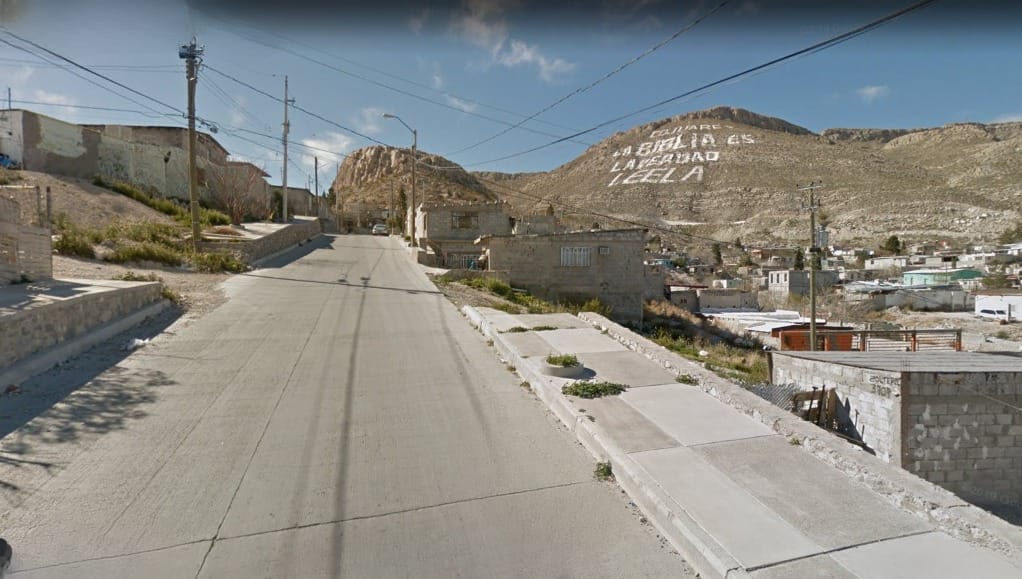
Con mil 778 metros sobre el nivel del mar, el llamado Cerro Bola es el punto más alto de Ciudad Juárez, parte del territorio identitario original de la comunidad Ndé (mal conocida como Apache) y punto frecuente de senderistas de la localidad.
Sin embargo, teniendo la importancia que tiene para la flora y fauna e incluso para la historia de los pueblos originarios de la región, una leyenda que reza “LA BIBLIA ES LA VERDAD. LEELA”, se ha robado la atención de las personas, quienes suelen defenderla como icono de la localidad pese al daño ecológico que le ocasiona a la misma.
Lo anterior fue expuesto por el activista y vocero de la agrupación “Defensa del Río Bravo«, Damián López Peña, quien señaló que ésta es sólo una de las diferentes acciones que se encuentran dañando la Sierra de Juárez.
Sierra Juárez donde se encuentra el Cerro Bola con la leyenda «La Biblia es la verdad. Leela» / Grabado de Google Earth
El activista adelantó que entre las acciones que se plantean es solicitar que se realice una consulta pública para preguntarle a la ciudadanía si desea hacer de la Sierra Juárez un área natural protegida, pasando así a la custodia de la Federación.
“También está lo de la construcción de la cementera, la construcción del Camino Real y luego la mala noticia de que pretenden hacer un complejo industrial por el área de Anapra”, comentó.
Dijo que en el caso del Cerro Bola, en diversas ocasiones los ecologistas han pugnado por retirar los permisos y no permitir que se siga retocando el famoso letrero hecho de cal.
Incluso hasta circuló en redes una publicación que aseguraba que esta leyenda ha permanecido en dicho lugar por más de 34 años.
Y cada 4 años, grupos de religiosos se reúnen para retocar las letras, teniendo cada una de ellas una altura de 30 metros.
Tomada de Google Maps
Se dice que el autor es Gerardo Bermúdez y que su realización ha evitado que mucha gente se suicide tras leer el mensaje.
“La gente siente ahora más arraigo por un letrero que por la misma Sierra de Juárez”, mencionó el ecologista.
La colocación de cal a los árboles fue una práctica que se popularizó en la llamada “Revolución Verde”, alrededor de la década de los cuarentas, debido a que se creía que esto impedía que las plagas avanzaran por los troncos de los árboles.
No obstante, añadió Damián, después se comprobó que el efecto era el contrario, las plagas permanecían, especialmente en la costra encalada del árbol.
“La cal alcaliniza, lo alcalino es lo contrario a lo ácido, el suelo del desierto por su composición natural es ya de por sí muy alcalino, así que la cal le provoca mucho daño”, explicó.
Archivos periodísticos indican que el 1 de septiembre del 2018, el entonces alcalde Armando Cabada Alvídrez, hubiera acudido junto a un grupo de religiosos para realizar un retoque a estas letras.
En ese entonces se anunció que pretendían romper el Récord Güines como la invitación más grande a leer la Biblia, sin embargo, nunca se dio a conocer si esto fue posible.
Hubo expresiones de inconformidad entre los grupos de activistas locales, pero al respecto, el coordinador de la actividad de retoque, el pastor evangélico Gabriel Andavazo, declaró para el medio de comunicación «Evangélico Digital» que después de más de 30 años era imposible medir cualquier impacto de forma retrospectiva.
En esa entrevista, él aseguraró que “está demostrado que la pintura con cal es inocua al medio ambiente y que quienes realizan el mantenimiento periódico cada dos o tres años se cuidan de no estropear nada, aunque esta zona es de flora y fauna desértica muy resistente”.
Aunque se pormenoriado esta zona natural, el Programa de Ordenamiento Ecológico Territorial del Municipio de Juárez (POET), documento realizado en el 2015 por el Colegio de la Frontera Norte (Colef) y por el Municipio, establece que existen cinco zonas de prioridad ambiental para la ciudad, entre ellas, la Sierra de Juárez.
Lo anterior debido a que ésta es una zona de filtración de agua, la cual coincide con el acuífero somero del Río Bravo y el Bolsón del Hueco.
El documento refiere también que en la sierra hay cerca de 15 especies de cactáceas, así como habitan 17 especies de reptiles y otras especies de mamíferos como el coyote, el gato montes, el tejón y el puercoespín.
En un emotivo acto de conmemoración, activistas por los derechos humanos se reunieron frente al Instituto Nacional de Migración (INM), donde hace un año ocurrió un devastador incendio que cobró la vida de 40 migrantes.
Blanca Navarrete, activista fronteriza, expresó que, a un año de la tragedia, aún se esperan acciones concretas por parte de las autoridades responsables.
La manifestación incluyó la instalación de cinco torres, una por cada nacionalidad representada entre los fallecidos, construidas con arena y paja para simbolizar la naturaleza y la diversidad.
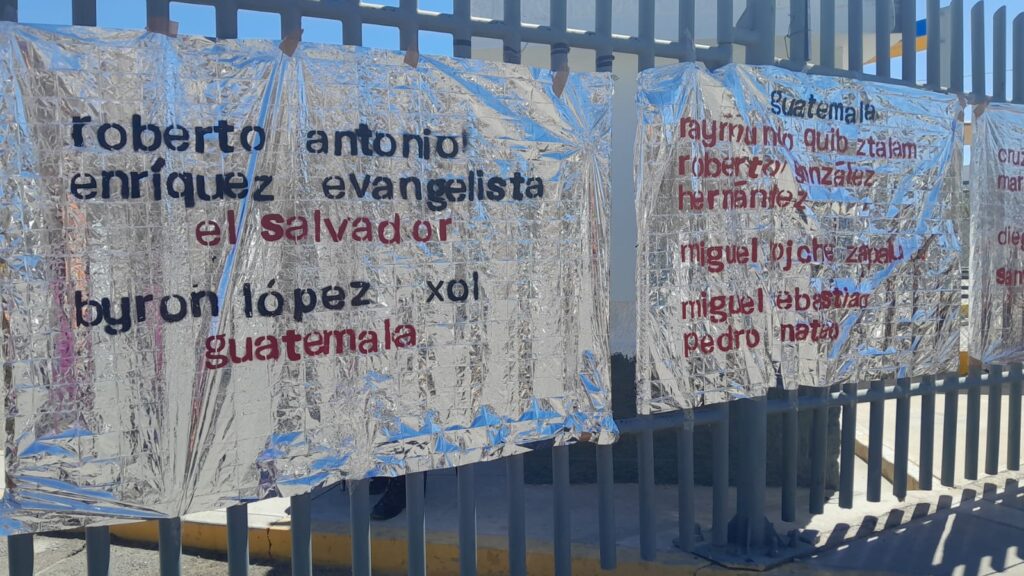
Mantas fueron colocadas para mitigar el frío, con los nombres de las víctimas escritos en ellas, mientras que cordones de colores representativos de la diversidad de nacionalidades adornaron el lugar.
Nombres de las víctimas del incendio / Foto: Karen Cano
Además, se llevó a cabo un performance que consistió en cerrar las calles cercanas para hacer circular llantas con las manos, simbolizando la travesía de los migrantes y exigiendo justicia, marcando el recuento de las 40 vidas perdidas.
Durante el evento, varios activistas tomaron el micrófono para expresar palabras de solidaridad y demandas por los derechos de los migrantes, acompañados de canciones en honor a las víctimas.
Todo pasó en 4 minutos. La habitación se llenó de humo y las llamas fueron captadas por las cámaras de seguridad hasta que ya no se vio nada.
Hoy se cumple un año del incendio registrado en el Instituto Nacional de Migración (INM) de Ciudad Juárez, donde 40 personas murieron y 27 más resultaron lesionadas.
A 365 días de este suceso ni las investigaciones han concluido ni las víctimas han recibido justicia. Así empezó todo.
En el transcurso de 240 segundos, la Estancia Provisional B ardió completamente, cobrando la vida de cuatro decenas de personas.
Antes de eso, en un video se muestra cómo algunos migrantes quitan las colchonetas donde estaban acostados dentro de su celda y le prenden fuego.
El guardia de seguridad se va para solicitar ayuda, pero a pesar de que acuden elementos migratorios, el lugar comienza a incendiarse. Sin embargo, las puertas de la celda están cerradas.
Aquí abajo, el video cámaras de seguridad Instituto Nacional de Migración
También se indica que a raíz del incidente, un total de 68 personas fueron resguardadas.
El rescate duró toda la noche, la madrugada y parte de la mañana / Foto: Redacción Circuito Frontera
El incendio fue reportado pasadas las 9:30 de la noche del lunes 27 de marzo del 2023, dentro del inmueble federal, ubicado entre la calle Lerdo y General Rivas Guillén, a un costado del Puente Internacional “Lerdo” mejor conocido como “Santa Fe”.
Al día siguiente aún se sentía el ambiente caliente afuera de la estación migratoria y el olor a cenizas era penetrante, pero más aún el dolor de los amigos y algunos familiares de las víctimas.
“Y ahí Migración no hace nada. Están viendo que se están quemando. Ignorantes, ábreles la puerta”- dijo Katiuska desesperada – “Porque eso es una reja, de eso no hay escapatoria. Aquí hay dos y solo dos entradas: esa y la parte de la salida, que ayer pasé y vi pues”, platicó Katiuska una mujer de origen venezolano que llegó a Ciudad Juárez en tren, junto con su esposo y sus hijos, “guerreando” con otros migrantes.
En ese momento ella no lo sabía, pero más tarde las autoridades darían a conocer oficialmente que los migrantes fallecidos pertenecían a las siguientes nacionalidades: un colombiano, un ecuatoriano, 12 salvadoreños, 28 guatemaltecos, 13 hondureños y 12 venezolanos.
Tres días después del incidente, autoridades federales informaron que sería el propio INM quien haría el traslado de los cuerpos a su lugar de origen.
Mientras que afuera del INM, los días se convirtieron en horas de protestas, de indignación y de tristeza para la comunidad migrante, a quienes se unieron también los fronterizos.
Algunas personas trajeron una manta azul y botes de pintura blanca; el trozo de tela de alrededor de cinco metros de largo fue tendido sobre la banqueta, en la que, con distintas caligrafías, se impregnaron los nombres de todas las personas fallecidas.
Desde entonces se cerró la Estancia Provisional B del Instituto Nacional de Migración en Ciudad Juárez, la cual hasta la fecha continúa sin operar, al igual que 33 estancias más en toda la República Mexicana.
Semanas después del incidente, los cuerpos de las víctimas comenzaron a salir en vuelos hacia El Salvador, Guatemala y Venezuela en un avión militar CASA 295.
Mientras que varios campamentos se comenzaron a conglomerar afuera de la instancia federal migratoria y de la Presidencia Municipal, los cuales con el tiempo fueron crecimiento llegando a ser hasta 33 campamentos.
También hubo quienes prefirieron alojarse en hoteles económicos en la zona Centro, pero también en casas y predios abandonados.
Estos campamentos se expandieron rápido, pues incluso crecieron tanto que llegaron a crear una mini urbe migrante que se incrementó 7.5 veces en dos semanas.
Incluso activistas aseguraban que la intensa movilidad de migrantes apostados en distintos puntos de la ciudad podría haber sido de una población de entre 15 y 20 mil.
Una megacarpa fue habilitada por autoridades municipales y federales.
Este lugar comenzó a operar a partir del 22 de mayo, luego de que cientos de migrantes fueran desalojados, de nueva cuenta, afuera de las instalaciones de la Presidencia Municipal, en donde llegaron a localizarse hasta 150 viviendas improvisadas, a través de casas de campaña.
El 18 de mayo, el INM solicitó a la Secretaría de Hacienda y Crédito Público (SHCP) una partida presupuestal “especial” para la reparación del daño, a fin de que una vez definido el monto por la Comisión Ejecutiva de Atención a Víctimas (CEAV) se llevará a cabo la indemnización respectiva.
Se determinó la suspensión temporal de 33 estancias provisionales del INM, y de ello se informó a la Comisión Nacional de los Derechos Humanos (CNDH) a fin de que certificara las condiciones éstas y determine cuáles se rehabilitan, cuáles se cierran y cuáles pueden seguir operando.
139 días después, el mismo Gobierno Federal emite un documento donde especifica que el INM reconoce el fallecimiento de 40 migrantes extranjeros y las heridas sufridas por 27 más, como resultado del incendio provocado por dos personas de origen venezolano.
Recientemente, el Instituto Nacional de Migración dio a conocer que hasta la fecha se instalaron mil 511 detectores de humo en espacios de alojamiento migratorio y en nueve instalaciones se han colocado tomas de agua para incendio (hidrantes), así como 23 alertas sísmicas.
Se ordenó el retiro inmediato de las rejillas de protección metálica de medallones y costados de 424 unidades vehiculares de transporte que se utilizan para el traslado de personas migrantes extranjeras en el país.
También que no fue hasta a partir del 20 de junio del 2023 en que la autoridad migratoria implementó un programa integral y progresivo en materia de Protección Civil para sus espacios de alojamiento.
“Este contrato será reincidido, reiteraoms se inició el proceso sancionador administrativo contra la empresa, la cual ya fue notificada, debido a que incurrió en al menos nueve omisiones”, señaló.
Dijo que existe un contrato de la institución migratoria con la empresa de seguridad que se otorgó por adjudicación directa y que le permitía prestar sus servicios.
La empresa operaba en 23 estados de la República, así como de su contrato establece que tenía una vigencia 1 de marzo al 31 de diciembre del 2023, con un monto mínimo de 76 millones de pesos y un máximo de 190 millones.
#CasoINM La empresa de seguridad privada "Grupo de Seguridada Privada CAMSA SA de CV" que operaba en el INM de #CiudadJuarez incurrió en al menos nueve omisiones, dijo la secretaria de Seguridad Ciudadana @rosaicela_pic.twitter.com/8RpLhwNarF
— Circuito Frontera (@Circuitofronte1) April 1, 2023
Los detenidos
Los funcionarios vinculados a proceso por este hecho fueron: Francisco Garduño Yáñez; Antonio Molina Díaz; Salvador González Guerrero; Juan Carlos Meza Cumplido; Eduardo Apodaca Magallanes; Daniel Goray Yosioka; Rodolfo Collazo de la Torre, y Gloria Liliana Ramos García.
Además de dos personas migrantes: Jaison N., y Carlos Eduardo C., ambos de nacionalidad venezolana.
Una serie de audiencias de vinculación a proceso de los funcionarios y las personas migrantes se llevaron a cabo durante meses, situación que aún no concluye.
Aunque en estas, también se dieron a conocer varias irregularidades que ocurrían dentro del Instituto Nacional de Migración, incluso antes de que ocurriera el incendio.
Durante la audiencia inicial del delegado del Instituto Nacional de Migración (INM), Francisco Garduño Yáñez, se reveló por parte de la Fiscalía General de la República que mediante las entrevistas a los sobrevivientes del incendio, las personas migrantes capturadas y recluidas en la Estancia Provisional B recibían ofertas por parte de los oficiales, a cambio del pago de mil dólares, dejarlos en “libertad”.
El testigo identificado como M. A. G. P. relató que ” si querían salir, tenían que pagar mil dólares”, aunado a un trato duro por parte de los guardias quienes no daban de comer. También relató que una de las frases comunes en su contra era: “Nadie les ha dicho que vinieran a México”, esto ante los malos tratos y humillaciones.
Sin embargo, la ley ha sido injusta no solo con las víctimas y sus familias sino con varios de los involucrados, especialmente con Juan Carlos Meza Cumplido, quien era coordinador del Grupo Beta y quien, a diferencia del resto de los funcionarios, su puesto no lo involucraba como responsable.
Leonardo Lara Ferreiro, abogado de Legal Estudio Jurídico y defensor de Juan Carlos Meza, platicó a Circuito Frontera que hasta el momento se logró fijar una garantía económica de 2 millones de pesos para que pueda llevar su proceso legal en libertad, monto que aún no reúne su familia.
También que el Juez de Control aceptó la imposición de un brazalete electrónico, una vez que se junte esta cantidad.
Cabe recordar que Juan Carlos Meza Cumplido es señalado por la Fiscalía General de la República como uno de los presuntos responsables, traspresentar un documento en donde lo señalan como encargado de la Unidad de Protección Interna, un documento que carece de todas las firmas de los intervinientes.
El abogado de Legal Estudio Jurídico señaló también que Juan Carlos Meza no se encuentra detenido bajo la medida cautelar de prisión preventiva justificada ni tampoco por prisión preventiva oficiosa, sino que quedó en un limbo jurídico sin poder llevar su proceso en libertad.
La familia de Juan Carlos aun no logra reunir los 2 millones de pesos como garantía para realizar su proceso en libertad / Foto: Redacción
«El principal motivo por el cual está detenido Juan Carlos es porque la Fiscalía alega que era responsable de Protección Civil del inmueble. Para ello, ellos anexan un acta constitutiva donde lo asignan a él, pero nosotros hemos alegado desde el inicio que ese documento no fue firmado por Juan Carlos», explicó.
La defensa señaló que el ex coordinador del Grupo Beta no puede ser responsabilizado de haber causado daños a las personas migrantes materialmente, ya que su detención se basa en cuestiones administrativas y burocráticas.
«Juan Carlos está detenido por una designación que no fue bien hecha y por irregularidades administrativas. Él es el único con el que se están agarrando, es la base de la pretensión de la Fiscalía, no hay otra cosa», afirmó el abogado.
Juan Carlos Meza Cumplido, coordinador del Grupo Beta / Foto: Tomada de redes sociales
También expuso que Juan Carlos no está detenido por prisión preventiva ni oficiosa ni justificada, debido a que la Fiscalía tampoco pudo justificar una detención preventiva, aunque sí se encuentra dentro de un «limbo jurídico».
«Nosotros ya logramos, digamos la parte jurídica, que es lo importante que el juez redujera de 20 millones a dos millones. Esa es una y la imposición del brazalete electrónico. A diferencia de los otros detenidos, ellos siguen con la medida cautelar de prisión preventiva, pero Juan Carlos está digamos ahorita en un en un limbo jurídico porque él está ahí detenido por falta de recursos», sentenció.
Actores y organizaciones de la sociedad civil se pronunciaron al respecto, tras los pocos avances y desden institucional, a un año de la tragedia en Ciudad Juárez.
A través de una publicación en redes sociales, la organización Derechos Humanos Integrales en Acción (DHIA), publicaron un comunicado donde hablan sobre este hecho, donde 82 familias en cinco países siguen a la espera de justicia y la reparación integral del daño.
«A la fecha, no hay ninguna sentencia, ni reparación integral del daño a las víctimas directas e indirectas, sólo promesas, omisiones, simulación y un funcionario vinculado a proceso en funciones que cínicamente presume de acciones de protección civil dentro de las estaciones migratorias».
Se indica que lo sucedido en Ciudad Juárez es un crimen de Estado, consecuencia directa de un sistema de políticas migratorias que criminalizan y buscan disuadir la migración por México.
Sin embargo, este no se trata de un caso aislado, de acuerdo con 69 recomendaciones de la Comisión Nacional de los Derechos Humanos (CNDH) dirigidas al Instituto Nacional de Migración por eventos al interior de las estaciones migratorias.
Desde 2018 se registraron 41 motines y cuatro incendios en protesta por las condiciones inhumanas de detención, siendo la administración de Andrés Manuel López Obrador la que registra el mayor número de muertes de personas migrantes en custodia del INM con 55 decesos, frente a 16 en el sexenio de Enrique Peña Nieto.
«Como organizaciones, redes y albergues de la sociedad civil que trabajamos por los derechos de las personas migrantes y con necesidades de protección internacional seguiremos acompañando a las familias de los fallecidos y a las personas sobrevivientes, hasta que se haga justicia y exista una verdadera reparación integral del daño y garantías de no repetición», señala el documento.
A la FGR y jueces de control de PJF a dejar de obstaculizar la defensa de las víctimas directas e indirectas en el proceso judicial; el proceso judicial en el caso, y desvincular al Comisionado del INM de sus funciones para que exista una investigación y proceso penal independiente, imparcial y exhaustivo.
A la CEAV a tomar el mando de sus facultades, garantizar evaluaciones individuales para cada una de las víctimas y las familias de los fallecidos, y a comprometerse con una reparación del daño justa, de acuerdo con las necesidades de cada familia, pues algunos de los sobrevivientes serán dependientes el resto de sus vidas.
Al INM a terminar con las detenciones migratorias, pues estas no representan un delito en México, sino una falta administrativa. Convertir las estaciones migratorias en espacios donde se brinde orientación e información a las personas para regularizar su situación migratoria o acceder al asilo.
Al Estado mexicano a garantizar a las personas una migración libre de violencia, así como dejar la política de disuasión y securitización, que ha cobrado la vida de miles de personas migrantes y con necesidades de protección internacional I en este país.
El posicionamiento fue firmado por 39 organizaciones, albergues y redes de organizaciones de la sociedad civil, además de otras 9 personas a título personal.
Al Otro Lado TJ AC
Apoyo a Migrantes Venezolanos
Asylum Access México A.C. (AAMX)
Casa Arcoiris, Albergue Temporal LGTBIQ+
Casa Betenia-Santa Martha
CEJUDI , A.C. Centro por le Justicia, Democracia e Igualdad
Centro de Atención a la Familia Migrante Indígena
Coalición internacional contra la vetencion (IDC)
Colectiva Sororidad Glocal
Comunidad en Retorno
Congreso Internacional de Periodismo de Migraciones
Clínica Jurídica para Personas Refugiadas «Alaíde Foppa»
Derechos Humanos Integrales en Acción, A.C. (DHIA)
Dignidad y Justicia en el Camino A.C «FM4 Paso libre»
Fundación porCausa
Fundación para la Justicia y el Estado Democrático de Derecho (FJEDD)
Frontera con Justicia A. C. [Casa del Migrante Saltillo]
Grupo de Acción por la No Detención de Personas Refugiadas
Grupo de Trabajo Sobre Politica Migratoria-GTPM: Aldeas Infantiles SOS México, L.A. P.; Alianza Américas; American Friends Services Committee; Apoyo a Migrantes Venezolanos, A.C.; Asylum Access México (AAMX) A.C.; Casa del Migrante Saltillo (Frontera con Justicia A.C.); Centro de Derechos Humanos Fray Matías de Córdova, A.C.; Coalición Pro Defensa del Migrante de Baja California, Comisión Mexicana de Defensa y Promoción de los Derechos Humanos; Fundación Appleseed México, A.C.; DHIA. Derechos Humanos Integrales en Acción, A.C.; IMUMI Instituto para las Mujeres en la Migración; Iniciativa Ciudadana para la Promoción de la Cultura del Diálogo, A.C.; INSYDE Instituto para la Seguridad y la Democracia, M3 Movimiento Migrante Mesoamericano, Paso de Esperanza A.C.; REDIM Red por los Derechos de la Infancia en México; Save the Children México, Sin Fronteras, IAP, Servicio Jesuita a Refugiados; SMR Scalabrinianas: Misión con Migrantes y Refugiados; Leticia Calderón, Analista en temas migratorios; Brenda Valdés; Elba Coria; Manuel Ángel Castillo, Investigador, Gloria Ciria Valdéz Gardea, fundadora y coordinadora del Seminario Niñez Migrante; IDC International Detention Coalition (Observadoras). Melissa Vertiz Hernández, Secretaria Técnica.
Iniciativa Ciudadana Región Puebla
Instituto para las Mujeres en la Migración, AC (IMUMI)
Instituto para la Seguridad y la Democracia, A.С.
Kaltsilaltik AC
LV Acompañamiento y Arte por los Derechos de las Mujeres A.C. (Las Vanders)
Menstruación Digna en Estaciones Migratorias
Observatorio de Racismo en México y Centroamérica
Pastoral de la Movilidad humana de la Arquidiócesis de Tuxtla, Chiapas
Pastoral Social La Libertad
Programa de Asuntos Migratorios de la Universidad Iberoamericana Ciudad de México
RacismoMX
Red Franciscana para Migrantes
Red de Mujeres del Bajío AC
Secretaria Cristiano de Solidaridad con América Latina
Servicio Pastoral a Migrantes San Martín de Porres
Sin Fronteras IAP
Tejiendo Redes Infancia en América Latina y el Caribe
Uno de Siete Migrando AC
Voces Mesoamericanas, Acción con Pueblos Migrantes