Con fin de dar una perspectiva sobre el tipo de delitos y la incidencia de los mismos cometidos en Ciudad Juárez, el Fideicomiso para la Competitividad y Seguridad Ciudadana (FICOSEC) lanzó la plataforma de incidencia delictiva ID-360.
Esta plataforma se trata de una herramienta para el análisis del crimen, en donde se muestran diferentes mapas para medir los delitos de mayor impacto en Ciudad Juárez, donde destacan la violencia familiar, homicidio doloso, lesiones dolosas, robo, entre otros.
La herramienta cuenta con información obtenida por consulta de datos provenientes de diversas fuentes de información pública como: el Secretariado Ejecutivo del Sistema Nacional de Seguridad Pública (SESNSP), el Consejo Nacional de Población (CONAPO), la Fiscalía General del Estado de Chihuahua (FGE) y el Instituto Nacional de Estadistica y Geografía (INEGI).
En la página además se especifica que el tratamiento de información se realiza con finalidades de análisis históricos, estadísticos y científicos, en observancia de lo dispuesto por los artículos 7 último párrafo y 18 segundo párrafo de la Ley de Protección de Datos Personales en Posesión de los Particulares, así como el correlativo artículo 7 del Reglamento de la citada normatividad.
Debido a la importancia de este tipo de herramientas digitales, la plataforma fue presentada ante estudiantes de las licenciaturas en Derecho y Seguridad y Políticas Públicas, con el objetivo de introducir a los alumnos a las herramientas e información disponibles, diseñadas para facilitar investigaciones y análisis en sus respectivas carreras.
Carlos Murillo Martínez, coordinador de la licenciatura en Seguridad y Políticas Públicas de la UACJ
Además de su aplicación en el ámbito académico, Murillo Martínez destacó que esta herramienta tiene un gran potencial para extender su utilidad en el análisis de la incidencia delictiva en el ámbito profesional, brindando a los futuros graduados una ventaja competitiva.
La presentación estuvo a cargo de Jaime García De la Rosa, coordinador del Laboratorio de Co Diseño y Evaluación de Proyectos de Ficosec, quien detalló a los estudiantes los distintos tableros que componen la plataforma.
Durante la explicación, los alumnos tuvieron la oportunidad de explorar los datos disponibles, incluyendo informes de incidencia delictiva por municipio, visualización de delitos por cuadrante y comparaciones históricas.
García De la Rosa y Carlos Murillo invitaron a los estudiantes a comenzar a utilizar activamente ID-360 en sus proyectos de investigación y a familiarizarse con las bases de datos que están vinculadas al ejercicio del derecho y la seguridad.
Esta iniciativa busca preparar a los futuros profesionales con herramientas efectivas para abordar los desafíos relacionados con la seguridad y el crimen en la región.
Tres hombres fueron vinculados a proceso por el delito de secuestro agravado y promoción de conductas ilícitas, por su probable participación en el rapto de nueve migrantes el pasado 23 de agosto.
A través de un comunicado de prensa se informó que agentes de la Fiscalía Especializada en Operaciones Estratégicas, a través de la Unidad Modelo de Atención al Delito de Secuestro, obtuvieron la vinculación a proceso penal de tres sujetos, por la sustracción ilegal de diversas víctimas en un hotel de Ciudad Juárez.
En el documento se indicó que un Juez ratificó la medida cautelar de prisión preventiva para los imputados Eduardo Javier M. H., Brayan Alejandro E. H., y Kevin R. D., otorgando un plazo de investigación complementaria de cuatro meses.
Se recordó que el miércoles 23 de agosto del presente año, entre las 17:00 y 17:30 horas, varias personas fueron privadas de su libertad en el hotel«San Miguel», ubicado en la Avenida Tecnológico, a la altura de la colonia La Cuesta, por un grupo de sujetos armados.
De acuerdo con las investigaciones de la Unidad Modelo, Eduardo Javier M. H., y otro sujeto, trasladaron a sus víctimas a un domicilio de la colonia Aztecas, al tiempo que Brayan Alejandro E. H., y Kevin R. D., les pedían números telefónicos, les tomaban fotos y videos, para solicitar a los familiares la cantidad de 15 mil dólares a cambio de su libertad.
El 25 de agosto, una de las víctimas escapó y solicitó auxilio de las autoridades, logrando agentes de la Secretaría de Seguridad Pública Estatal (SSPE) asegurar a las otras víctimas y detener a los tres imputados.
Los sujetos fueron puestos a disposición del Juez de Control del Distrito Judicial Bravos bajo la causa penal 4699/2023, mientras que el domingo 27 de agosto se llevó a cabo la audiencia de control de detención, formulando imputación de cargos.
Este jueves 31 de agosto, los imputados fueron vinculados a proceso por los delitos de: Secuestro Agravado previsto y sancionado por el Artículo 9 Fracción I inciso a), 10 fracción I, incisos b, c y d de la Ley General para Prevenir y Sancionar los Delito en Materia de Secuestro; así como de Promoción de Conductas ilícitas, previsto y sancionado por el artículo 274 del Código Penal del Estado de Chihuahua.
Sin embargo, de acuerdo con las leyes y normas vigentes, los imputados se presumen inocentes mientras no se declare su responsabilidad mediante sentencia emitida por la autoridad judicial (artículo 13 del Código Nacional de Procedimientos Penales).
The recent kidnapping of nine migrant individuals in Ciudad Juárez, two of them minors, highlights the dangerous journey that the mobile population faces.
The victims were five men and four women, two of them minors, originally from Ecuador and Guatemala, stated by State Attorney General’s Office (Fiscalía General del Estado, FGE).
However, this incident is not an isolated case, according to a report by Circuito Frontera. As of June 2023, at least 61 people have been victims of kidnapping in this city. All of them are migrants: foreigners and nationals, as maintained by the association Security and Justice Board in Ciudad Juárez (Mesa de Seguridad y Justicia en Ciudad Juárez).
This trend has been recurring, as opposed to previous years, where currently the migrant population is the most vulnerable group to the crime of kidnapping. In all the recorded cases, the victims are individuals in motion, said Ángela Sánchez Miramontes, a member of the civil organization.
Meanwhile, Rogelio González Alcocer, coordinator of the Security and Justice Board in Ciudad Juárez, stated to this media, that this is a concerning situation for the border community, due to the impunity and violence that threaten the peace and well-being of society in our region.
He mentioned that they had been warning about these situations for several months, given the lack of control over immigration policies in the country.
“Because one of the assumptions regarding these events is the ‘coyote’ («polleros»/people smugglers) war that may exist, viewing these migrants as ‘merchandise,’ which they are fighting over».
Regarding the actions taken by the authorities, it was indicated that there is knowledge that five individuals are currently detained for these incidents, one of them being a minor. Additionally, it appears that they are affiliated with a criminal group.
Also, the last two individuals who were abducted last wednesday have already been rescued.
«It’s evident that the current strategies are not showing results in terms of preventing these crimes, and we must continue to emphasize the coordination among the three levels of government and stakeholders in the realm of security, so that these kinds of situations cease to occur».
In this regard, the Municipal Secretary of Public Security (Secretaría de Seguridad Pública Municipal, SSPM), César Omar Muñoz Morales, informed that they have now identified the criminal groups responsible for this crime and are collaborating with the FGE and federal authorities to pursue the matter.
He mentioned that one of the challenges they face as an authority is the lack of reports by the affected individuals, since most of them have the sole intention of crossing to the United States.
Regarding this event, the social communication staff of the FGE announced that on wednesday, august 23rd, at 6 pm, through the radio operator of the 911, the probable abduction of several individuals at the «San Miguel» hotel, located at the intersection of Tecnológico Avenue and Sierra Mojada Street.
In the initial report, it was indicated as a violent robbery. Upon making contact with the establishment’s manager, she stated that four armed men dressed in dark clothing abducted five men and four women against their will. Two of the women are minors and are originally from Ecuador and Guatemala.
Also, that the possible suspects fled the scene aboard an orange-colored van, accompanied by a black Suburban. Just before fleeing, they disabled the monitoring system and caused damage to the hotel’s doors. In response to this situation, personnel from the Specialized Unit for Missing or Unlocated Persons, Men’s Division, initiated the first investigations.
Un día marcado por la violencia, con 16 homicidios dolosos registrados el pasado lunes, se presume que la «racha» de crímenes tuvo su origen en un conflicto entre grupos de traficantes de personas, comúnmente llamados «polleros».
El alcalde, Cruz Pérez Cuéllar, informó que la creciente violencia puede atribuirse a una disputa entre tratantes de migrantes, específicamente aquellos que cruzan ilegalmente hacia Estados Unidos.
Las investigaciones sugieren que la ruptura entre estos grupos delictivos desencadenó una escalada de violencia en la localidad. Pese a este trágico episodio, el funcionario declaró que en el transcurso de casi dos años, los homicidios dolosos han experimentado una reducción entre el 25 y el 30 por ciento.
Sin embargo, la disminución de la violencia contrasta con los eventos recientes y subraya la complejidad de las dinámicas delictivas en la región.
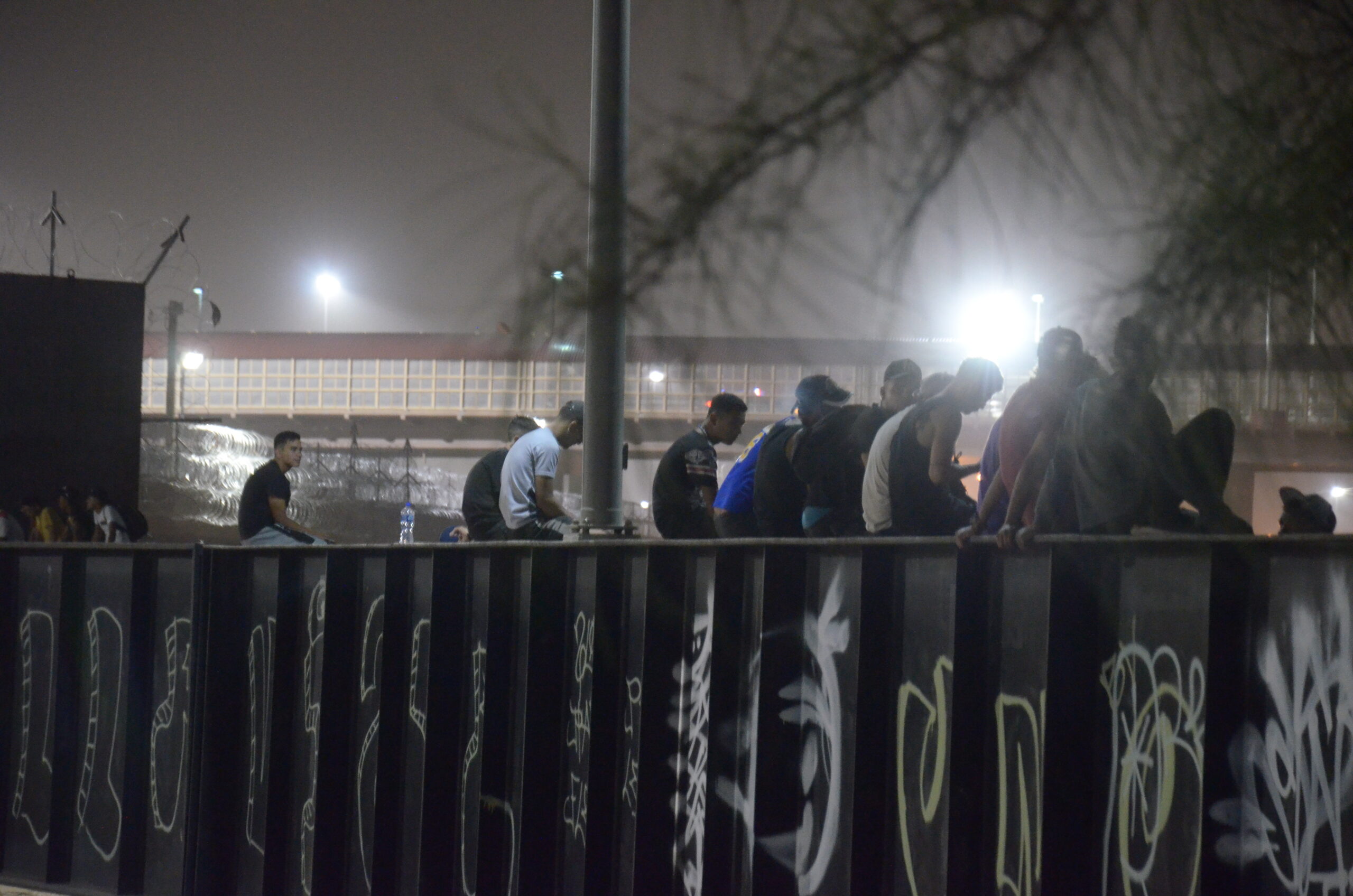
Migrantes se manifiestan en «Puente Negro», tras solicitar la entrada a EU por la frontera de El Paso/Foto: Paco Servin
En tanto que los albergues de la localidad están operando cerca de su capacidad máxima y se anticipa que en continúen llegando más personas en búsqueda de refugio.
El presidente municipal enfatizó la importancia de la coordinación entre instituciones para asegurar la seguridad y bienestar de los migrantes. En tanto que, por la falta de espacio en los albergues, dijo que están en la disposición de adecuar espacios adicionales para aquellos migrantes que no puedan ser acomodados en los refugios existentes.
La llegada de más migrantes también fue advertida por la gobernadora del Estado, María Eugenia Campos Galván, quien expresó su perspectiva sobre el fenómeno migratorio.
Dijo que, si bien la entidad no se opone a la migración, consideró que se requiere un proceso migratorio ordenado para evitar tensiones en los municipios.
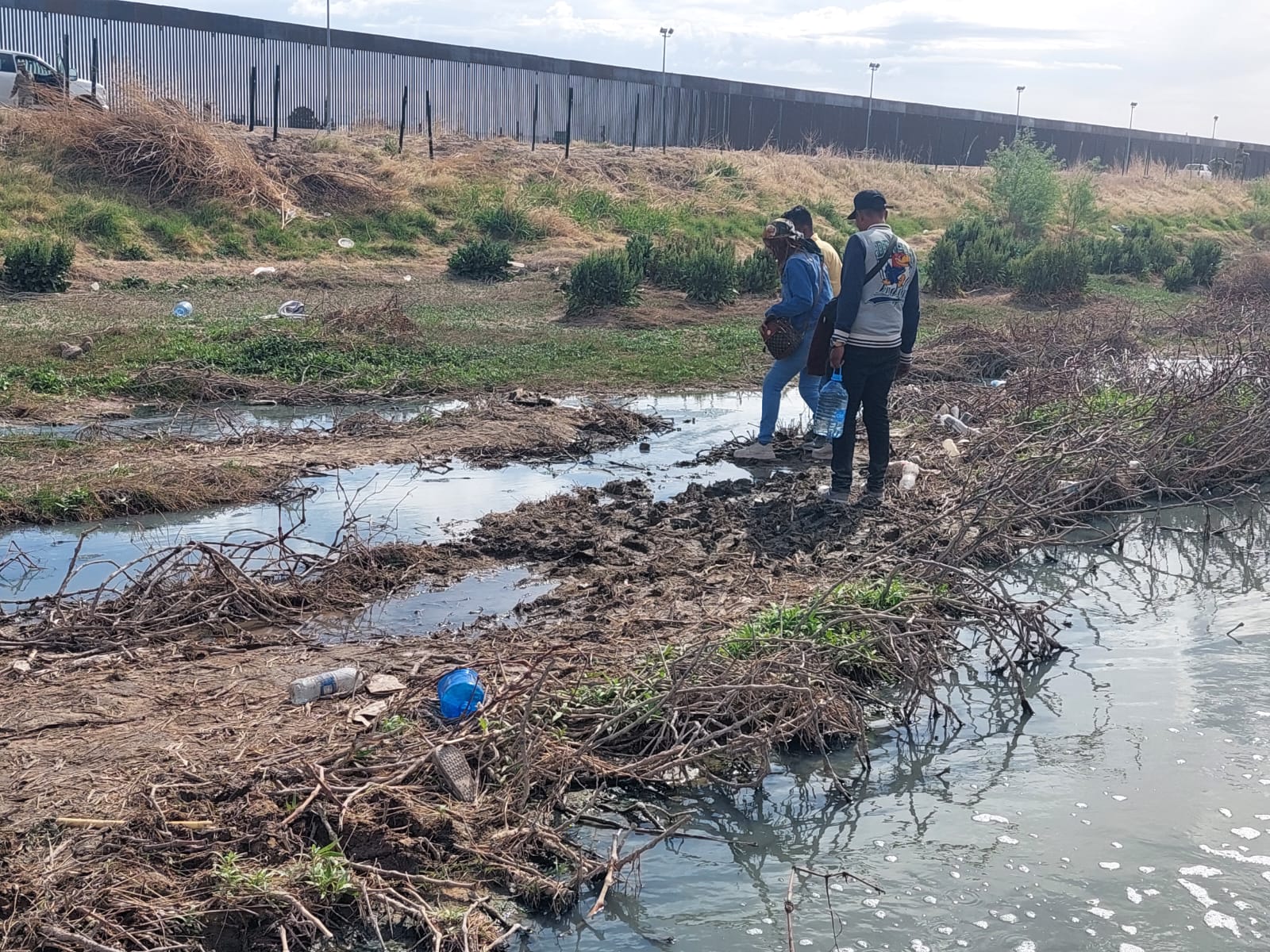
Migrantes acuden al punto de revisión por la puerta 38, antes de que concluyera Título 42 de Estados Unidos / Foto: Mat Romero
Señaló que Ciudad Juárez se ha visto afectada por una severa crisis en servicios de salud, educación, seguridad y hospedaje, debido al incremento de la población.
Además, destacó la diversidad de motivaciones detrás de la migración hacia Chihuahua, mencionando que algunos migrantes buscan el «sueño americano», mientras que otros prefieren quedarse en México.
La complejidad de estas dinámicas y los desafíos que enfrentan las autoridades tanto en seguridad como en atención humanitaria para los migrantes, resaltan la necesidad de enfoques integrales y cooperativos en la región.
Por lo que la situación actual exige respuestas que consideren tanto la seguridad de las comunidades locales como la protección y derechos de los migrantes que buscan un futuro mejor.
Members of the animal welfare collective called «Somos Su Voz» (We Are Their Voice) visited the State Government offices in Ciudad Juárez, tuesday august 15th to submit a request for a public hearing, demanding improvements for the animals residing in Parque Central.
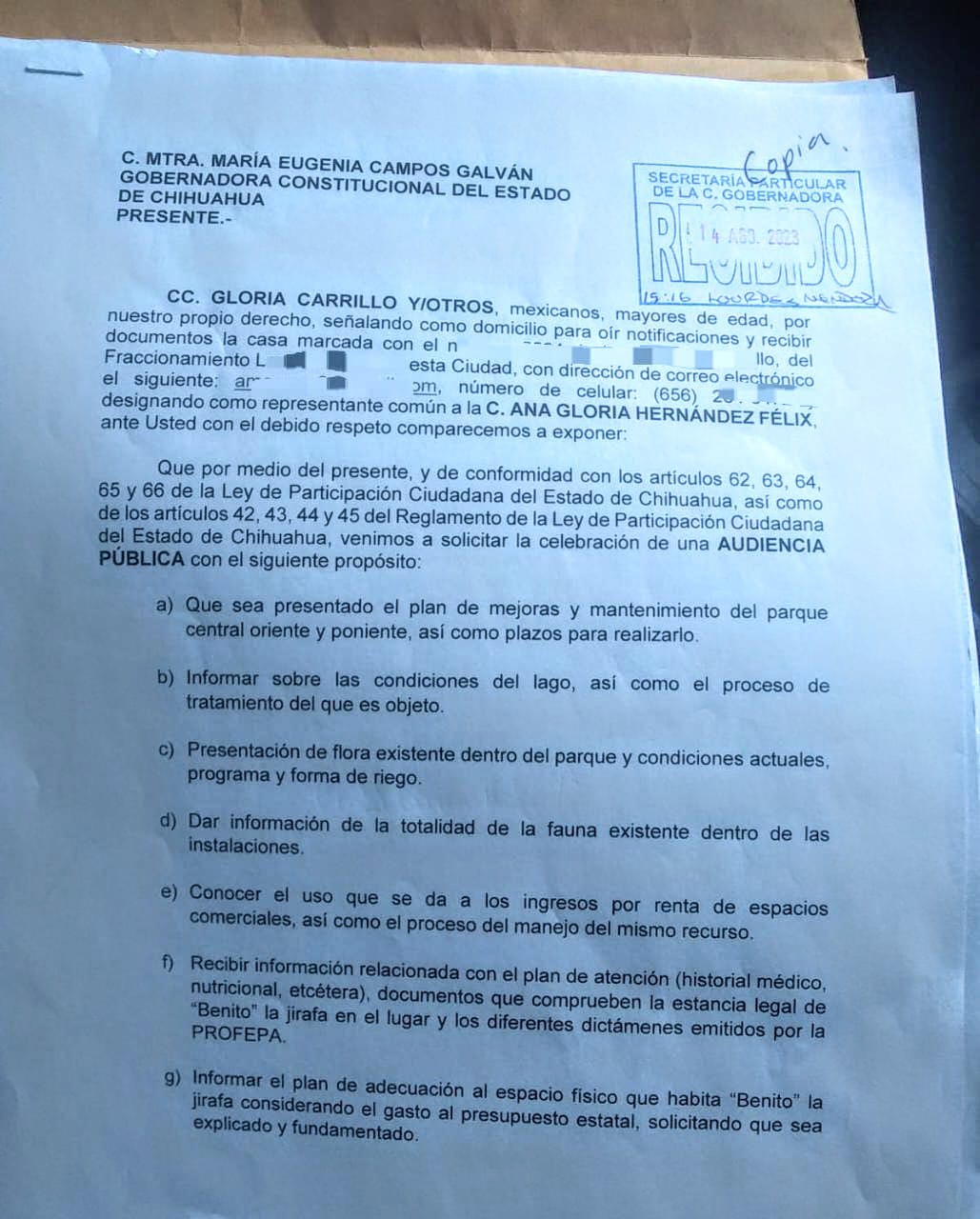
Ana Félix, activist and spokesperson for the collective, revealed that this document was handed over at the office of Óscar Ibáñez, representative of Governor María Eugenia Campos in Ciudad Juárez.
Due to her traveling to the city of Chihuahua a day before to deliver the same request at the state leader’s office, in order to raise awareness about the issues at the Parque Central
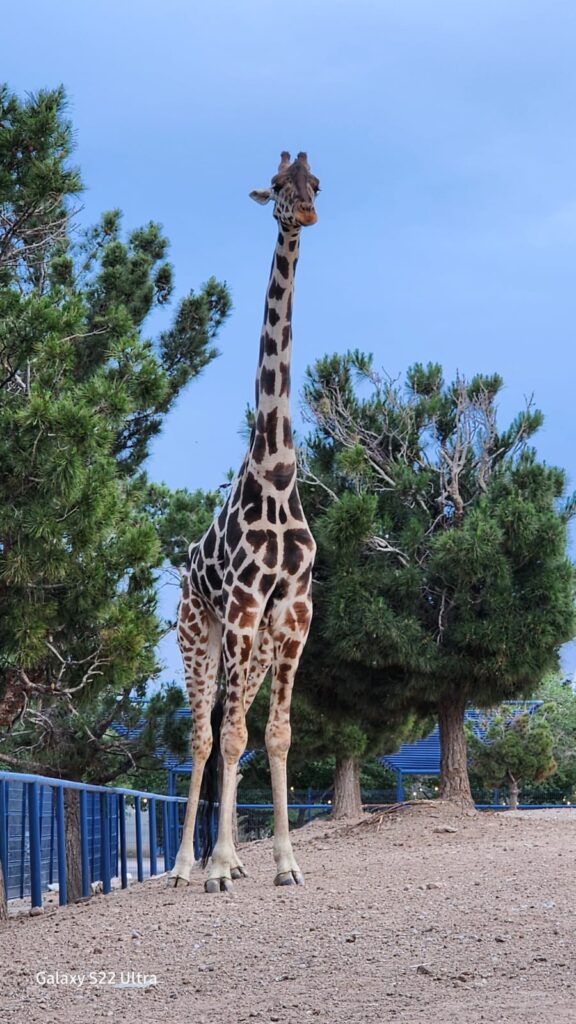
It’s worth noting that the collective «Somos Su Voz» reported the deaths of several animals in the park, including rabbits and a turkey. They’ve also been advocating for the rights of Benito, the new giraffe in this area, almost since its arrival at this location.
Benito when he arrived to the Parque Central Photo of Benito at begining of august
Félix emphasized that the urgency is imminent as an alarming daily death rate among the animals within the park has been observed.
Despite having requested improvements for months, the lack of substantial changes remains evident, particularly in the area where Benito resides.
In the document delivered to the governor, a request is made for a public hearing to be held through this application, with several purposes, including the presentation of the plan for improvements and maintenance of the east and west Parque Central, as well as the deadlines for its execution.
Information is to be provided about the conditions of the lake, as well as the treatment process it undergoes. A program is also required to detail the flora present in the park and its current conditions.
Furthermore, a comprehensive report is demanded to provide information about the entirety of the fauna within the park, ensuring a complete understanding of the animals that inhabit it.
Transparency in the use of income generated from commercial space rentals is also requested.
Additionally, detailed information about the health status of Benito the giraffe is requested, including its medical and nutritional history, documents validating its legal residence at the location, and assessments issued by Federal Bureau of Environmental Protection (PROFEPA by its acronym in spanish).
This story is part of the Border Hub of Investigative Journalism Hub, a project by the International Center for Journalists in partnership with the Border Center for Journalists and Bloggers.
The downtown and southeast neighborhoods of Ciudad Juárez, Chihuahua, have become two poles with the highest rates of violence and crime, which experts believe has been fueled by the increase in home abandonment in these areas.
Translated by Jesús Ronquillo / Circuito Frontera
The displacement of residents from downtown Ciudad Juárez, Chihuahua, caused by rising housing costs, along with the proliferation of new neighborhoods in the southeastern part of the city without sufficient demand, has led to an increase in home abandonment and subsequently a rise in insecurity in these zones, according to experts and official information obtained through transparency.
The State Attorney General’s Office (Fiscalía General del Estado, FGE) and the Municipal Public Security Secretariat (Secretaría de Seguridad Pública Municipal, SSPM) reported, through the National Transparency Platform (Plataforma Nacional de Transparencia, PNT), on the investigation files for crimes such as homicides, domestic violence, and robberies, as well as reports of emergency calls made to 911. In both cases, the number of complaints was concentrated in the southeastern and downtown areas of Juárez.
The increase in uninhabited homes in both zones contributed to the rise in insecurity, as indicated by the 2018 Periurban Zone study conducted by the Municipal Institute of Planning Research (Instituto Municipal de Investigación y Planeación, IMIP), as well as interviewed experts.
This document states that based on the 2016-2017 Land Use Survey, they counted 142,100 homes in the southeastern zone, of which 82.5 percent are habited and 17.5 percent are uninhabited. This corresponds to 24,867 uninhabited homes in that city area alone.
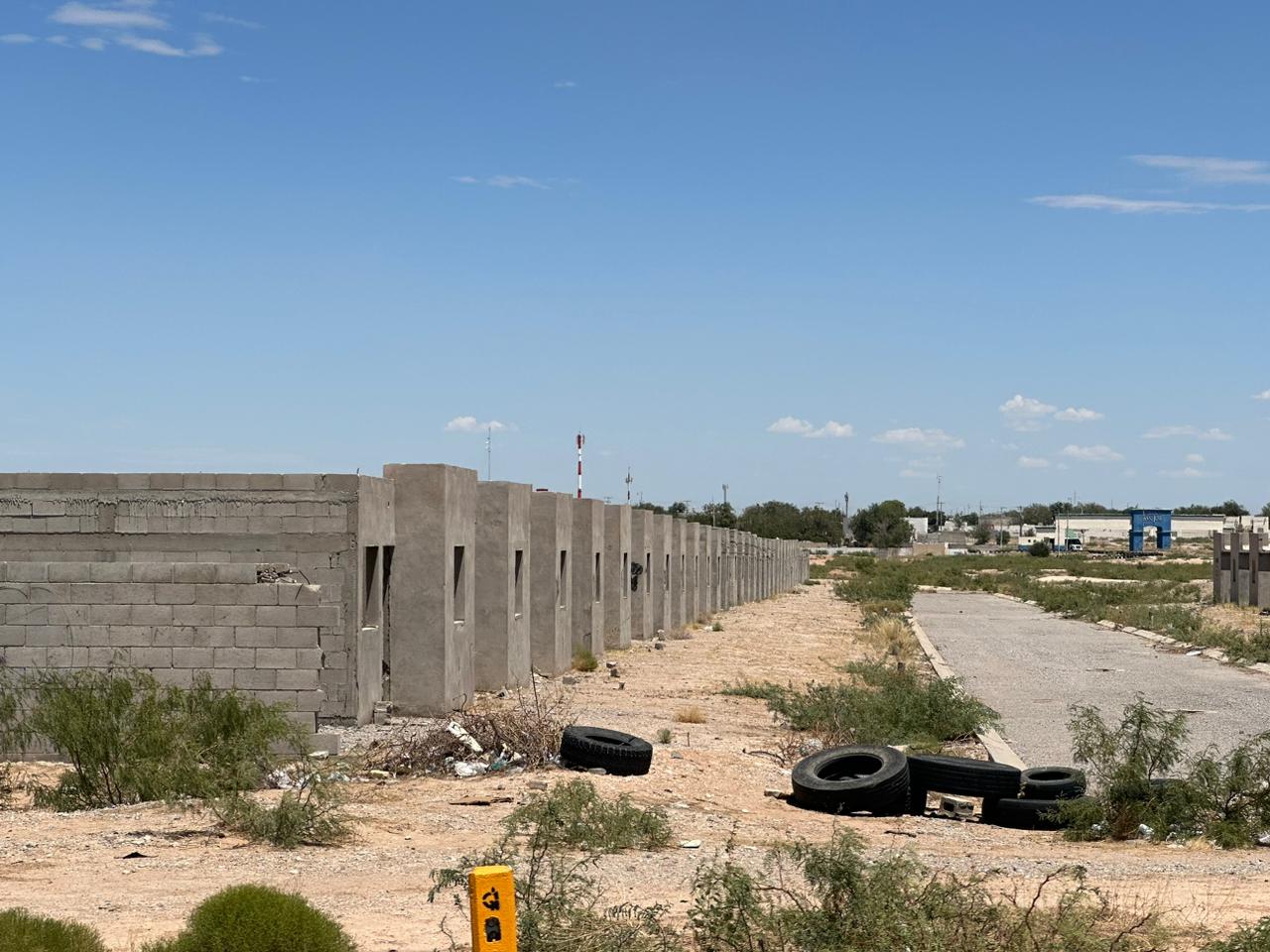
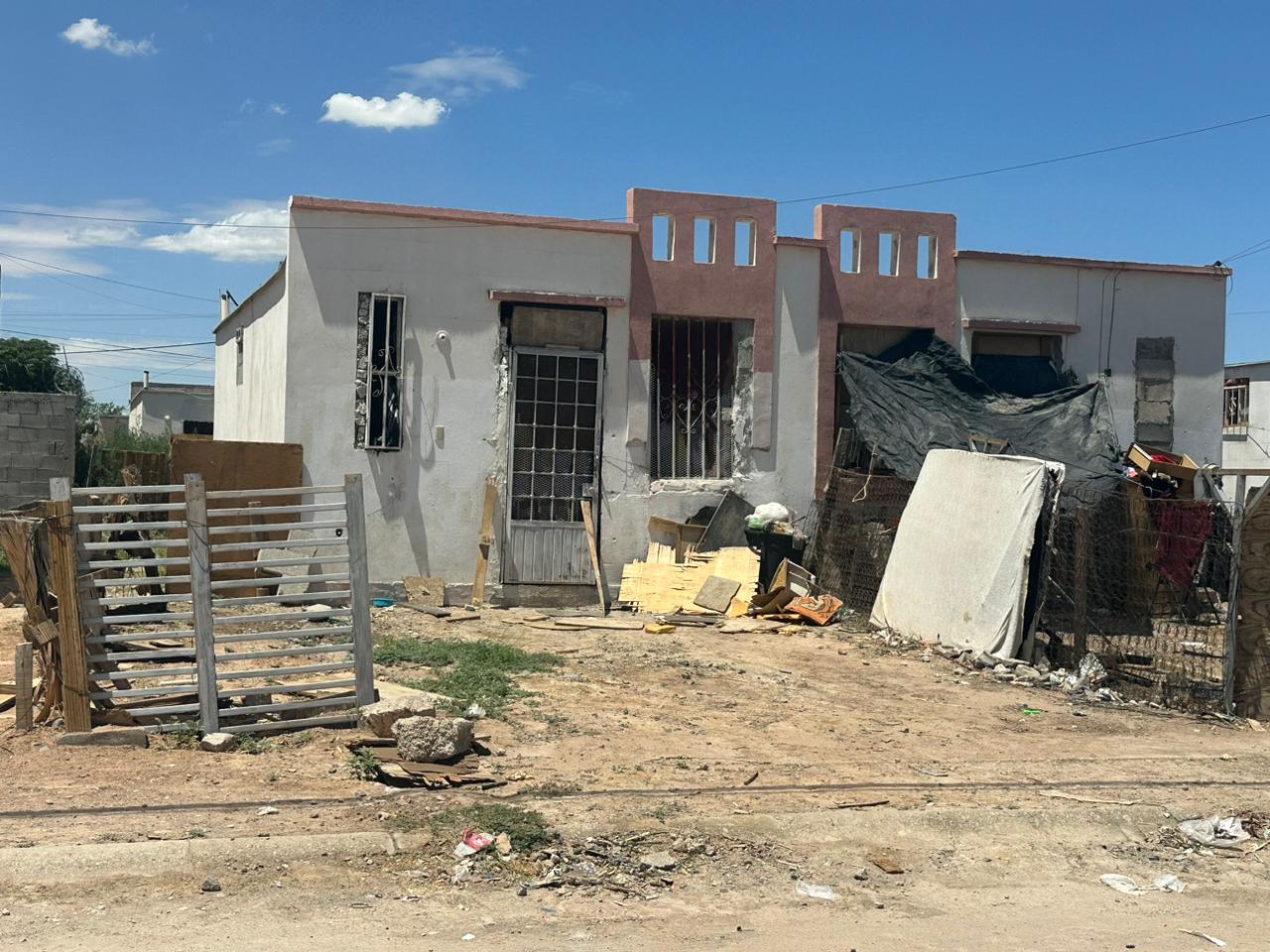
Uninhabited houses of an unfinished housing development in the southern part of the city / Photo: Aimé Salinas
According to information provided by National Institute of Statistics and Geography (Instituto Nacional de Estadística y Geografía, INEGI), in the central and northern areas of the city, there are at least 22 Basic Geostatistical Areas (Área Geoestadística Básica, AGEB) with an average of 146 to 300 uninhabited houses. This means that an estimated 3,212 to 6,600 houses are uninhabited in this zone.
While both areas share the same issue of increasing abandoned housing, each of them faces different challenges.
According to the «Urban Renewal and Recovery Plan of the Seven Historic Neighborhoods,» which includes the Chaveña, Obrera, Barreal, Monumento, Ex Hipódromo, Centro, and Bellavista neighborhoods, a study by the IMIP in 2020 stated that some homes were abandoned because the owners passed away, and no family member took charge of the house. Another reason was that owners migrated to the United States and never returned to the city or their old homes.
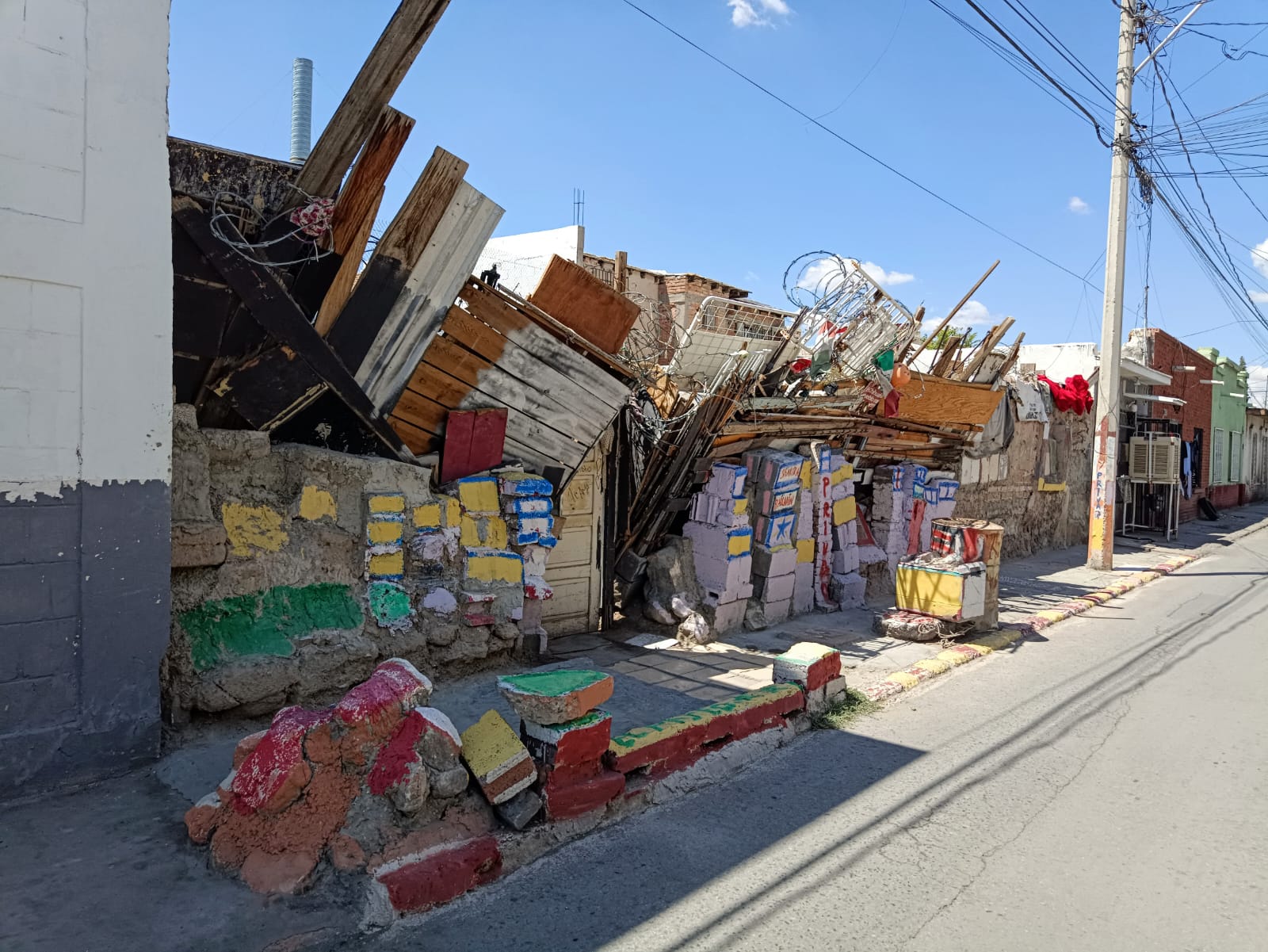
Abandoned “remodeled”walls and houses , are irregularly occupied in downtown area / Photo: Angélica Villegas
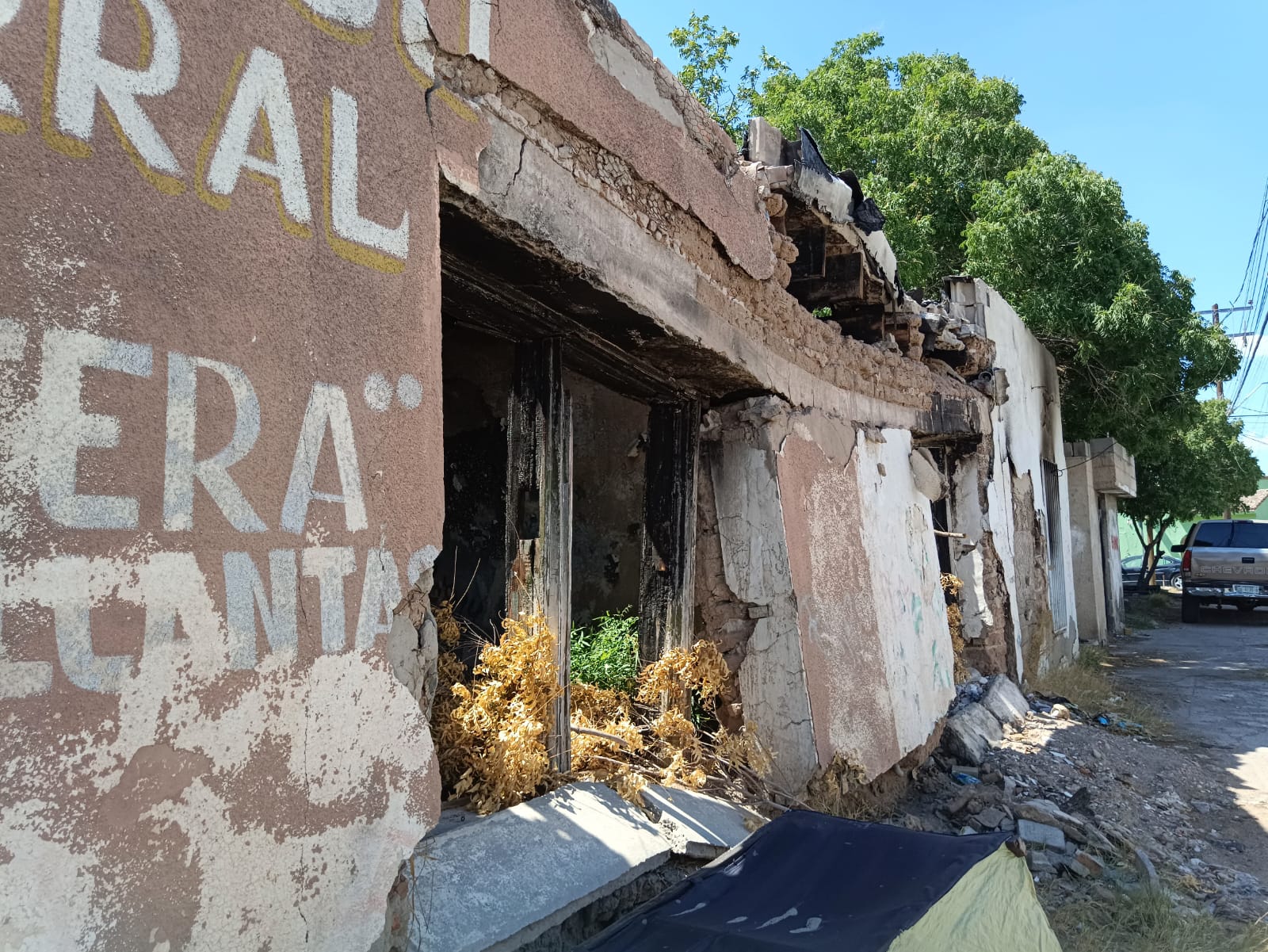
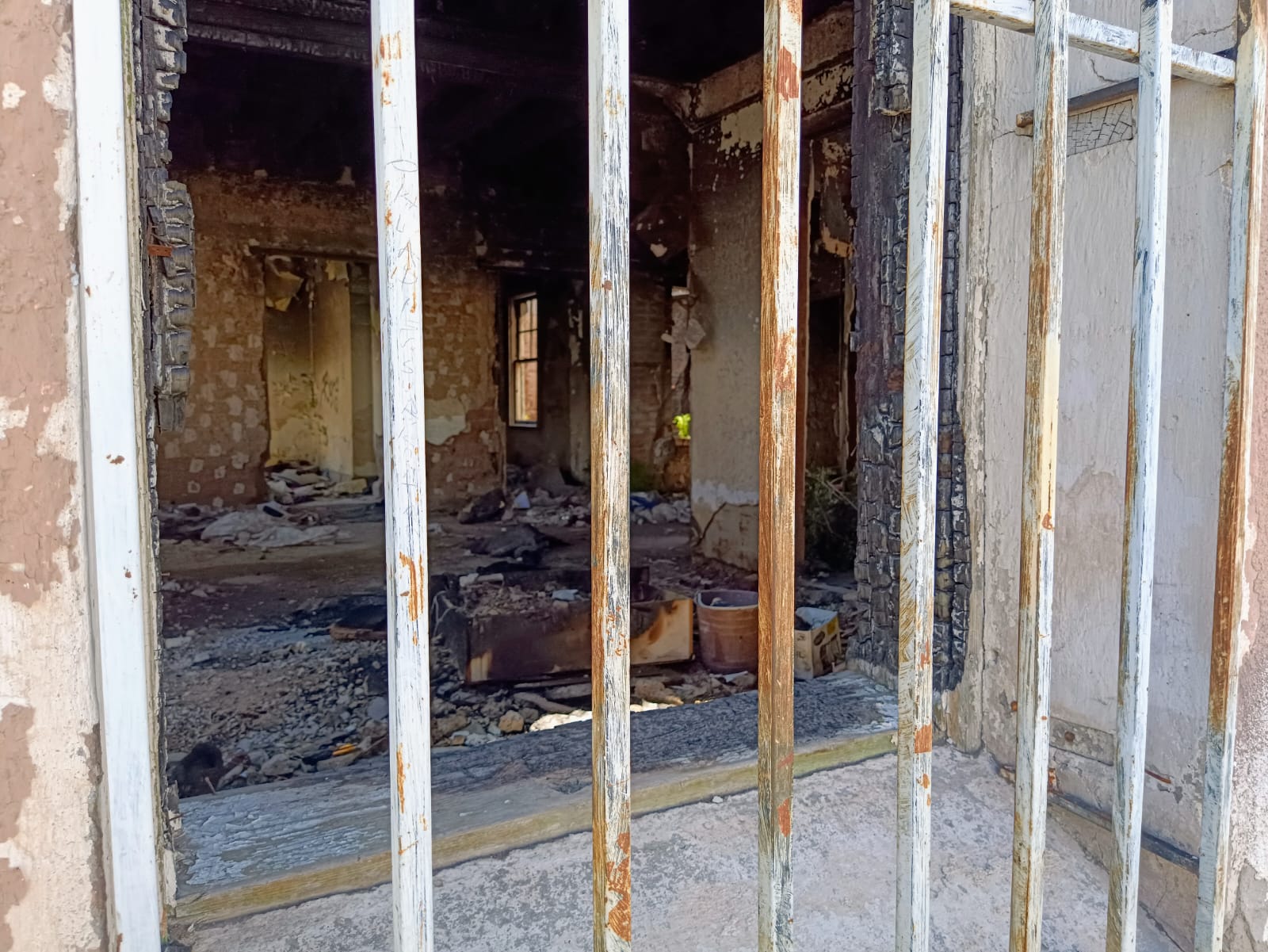
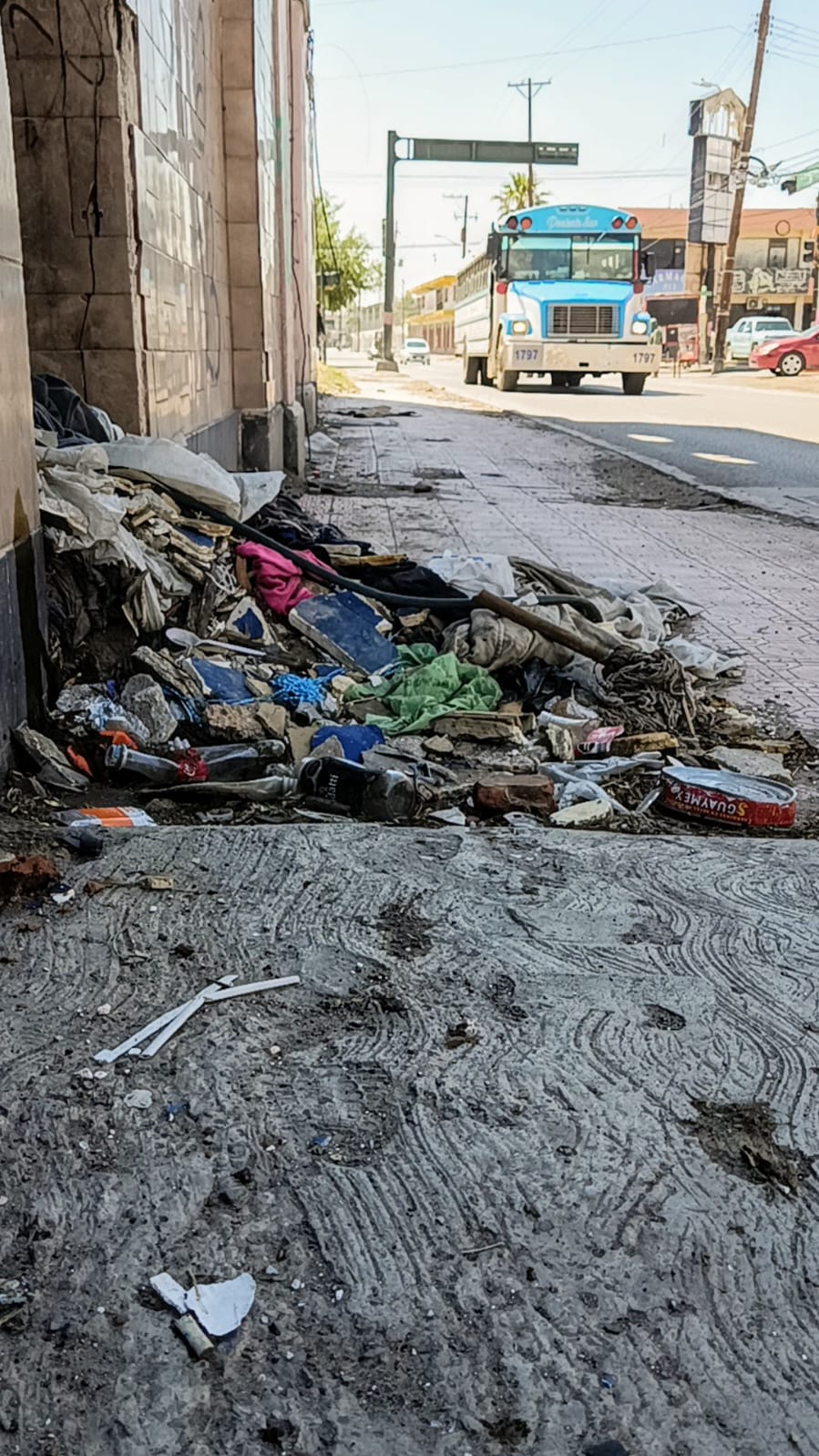
This abandoned housing has a social impact, becoming places that generate an environment of violence affecting the safety of the colony’s residents, as they become «dumpsters, public restrooms, drug consumption sites, homes for homeless people, or shelters for criminals,» according to the document.
Vladimir Hernández Hernández, coordinator of Doctorate in Urban Studies at UACJ, pointed out that in the city center, there’s also a displacement of residents from traditional sectors due to property price increases.
«We observe certain traditional areas of the city that exhibit a relative centrality and proximity to the traditional center, such as the Hidalgo neighborhood. We also notice here other recently authorized housing developments. A vertical residential tower was erected very close to the traditional city center as well, but it comes with costs exceeding two or three million pesos. Therefore, this housing isn’t or won’t be within reach for the majority of the population,» he explained.
Furthermore, María Teresa Vázquez, a research professor in the Master’s in Urban Planning at UACJ, commented that issuing permits for housing development in non-viable areas increased social and violence-related problems, mainly in the southeast of the city.
The researcher mentioned that some of the issues arose due to omissions in the Municipal Plan and the State Plan for Sustainable Urban Development, following the approval of permits to construct new housing developments outside the Peripheral Containment Ring.
«As a planner, I don’t just look at the dimensions or measurements of a house, but also consider the surroundings. For instance, the presence of water, transportation, cultural activities, schools, hospitals, and healthcare services. It should be a safe area since security is of utmost importance,» she said.
Residents interviewed for this report in the southeast of the city mentioned problems such as lack of basic services like electricity, water, garbage collection, paving, and public transportation, which fail to meet Unitated Nations (UN) parameters for decent housing regarding availability of services, habitability, accessibility, and location.
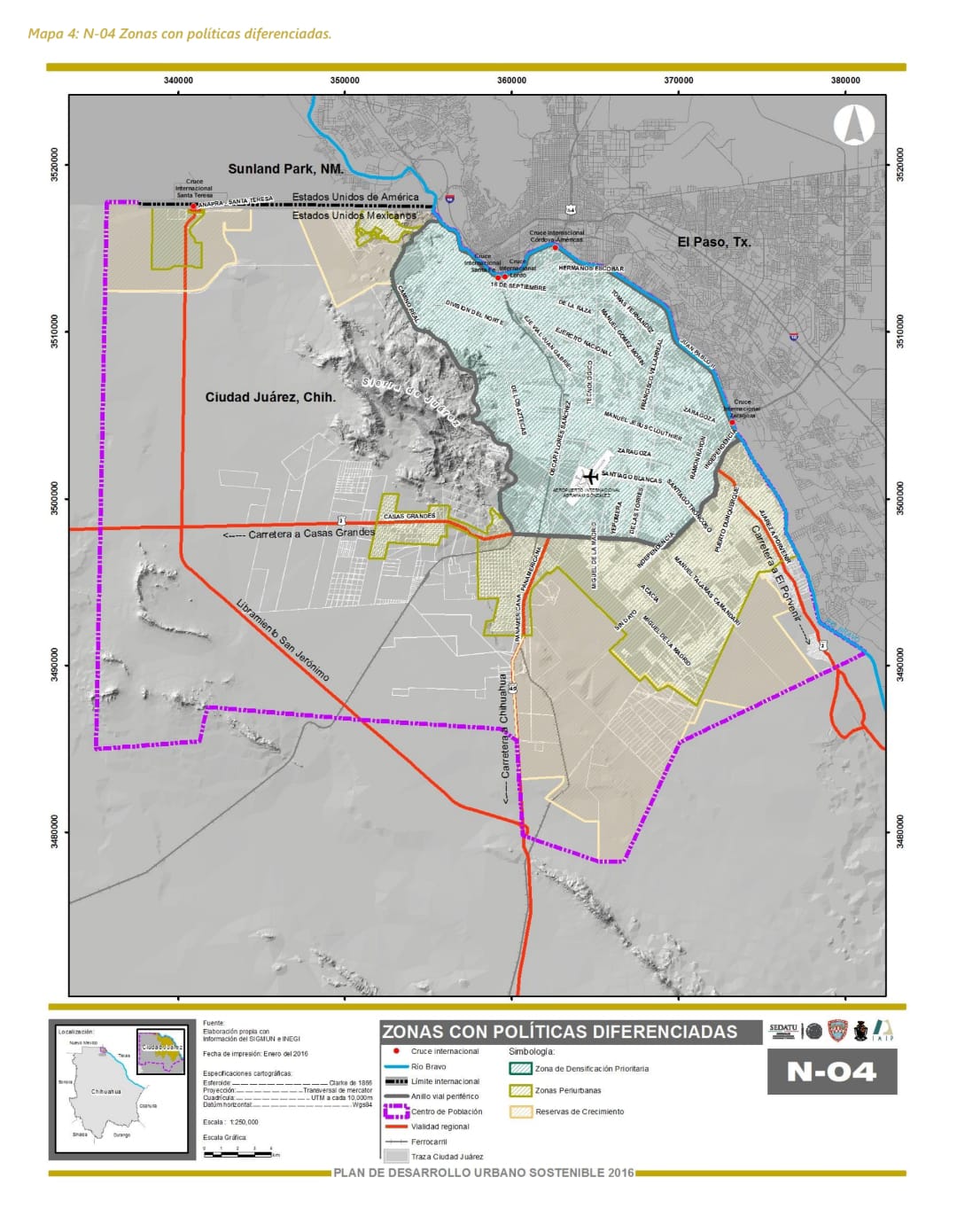
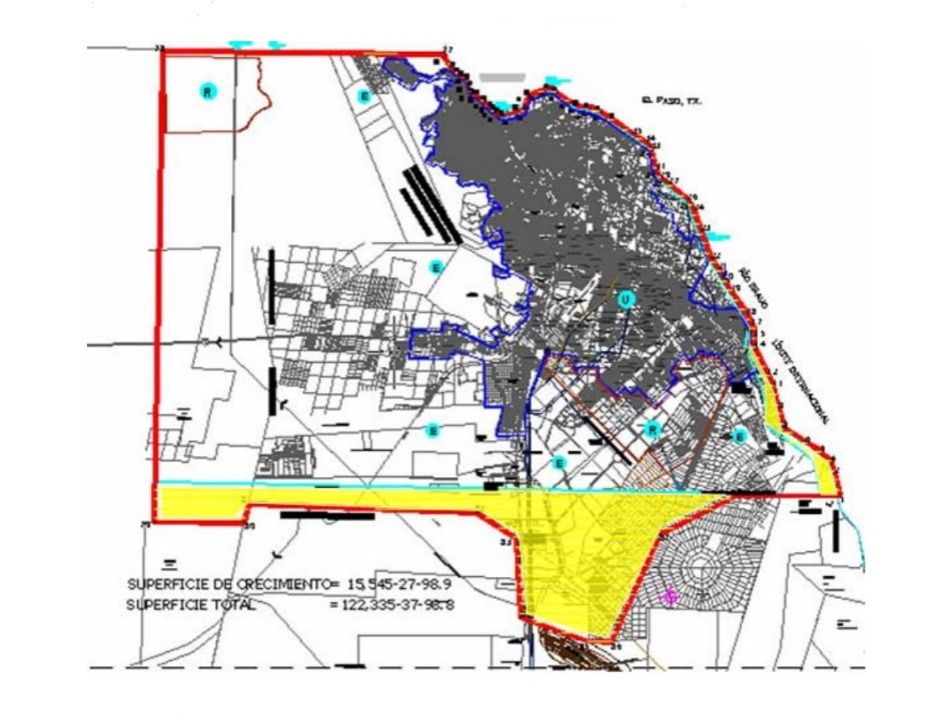
According to the Normativity chapter of the 2016 Sustainable Urban Development Plan for Ciudad Juárez, the Priority Densification Zone (Zona de Densificación Prioritaria, ZDP) is the area where city buildings and population should concentrate to promote more compact and efficient development. This zone is delimited by the Peripheral Ring Road which consists of a series of controlled access routes, divided into three subzones.
Map of the Peripheral Ring Road that delimits where the population should concentrate to have urban facilities and services / Source: IMIP
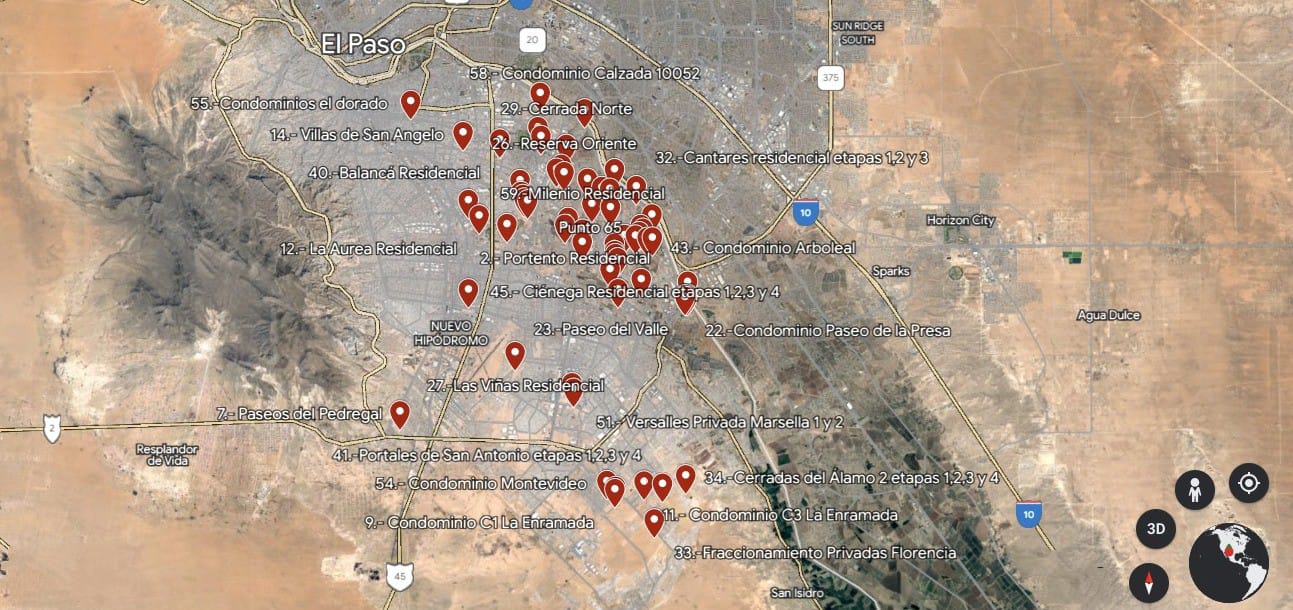
However, despite the issues faced by residents in both the southeastern and central parts of the city, as highlighted by experts and inhabitants, from 2018 to 2023, spanning two municipal administrations – the mayor’s Armando Cabada Alvídrez and Cruz Pérez Cuéllar – authorities approved the construction of 69 housing developments in various areas of the city. This approval was in accordance with requests 080155923000272 and 080155923000273, submitted to the City of Juárez through Transparency.
Of these housing developments, none were constructed in the Historic Center zone to promote urban densification, as outlined in the Sustainable Urban Development Plan. At least 16 of them were approved beyond the Peripheral Ring Road.
Marina Contreras Saldaña, a sociologist and Ph.D. in Urbanism from UACJ, stated: «What is needed precisely is the consolidation of urban voids, ensuring that all necessary services are provided within the existing urban area. We shouldn’t just promote city expansion due to available land; we should also plan for the city we desire.»
INCREASING INSECURITY
From January to June 2023, Ciudad Juárez recorded 568 intentional homicides, according to data from media monitoring conducted by the Citizens’ Observatory of the Trust for Competitiveness and Citizen Security (Observatorio Ciudadano del Fideicomiso de Competitividad y Seguridad Ciudadana, FICOSEC).
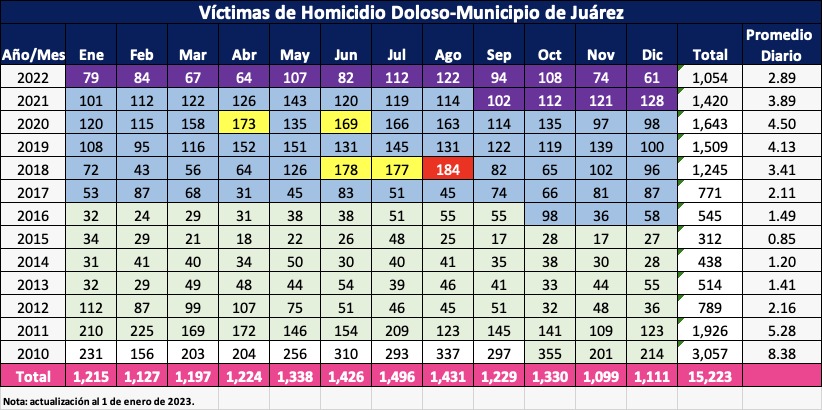
Furthermore, between january 2018 and december 2022, there were 6,871 intentional homicides in Ciudad Juárez. This averages to 3.87 murders per day over the past five years, nearly 4 daily murders, based on information from the FGE.
Table death rate recorded in Ciudad Juárez from 2010 to 2022 / Source: FGE
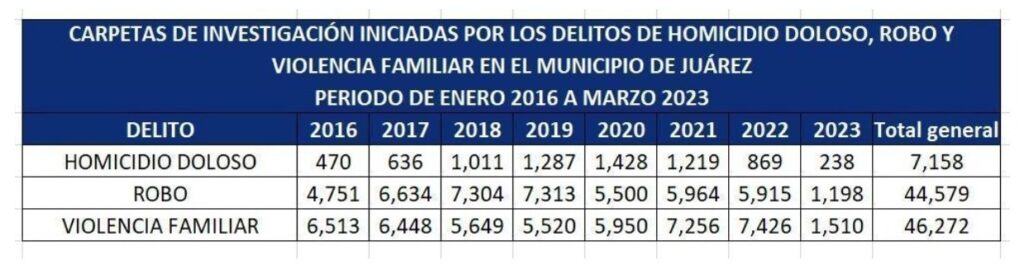
Through request 080139723000393 made via transparency, the FGE reported that between January 1 and March 31, 2023, they had a total of 1,436 ongoing investigations for intentional homicides and robbery. Among these cases, 238 were related to homicides.
From 2016 to 2023, the neighborhoods in the city center with the highest number of complaints were: Margaritas with 149; Centro with 146; Infonavit Casas Grandes, 85; Riberas del Bravo, 68; Chaveña, 53; Salvárcar, 50; Anahuac, 36; Parajes de San Isidro, 31; and Senderos de San Isidro, 17.
In the southeastern part of the city, neighborhoods including Parajes del Sur, Hacienda de las Torres, Toribio Ortega, Portal del Roble, Urbi Villa del Prado, Campestre Virreyes, Tierra Nueva, El Papalote, Sierra Vista, Parajes de Oriente, and Parajes de San José, reported elevated crime rates.
From 2016 to 2022, there was an upward trend in crime. Investigations for intentional homicides increased from 470 to 869, marking an 84.89% rise. Robbery cases climbed from 4,751 to 5,915, a 24.5% increase, and reports of domestic violence increased from 6,513 to 7,426, representing a 14% rise.
Investigation cases for deliberate homicide, robbery, and domestic violence, obtained through Transparency in request 080139723000393
Neighborhoods with the highest number of initiated cases for deliberate homicide, robbery, and domestic violence, obtained through Transparency in request 080139723000393
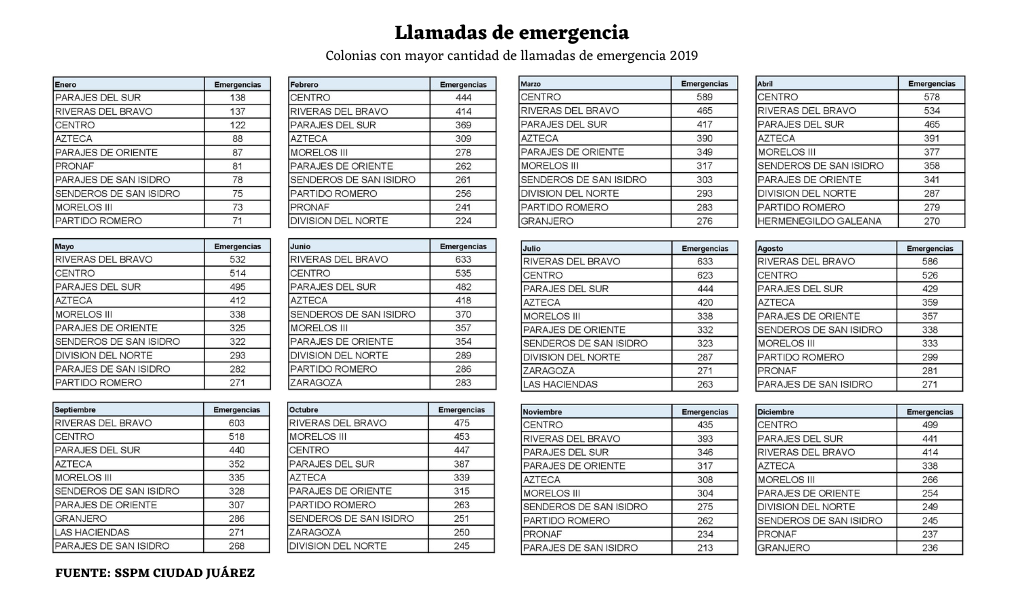
Similarly, the southeast and central areas led in the number of emergency calls made to 911 from 2019 to 2023, according to information from the SSPM, provided through request 080155923000269.
In 2019, the Municipal Police reported 5,780 emergency calls in the central area, and in the southeast, they reported 5,819 calls in the Riveras del Bravo neighborhood, and 4,853 in Parajes del Sur. These were the three neighborhoods with the highest number of calls.
Neighborhoods with the highest number of 911 reports during 2019, obtained through Transparency in request 080155923000269.
César Omar Muñoz Morales, Secretary of Municipal Public Security, pointed out that they record around 600 calls to 911 daily from Monday to Thursday, while the number increases to up to a thousand calls on weekends.
«The main reasons for calls made to the agent are: number one, excessive noise; number two, domestic violence; number three, non-injury traffic accidents; and number four, business alarms. This is just to provide context, and as I mentioned earlier, the vast majority of these calls come from the southeast of the city.»
However, Oscar Villalobos, Chief of the Immediate Response Center 911 (Centro de Respuesta Inmediata, CERI 911), shared that they receive an average of 2,000 to 4,000 calls daily, with a monthly total ranging from 24,000 to 26,000 calls.
He mentioned that some of the neighborhoods identified with more issues include: Aztecas, Felipe Ángeles, Pánfilo Nájera, Parajes del Sol, Hidalgo, Sierra Vista, and Kilometer 20.
As part of strategies to improve emergency response time and citizen attention, Villalobos mentioned increasing the fleet of vehicles and the personnel of the Police Department as key measures, along with collaboration with links from all federal, state, and municipal departments. The average response time ranges from 5 to 10 minutes.
HOUSING DEVELOPMENTS OUTSIDE THE PERIPHERAL RING ROAD
Social issues in the southern and southeastern areas of Ciudad Juárez have been evident since 2007, as noted by Elvira Maycotte Pansza, a doctor in Urban Development, in her article «Dispersed Cities, Abandoned Homes: Housing Policy and its Territorial and Social Impact on Mexican Cities.»
Maycotte Pansza points out that in that year, the City Council of Ciudad Juárez approved the incorporation of 122,335 hectares in the south and southeast, expanding the construction zone without considering the Urban Development Plan.
However, housing occupation was lower in the period from 2001 to 2006 in relation to the number of incorporated lands through legal expansion.
Expansion of the Legal Land Reserve / Photo: General Directorate of Urban Development of the Municipality of Juárez. «Observations and adjustments to Partial Plans and urban planning instruments in public consultation. Ciudad Juárez, Chihuahua. March 2007»
By 2018, according to the Periurban Zone report of Ciudad Juárez, the population in that sector increased to just over 440,980 inhabitants (IMIP, 2018), with 124 regular and irregular settlements.
Urban sprawl has been concentrated in the southeastern part of the city, especially in the last 20 years. Despite being rapid growth, it has mainly occurred outside the peripheral ring road, in accordance with the 2040 Sustainable Urban Development Plan of Ciudad Juárez.
The «Talamás Polygon Action Plan» states that, according to information from the General Directorate of Urban Development, during the 2013-2016 administration, 9,153 housing lots for new housing were authorized, of which 76 percent were located in the southeastern periurban area.
The plan also indicates that by 2019, there were 19,000 authorized housing lots yet to be built; some of them approved over ten years ago that haven’t been developed or built completely.
The «Talamás Polygon Action Plan» aimed to restrict new housing development to reduce urban deficits and ensure the non-dispersion of new housing developments.
However, the City Council of Ciudad Juárez approved the revocation of this project on december 14, 2022, even though it had been voted in favor in 2019.
After nullifying this regulatory framework, the City Council authorized the construction of the «Portales San Antonio Phases 1, 2, 3, and 4» single-family subdivision, emphasizing the importance of road consolidation and public transportation due to deficits in the area.
According to the contract, the construction of the Portales de San Antonio Phases 1, 2, 3, and 4 subdivision would consist of 720 single-family housing lots and five commercial reserves with a total area of 189,116.269 square meters. This means each lot would have a dimension of 262.66 m2.
In March 2018, the municipality also approved the construction of a subdivision containing family lots of 130 square meters for the developer Ruba Desarrollos SA de CV, located in the southeastern part of the city. This project was conditioned on a road project as well as drainage projects.
Housing developments approved by the City Council of Ciudad Juárez from 2018 to 2023 / Created using Google Earth
According to Article 201 of the Construction Regulations for the municipality of Juárez and its Complementary Technical Standards, authorization to build homes requires them to have a minimum of three habitable rooms, which can include bedrooms, living rooms, study rooms, and dining rooms, as well as a kitchen and a bathroom with a toilet, a sink, and a shower, along with their own parking area.
Additionally, Article 199 establishes that habitable rooms must meet certain minimum dimensions, such as a ceiling height of no less than 2.40 meters, a habitable room of at least 14.00 square meters in each dwelling, and a minimum separation of 2.50 meters between parallel walls.
However, the contracts of the subdivisions approved by the City Council of at least two administrations do not mention these specifications.
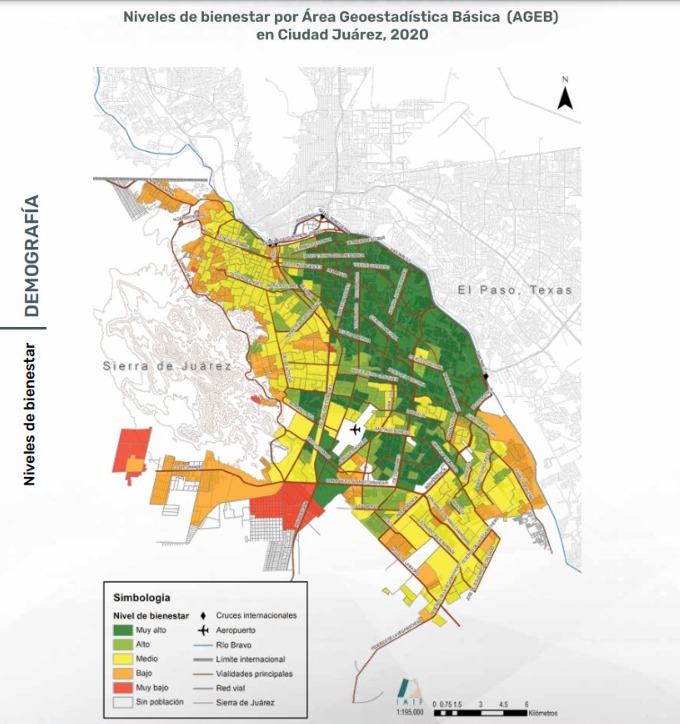
Levels of social well-being by AGEBS in Ciudad Juárez, where it is observed that in the southeast, the indices are medium, low, and very low / Source: IMIP
UNOCCUPIED HOUSING AND OVERCROWDING
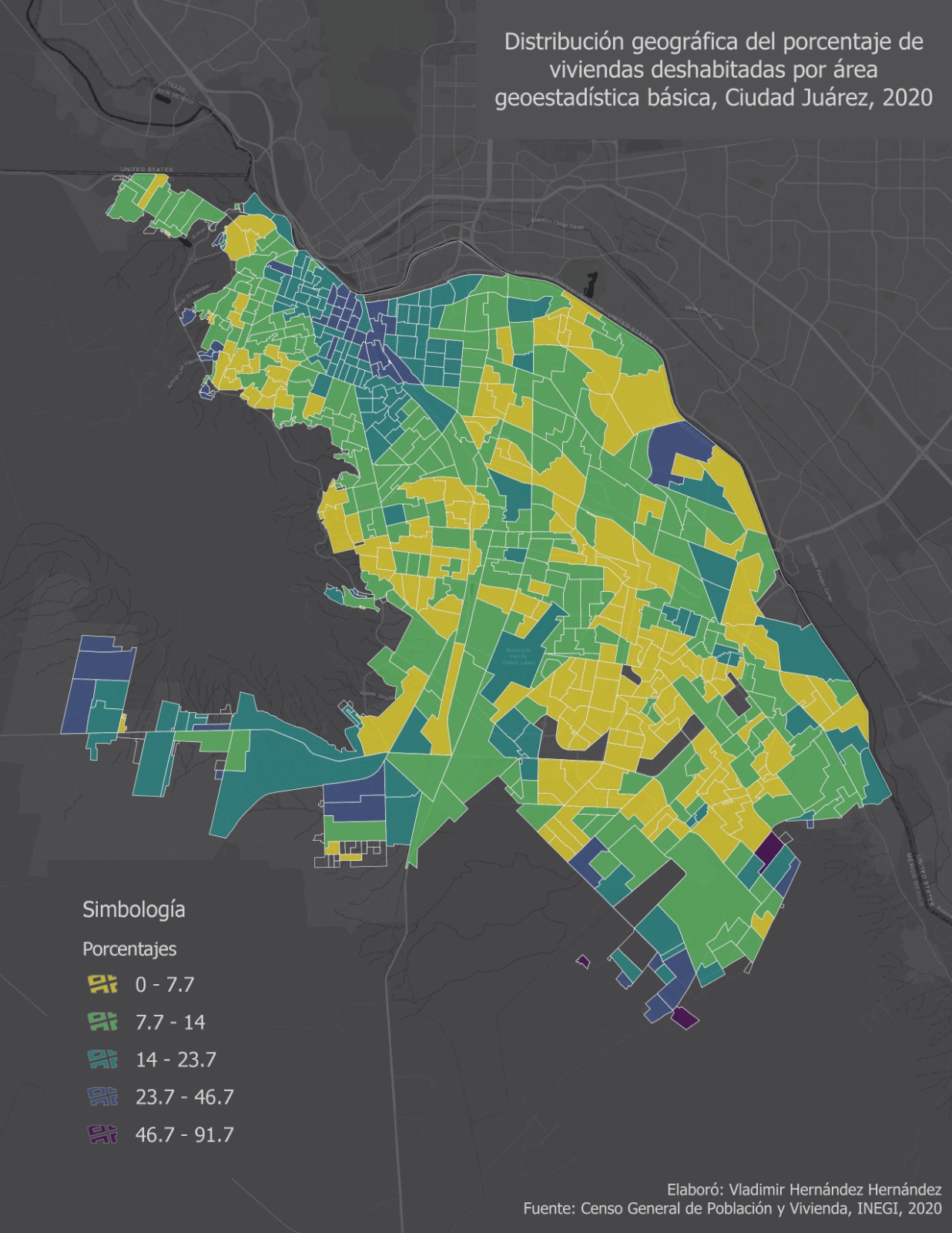
According to information from the 2020 Population and Housing Census, there were 56,379 unoccupied houses in Ciudad Juárez, which represents 10.8 percent of the total in this border city. Of that figure, 14,411 were for temporary use.
Meanwhile, the southeast area had a dimension of 9,849 hectares, where just over 440,980 inhabitants lived, according to the 2018 Periurban Zone Diagnosis Report.
Geographical distribution of the percentage of uninhabited housing by AGEBs in Ciudad Juárez, with data from the National Institute of Statistics and Geography “INEG by it’s acronym in spanish “2020 / Created by Vladimir Hernández Hernández
Regarding this sector, 65-year-old Evaristo Vargas, a resident of this area for 25 years, commented that one of the most serious issues is the lack of pavement and security.
«Sometimes the patrols trucks do pass by, but occasionally and often they come at night, but only to bother the people who are coming home from work at that time because apart from stopping them, they even take their money», the citizen denounced.
He explained that moving to another part of the city is complicated since there isn’t a public transportation route that runs within a kilometer of where he lives, while garbage collection is another problem, as even though the collection units sometimes pass at least once a week, there are times when it can go up to a month without happening.
Housing located in the southeast, near the Cerrada de Santa Isabel 2 housing development, which is surrounded by at least seven maquiladoras / Photo: Aimé Salinas
Similarly, 33-year-old Lorena Méndez, a resident of Portal del Roble subdivision for nine years, commented that there’s a very unsafe environment, as finding bodies in an adjacent vacant lot is recurrent.
Regarding services, she reported that the electricity supply constantly fails, and during hot weather, the same happens with the water supply, sometimes going up to four days without service.
«PASA (The garbage collection service contracted by the Juárez municipality) can take up to a month without coming by; it’s rare when it comes on the scheduled days. Sometimes, a lot of trash accumulates as a result. Right now, it’s the time when the warm weather begins, and there are flies and all that,» Lorena added.
Sergio Meza de Anda, director of the civil association «Strategic Plan of Ciudad Juárez» (Plan Estratégico de Ciudad Juárez) indicated that the issue of vacant housing has been present for years, and the southeast is one of the most lagging sectors.
«We, as part of the Neighborhood Network, are working every day with Public Services, Waste Management, Public Works, Urban Development, with everyone. The thing is, despite all this effort, there’s still this deficiency, and these are things that need to be addressed within the waste management service».
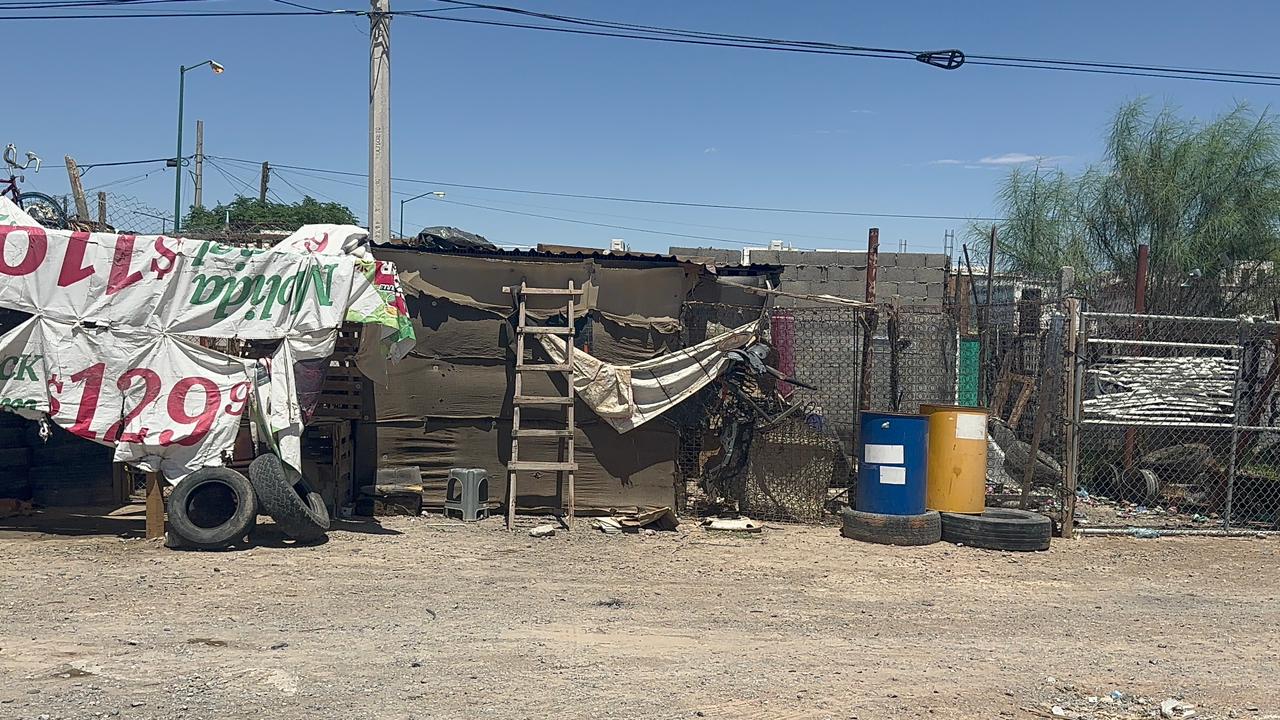
Residents of the southeast have repeatedly complained about the lack of services such as electricity, transportation, and garbage collection / Photo: Aimé Salinas
Vladimir Hernández Hernández, coordinator of the Doctorate in Urban Studies at UACJ, pointed out that two years ago, a postgraduate student conducted research on mobility and found that people living in the southeast spend more time, on average, commuting than people living in other parts of the city.
«People using public transport spend about two and a half hours commuting, even when public transport is accessible. Additionally, they have to walk about 20 or 25 minutes to reach the station where they board public transport. There are situations that involve more expenses, apart from the cost of public transport, such as expenses related to other services that are far away», he said.
In addition to housing costs, there are other expenses that are generally less visible, such as access to healthcare, education, and food, which increase when living far from the city center.
Marina Contreras Saldaña, sociologist, and a professor and doctor in Urbanism at UACJ, stated that according to figures from the 2020 INEGI Census, there are over 54,000 vacant homes in Ciudad Juárez. She clarified that this doesn’t mean they are ready to be occupied or that they don’t have owners.
She opined that the housing problem is multifaceted. On one hand, there’s a growing number of empty houses and developments experiencing depopulation. On the other hand, a considerable number of people cannot afford available housing due to high costs, even for renting.
«It doesn’t match their income capacities, which leads the new generations, in the establishment and formation of their families, to seek an alternative for new housing. However, it turns out that the current market’s offering is not so much new housing but rather reclaimed housing, which isn’t necessarily in good condition».
While new houses are still being built, the lack of a prohibiting law and the existence of certain factors allow for this trend.
Regarding violence in certain areas, she shared that two relevant theories exist: the first is «the broken windows theory», which suggests that a degraded and lawless environment can encourage criminal behavior. The second theory is «the eyes on the street theory», which highlights that less population and social life in the streets mean less social surveillance over possible norm violations.
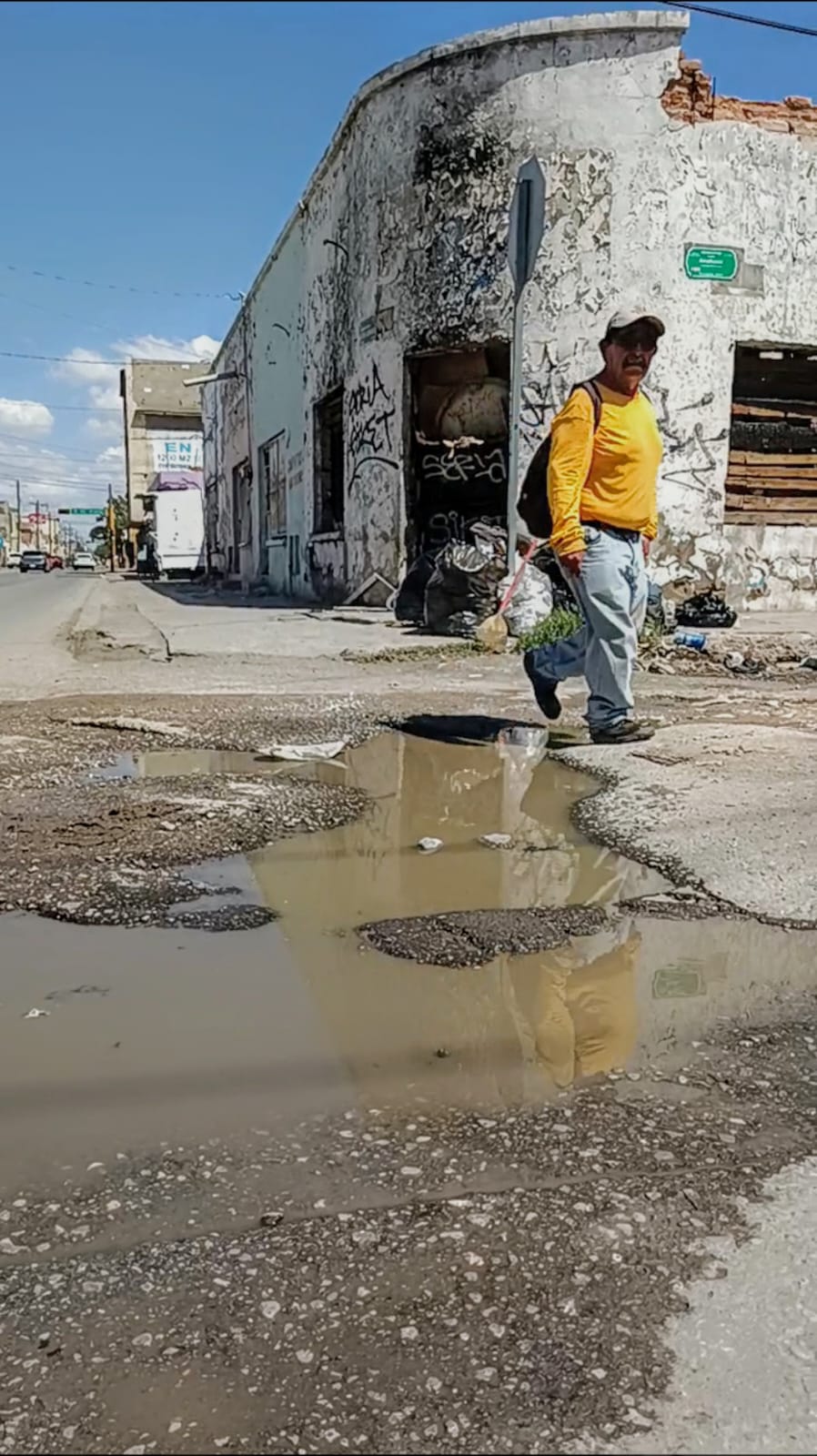
The downtown area is home to dozens of abandoned houses which, unlike the southeast, are surrounded by other occupied houses / Photo: Angélica Villegas
In both sectors, however, two opposing phenomena occur. On one hand, there are thousands of abandoned homes, while in the same sector, population overcrowding is observed.
The 2022 report by the Pan American Health Organization notes that overcrowding happens when there is more than one person per room, and critical overcrowding occurs when there are more than 1.5 persons per room (excluding bathrooms, balconies, porches, vestibules, hallways, and half rooms), which is the case in many homes in the southeast of the city.
According to the Socioeconomic Overview 2022-2023 of the Municipality of Ciudad Juárez, an average of 3.42 people live in one dwelling. However, in terms of social well-being, there is a lag in different variables of living conditions such as education, educational lag, occupants per dwelling, per room, housing conditions, available services, among others.
Uninhabited houses are commonly occupied by homeless people; however, due to lack of maintenance, their structure is highly deteriorated / Photo: Angélica Villegas
Yadira Cortés, a member of the Women’s Network Mesa (Red Mesa de Mujeres), highlighted that in the southeast, the overcrowding problem also contributes to generating violence, as sometimes up to 15 people share spaces of only 30 square meters.
«A group arrives from other states, they go into a small house, and then the cousin comes, the brother comes, the aunt comes, the mother comes, and they keep crowding into the same little house until they find another one, if they find one at all», she explained.
A similar situation has been seen in the Historic Center area of the city, after the arrival of migrant people, who occupy uninhabited and underserviced homes.
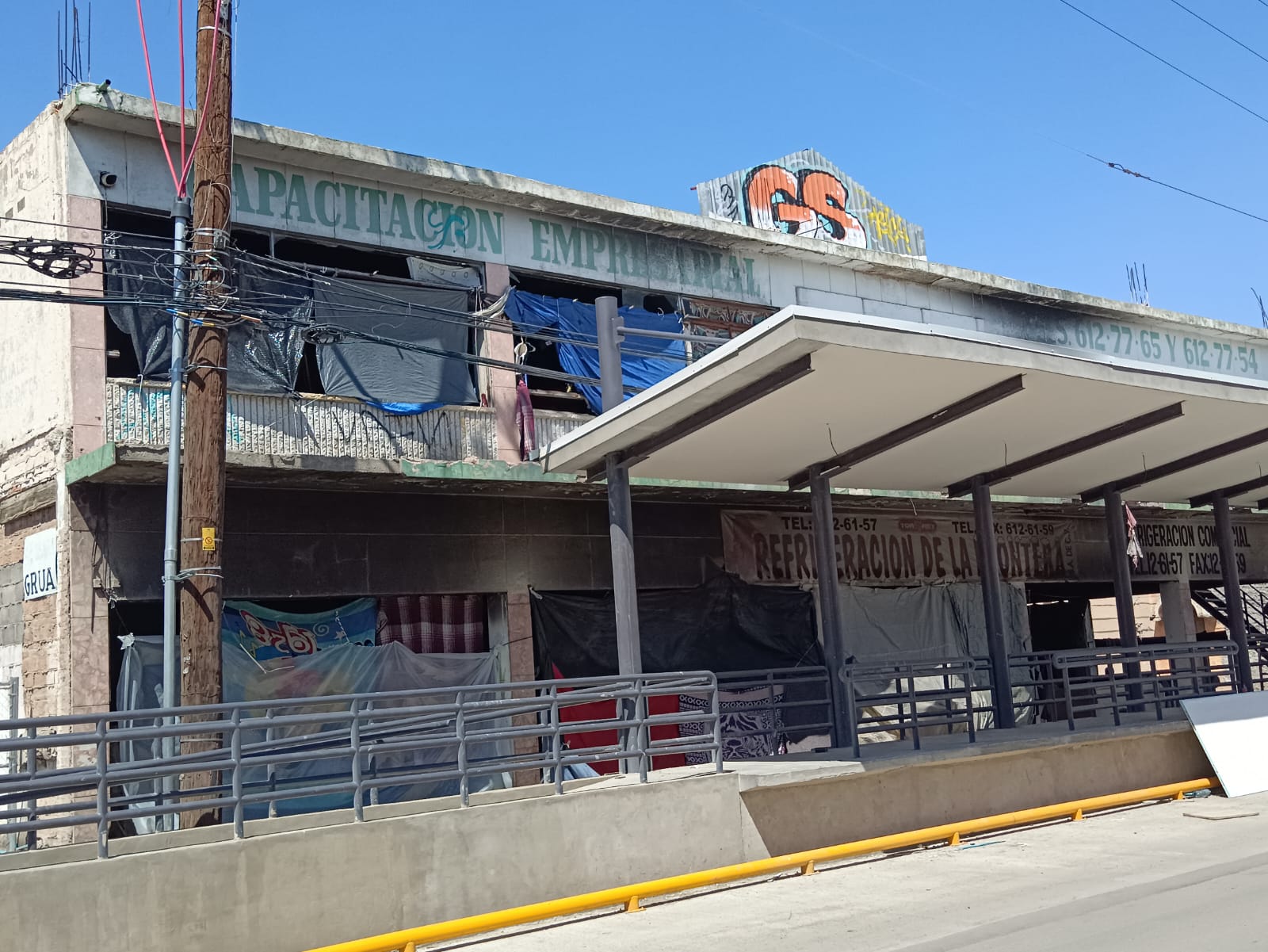
In the city center, abandoned businesses are also observed, with their spaces being occupied by migrant individuals / Photo: Angélica Villegas
Regarding this, councilman Joob Quintin Flores Silva, coordinator of the Historic Downtown Recovery Commission (Comisión del Centro Histórico), confirmed that the downtown area and southeast of Ciudad Juárez are the most problematic zones in terms of insecurity, correlating with abandoned housing.
He commented that the Historic Downtown, like in many cities, was once the heart of activity and the most important reference point.
However, with the growth of the border, the area experienced progressive abandonment, not only of homes but also of commercial streets, where dozens of abandoned properties exist.
«Abandoned housing areas like the southeast of the city and the downtown area are the most violent points in the city. There’s no magic formula, right? If this part is abandoned, it serves as a nest for criminals to hide», he explained.
Despite being located in busy areas, some buildings have remained vacant for many years / Photo: Angélica Villegas
This idea is also reinforced in the «Renewal and Urban Recovery Plan for the Seven Historic Districts», as in the Chaveña neighborhood, it had a population of 10,888 in 2000, which reduced to 7,793 in 2005 and 6,170 in 2010, with an estimated further reduction to 4,885 in 2020.
Just taking a walk along Vicente Guerrero Avenue revealed at least 20 abandoned homes and properties, some even occupied by migrant populations who have arrived massively since last year.
POTENTIAL SOLUTION: VERTICAL HOUSING
The 2016 Sustainable Urban Development Plan states that there are five key factors for urban densification. It explains the need for immediate, medium, and long-term actions such as more compact and denser urban patterns, comprehensive and sustainable public transportation, and proposes promoting accessible vertical housing for the population.
«Multiple types of housing on various levels can be mixed with commercial uses on the ground floor to diversify alternatives, including rental options for a certain market segment», the document states.
It also mentions that there are some deteriorating areas, such as the Historic Center of the city, where sales and rental housing schemes can be combined. While in those areas with potential for secondary development (considered as areas within the city for building infrastructure and urban facilities), it would be feasible to apply a series of incentives to support projects that densify the city, recovering its value and improving the environment of this part of the territory.
The specialists interviewed for this investigation concluded that, to truly improve the situation of marginalization, lack of services, and insecurity in the city, compacting the city is necessary, as there are even people in the southeast who have never visited the downtown area of Ciudad Juárez.
In addition to the houses, many streets and urban infrastructure in the downtown área show noticeable deterioration / Photo: Angélica Villegas
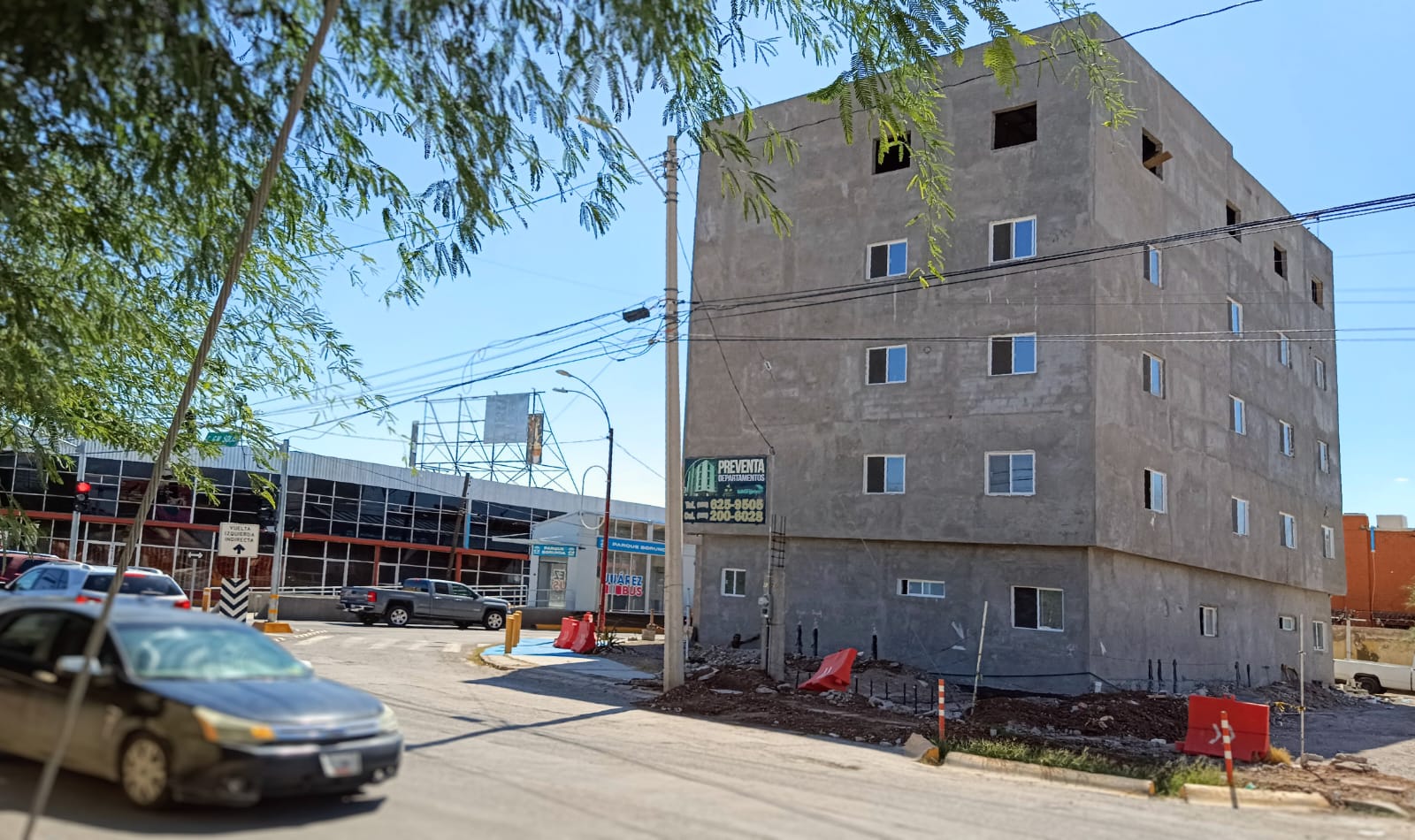
Vladimir Hernández Hernández, coordinator of the Doctorate in Urban Studies at UACJ, pointed out that one of the solutions to avoid expanding the urban area and generating lower accessibility costs in the city is to promote vertical housing.
He emphasized that despite the existence of several ongoing projects, the areas where they are being built are for higher-income population groups.
Marina Contreras Saldaña, a doctor in Urbanism, expressed that local authorities are overwhelmed by their capacities because they govern for short periods of time and seek immediate results without proper city planning.
«We have institutions with limited budgets, short administrative periods, and political or non-political parties that expect short-term results to promote their long-term campaigns.
Furthermore, developers aim for profit maximization, and in doing so, many responsibilities are transferred to the local government, she pointed out.
«Peripheries are built in the farthest locations without first establishing connecting roads, and these responsibilities are transferred to local governments, which then face budgetary challenges and the limitations of their governments».
Specialists pointed out that vertical housing projects encourage urban densification, but existing ones tend to be expensive / Photo: Angélica Villegas