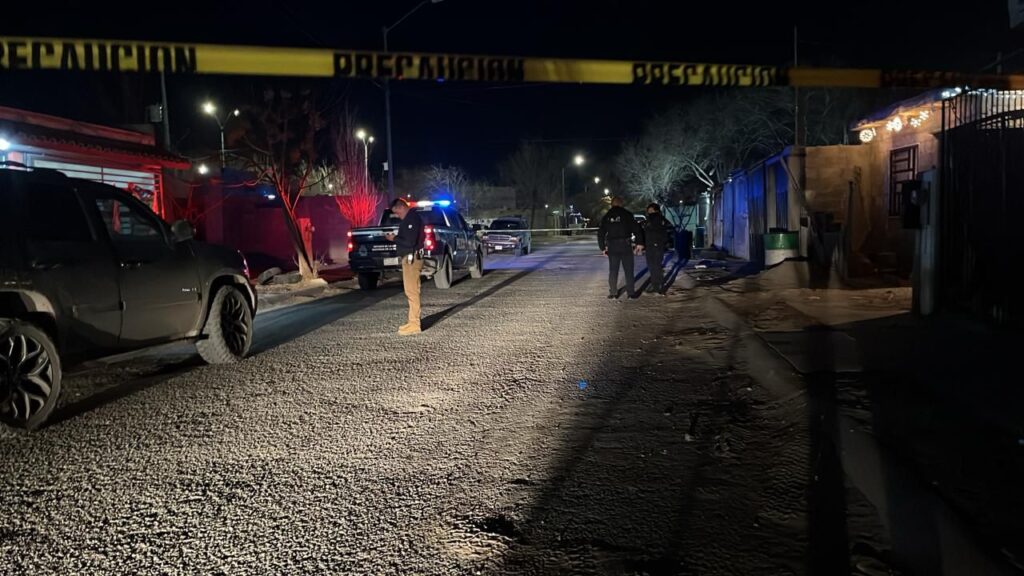
Pese a que autoridades estatales y municipales han declarado que los homicidios dolosos van a la baja, hasta el 31 de octubre de este año, en Ciudad Juárez documentaron 973 casos, según el seguimiento realizado por este medio.
Mientras que, de acuerdo con datos de la Fiscalía General del Estado, hasta octubre del 2022, las autoridades reportaron un total de 919 asesinatos en esta frontera.
Lo anterior representa un incremento del 6.12 por ciento, con relación al año pasado.
Agentes ministeriales resguardaron la zona donde un hombre fue ejecutado, en la avenida Plutarco E. Calles cruce con Hermanos Escobar / Foto: Redacción
Cabe resaltar que durante septiembre de este año se realizó también el descubrimiento de nueve esqueletos dentro de una vivienda localizada en la colonia Portal del Valle.
Sin embargo, en el conteo global del 2023 no se consideraron a las 40 personas migrantes que fallecieron en el incendio registrado el 27 de marzo dentro del Instituto Nacional de Migración (INM); incluyendo estos datos, la cifra se elevaría a mil 13 homicidios hasta el 31 de octubre de este año.
De acuerdo con el seguimiento realizado por este medio, de enero a mayo el número de homicidios dolosos superó a los registraron en el mismo periodo del 2022, pues en este 2023 se registraron 492 asesinatos en este periodo, frente a los 401 del año pasado.
Mientras que los meses más violentos en este año han sido mayo con 110, julio con 101, agosto con 109, septiembre con 100.
Un hombre fue asesinado dentro de una vivienda ubicada en las calles Fray Antonio de Tabares y Refugio de la Libertad, en la colonia Fray García de San Francisco / Foto: Redacción
Despite the fact that state and municipal authorities have declared that intentional homicides are on the decline, as of October 31 of this year, 973 cases were documented in Ciudad Juárez, according to the monitoring carried out by this media.
Meanwhile, according to data from the State Attorney General’s Office, as of October 2022, authorities reported a total of 919 murders on this border.
This represents an increase of 6.12 percent compared to last year.
Ministerial agents guarded the area where a man was executed, on Plutarco E. Calles Avenue at the intersection with Hermanos Escobar / Photo: Staff
It is worth mentioning that during September of this year, nine skeletons were also discovered inside a house located in the Portal del Valle neighborhood.
However, the overall count for 2023 did not include the 40 migrants who died in the fire that took place on March 27th inside the National Migration Institute (INM); including this data, the figure would rise to 1013 homicides as of October 31st of this year.
Check out this article, it might catch your interest
According to the monitoring carried out by this media, from January to May the number of intentional homicides surpassed those registered in the same period of 2022, since in this 2023 there were 492 murders in this period, compared to 401 last year.
While the most violent months this year have been May with 110, July with 101, August with 109, September with 100.
A man was murdered inside a house located on the streets Fray Antonio de Tabares and Refugio de la Libertad, in the Fray García de San Francisco neighborhood / Photo: Staff
Thirty-three months ago, 19 migrants were killed by Mexican police, who shot at them and then set their bodies on fire, in Camargo, Tamaulipas. Sixteen were Guatemalans. In a historic way, the case was sentenced. After this event, many things have changed, others have not. On the one hand, migration continues, but now there is a reason to trust in justice. The Jesuit Network with Migrants accompanied them on this journey and tells Plaza Pública about the complexities of this case.
This October 30, 2023, after more than two years of suspensions and delays, the unit trial judge of the Supreme Court of Justice of the State of Tamaulipas, Patricio Lugo, sentenced 11 Mexican state police officers to serve 50 years in prison for their participation in the massacre that took the lives of 19 people on January 22, 2021.
Among the deceased, 16 were from Guatemala, one from El Salvador and two from México. According to information from the Attorney General’s Office, two of them were in charge of taking the migrants to U.S. territory.
For the Mexican justice system, this ruling was possible because one of the police officers who participated in the events, Ismael Vázquez, took advantage of the opportunity criterion and confessed to what happened that day. For his collaboration in the case, he was the only one sentenced to 19 years.
More than 60 testimonies and documentary evidence were presented to prove the guilt of the 12 accused. The accusations were: 11 accused of aggravated homicide, 12 of abuse of authority – crimes committed in the performance of administrative functions – and one for the crime of false reports given to an authority.
Ángela López, 52, mother of Marvin Alberto Tomás López, in the kitchen of her home in Comitancillo, in the company of his father, Hipólito Mauricio, 78, and grandson Aldo Mateo, in March 2021 when the burial took place / Simone Dalmasso.
For both México and Guatemala, this sentence is emblematic and historic as it is the first conviction of state agents for a massacre of migrants.
From Guatemala, the lawyer of the Jesuit Network for Migrants (RJM), Ángel Escalante, has accompanied and provided legal advice to the families of the 16 Guatemalans who died, in conjunction with the Foundation for Justice and the Democratic Rule of Law, based in México.
As he explains, after the conviction the judge listened to the testimony of the families of the victims to determine the details of the sentence, as well as the reparation measures that the neighboring State should take in favor of the affected families.
A tragedy, two years ago
María Marcelina Mauricio, mother of Anderson Marco Antulio Pablo, recalls that she felt her «soul was ripped out» the day she confirmed that her son was one of the victims killed in the Camargo tragedy. At the time she was pregnant with her youngest daughter. However, the impact of the news had repercussions on her physical and emotional state, to the point of affecting the baby as well.
The child, doctors told her, would not live long. «I felt that my life no longer made sense without him, but thank God at this point I am still alive. It is very hard, very painful to be able to explain what we felt, what we have lived through all this time», she recalls now, more than two years after that event.
Anderson Marco Antulio was 16 years old when he undertook the risky journey to the United States. So were 15 other Guatemalans. Most of them not older than 35, young men and women. Twelve of them were originally from Comitancillo, two more from nearby municipalities in San Marcos and another two came from Granados, Baja Verapaz.
Sister of Anderson Marco Antulio, with the photograph of her brother repatriated after two years, in Comitancillo, San Marcos / Eduardo Say
Given the lack of orientation and the need for support, the parents and relatives of the deceased requested the help of RJM, an organization that provides support to people in transit and that in addition to this case provides accompaniment to more families of Guatemalan migrants who have died in inhumane conditions. For example, on the occasion when more than 50 people died locked in a van that was abandoned in Texas, or in the fire that occurred in a migrant station in Ciudad Juárez.
The first thing the families asked for, recalls José Luis González, the Jesuit priest who coordinates the Network, was a prayer.
«Marco Antulio Pablo called us to see if we could support him and other families. We said yes and also asked him to confirm if they were his children. Why are you so sure it is them? We later found out why», he says.
Both Marco Antulio and other family members had been in communication with their children, siblings and parents who were on their way to the United States. Some of them received calls and audios minutes before what happened. They were messages telling what was happening, how they were attacked with bullets and how they had been chased, some of them communicated while they were hiding in bushes.
The wake of Anderson Marco Antulio Pablo, in the hamlet La Nueva Esperanza / Simone Dalmasso
The judicial process being carried out from Tamaulipas, México, confirms that, roughly speaking, what happened that day was that the group of migrants traveling in a pickup truck was chased by police, who shot at them more than a hundred times and subsequently burned the bodies.
They then returned to the scene to pick up the shell casings and attempt to alter the scene. To support this chronology, various pieces of evidence were heard and taken into account. The mobile devices of the police officers, to cite one example, proved through the GPS system that they were all present at the scene of the tragedy at the time the victims were killed.
Although the facts of that day are known, what is still unknown is the reason that motivated the police officers to act in that manner. The Tamaulipas Prosecutor’s Office has an open investigation against the intellectual authors; however, there are still no further details on this case.
Forgotten by the State
Comitancillo is one of the municipalities in the country where statistics and living conditions show that there, 250 km from the capital, the State has never invested.
According to the National Institute of Statistics (INE), in the rural area of the municipality, nine out of 10 people live in poverty. In addition, the municipality has the lowest Human Development Index in the entire department of San Marcos.
The lands are mountainous and grow food crops such as beans, corn, peaches, apples, among others. But beyond that, economic alternatives are limited.
For example, González says, for many years the communities have been asking for an institute so that through technical careers young people can develop skills and work in their place of origin. However, their requests go unheeded and beyond field work, there are not many opportunities for development.
The rural area of the department of San Marcos, characterized by its flourishing production of wheat, brussels sprouts and potatoes / Simone Dalmasso
«The massacre did not stop the migration from Comitancillo. Almost all the families of the victims have siblings who in these two and a half years, in spite of the sadness that it caused to their parents and the fear that something similar could happen, have traveled and are already in the United States, they have managed to pass», explains the Jesuit priest, with the property of someone who for more than two years has been close to the 16 families of the murdered migrants.
One of the mothers who mourned the death of her son in Camargo undertook the same journey two years after the event. Migration in recent years, González says, has been savage and the massacre has not stopped it.
In Comitancillo, families have at least six members. And most people have only five years of schooling, according to official data.
In the list of the victims of the tragedy in Camargo, the majority were residents of Comitancillo. Four of them came from the municipalities of Catarina and Concepción Tutuapa, San Marcos; and Granados, Baja Verapaz. Similar places in terms of development limitations.
Otilia Agustín Pérez, RJM psychologist, approached the families of the deceased to accompany them in their mourning process and observed the emotional implications of the lack of growth opportunities in the region.
«We see that the parents feel a lot of guilt for having given them permission or for not having the economic conditions to be able to support them in their studies or in some entrepreneurship, for example. So this is the reality, not only in Comitancillo but also in other places», he explains.
María Morán, 74, receives comfort from a neighbor, during the wake of Adan Coronado Marroquín, in Comitancillo / Simone Dalmasso
The tendency among young people in Comitancillo, as well as in other parts of the country, is that a fundamental part of their life projects is to migrate in order to help their families economically. This desire increases when they realize how much better life is for their neighbors or relatives who have already migrated.
However, the dream is not only limited to having material goods but also to the desire to live in dignified conditions and have access to basic services such as health care. Santa Cristina García Pérez, for example, 20 years old, was one of the victims in Camargo and her main motivation for leaving Guatemala was to look for a job with which to pay for an operation to correct her younger sister’s cleft lip.
Behind these truncated projects, González believes, there is a great responsibility of the State for not guaranteeing the conditions for adequate development.
Two years in search of justice and resilience
The last 33 months have been a struggle for the 16 families to be heard and to have access to a justice system that is not prepared to adequately include them in these processes. The fathers, mothers and even siblings have been able to stay informed and kept abreast of progress in identifying those responsible for what happened thanks to the legal accompaniment provided by RJM in Guatemala and the Foundation for Justice and the Democratic Rule of Law, which works from México.
From the State of Guatemala, neither the Ministry of Foreign Affairs nor any other entity provided them with this service, despite the fact that in 2021, President Alejandro Giammattei made a series of offers to the families and assured that they would receive accompaniment from the government.
But that support received lasted only a few months. «Their help was basically with the transfer of the bodies to their communities for burials, but afterwards there were very curious things. For example, in a workshop we held with the families, the Ministry of Agriculture intervened to talk to the family members and gave them a small bag of seeds, which fit in each one’s hand. They were very surprised», says González.
In the absence of the State, it was the solidarity of the people of Comitancillo, and even the economic support of migrants living in the United States, which helped the families to improve conditions in recent years. Thanks to this, they have all received help to build houses and improve their quality of life. Santa Cristina’s sister, for example, underwent surgery after the tragedy, when the news reached the ears of health professionals.
The sister of Santa Cristina García Pérez watches on the television at home the images of the arrival of the coffins at the Guatemalan air force in Guatemala City / Simone Dalmasso
Since the events, investigations have been launched in Mexico to determine responsibility for these murders. In Guatemala, on the other hand, the Public Prosecutor’s Office (MP) disassociated itself from the investigation, arguing that since the events occurred in another territory, it was not within its competence to investigate. However, they did carry out operations to identify the «coyotes» working in the Comitancillo territory.
Having access to the judicial process was the first major challenge faced by the families. Many of them are people whose main language is not Spanish, in addition to the fact that they had no previous experience or knowledge of such a process. The first reaction of the families to what happened was resignation and apathy. They only wanted to receive the remains of their loved ones, give them a dignified burial and try to move on with their lives.
A few others insisted on the importance of clarifying what happened to prevent something like this from happening again.
In addition to that, due to the fact that at a national level the culture of denunciation is not the predominant one, neighbors and other relatives questioned the need to «wear themselves out» in a trial to achieve justice.
«They felt discouraged because in their community they were told: «Why do you have to go through this very tiring process? Leave your family member in peace, don’t go through this process because it will lead to many illnesses,» says the psychologist who has accompanied them to date.
There was also fear that the resolution of the case would not be favorable for the victims and that there would be reprisals for the family members. «The parents thought that if they lost the case and the police went free, they would come after them. In this process they had to deal with a lot of anguish and anxiety, hours and nights without being able to sleep», González said.
Depression, family disintegration, alcoholism, stress and even health problems affected them. Marcelina’s case is an example of this. When her youngest daughter was born, there were not many life expectations for her. Bringing her back to health was not easy; however, today she is a two-year-old girl who plays and laughs while her parents, Marcelina and Marco Antulio Pablo, remember how hard the journey to a conviction was.
«Remembering this tragedy makes us nostalgic, says Marco Antulio, migrating is not a crime, it is a right, but unfortunately people feel they are the owners of a country, we are not».
The funeral procession accompanies Santa Cristina García Pérez during the long journey from her parents’ house to the cemetery / Simone Dalmasso
In the trial from México, as constantly happens also in Guatemala, there were a series of delays to entrap the process. Because the hearings were being held in Tamaulipas, the judge in charge authorized the families to participate in them by videoconference.
That way they could keep abreast of the progress. Attorney Escalante relates that it was not the State that provided the space and resources for the families to connect to the hearings, but the RJM, who became the legal advisors of the families from the first days after the tragedy, with the support of the Foundation for Justice.
On numerous occasions, the hearings were suspended or interrupted for various reasons. Due to the precariousness of the roads, which are dirt roads in mountains far away from the urban center, for the families to travel from their homes to the center of Comitancillo implied a significant investment of time and resources.
Attending the virtual hearings, therefore, meant sacrificing a day’s work and spending money on transportation. For these reasons, explains Marco Antulio, this process felt like an uphill struggle, where everything seemed to be against the families.
«The distances and economic shortages of the families were so evident that some people had to travel two to four hours to get to the place chosen for the hearings, others had to pay for a private vehicle to take them to the center of Comitancillo, which represented an expense of between 100 and 300 quetzales per person. In addition, losing a full day’s work meant not receiving 50 to 100 Quetzals per person», explains the lawyer on the case.
However, in this back-and-forth, the families formed a support group among themselves so as not to become discouraged and to understand the stages of the trial together. They also understood the importance of reaching a sentence, with the sole purpose of obtaining justice and above all to prevent this from happening again.
José Luis González, the Jesuit priest and coordinator of the Jesuit Migrant Network in Guatemala / Laura Garcia
«Today I think they can talk about the case and I perceive a lot of resilience. One of them told me on one occasion: ‘I have already forgiven, I am not happy to know that the policemen are going to be locked up for so many years because I imagine that they also have children, but I understand that they have to pay. The process is for justice, it is not revenge», says González.
A landmark sentence
In the morning hours of October 30, Judge Patricio Luego read and explained his final sentence. Of the 12 police officers involved, 11 were sentenced to 50 years in prison for homicide, abuse of authority and crimes in the performance of administrative duties.
One of the defendants, Mayra Vázquez, was also sentenced for falsification of reports given to the authority. She was the one who made the police report, which had a series of inconsistencies. In México, the prosecution requested a sentence of 50 years for each victim; however, the country’s legislation establishes that figure as the maximum sentence.
Agent Ismael Vázquez, 28 years old, was the key piece of the investigation because his statements disproved the false reports and testimonies of his colleagues.
On October 30, the 12 police officers involved were sentenced for homicide, abuse of authority and crimes in the performance of administrative duties / Tamaulipas State Attorney General’s Office
In the sentence, which is a little over 1,000 pages long, the families were ordered to pay 335,709 Mexican pesos -about 145,000 quetzales- for each victim. In addition, the sentenced persons were disqualified from holding public office for eight years. As of today, the defense attorneys have ten days to present pleadings and request the reinstatement of the trial. Some of them have already expressed their intention to do so.
There is no exact record of how many Guatemalans die on their way to the United States, due to the subhuman conditions in which they travel, attacks by organized crime, police abuses, kidnappings or assaults, among other circumstances. In recent years, tragedies of this magnitude have not ceased to be recorded. But none of these deaths has been solved, much less resulted in a conviction.
«Of all the massacres, -explains González-, this is the first sentence and that indicates that justice arrives but that it is necessary to have an alliance of organizations such as governments, justice and, above all, to have unity among relatives of the victims, which we believe has been the most important of this process». It was partly a coincidence that most of the victims are from the same municipality, Comitancillo, and this facilitated a certain unity among the relatives.
This sentence is considered a historic achievement that leaves an important precedent for not allowing any more impunity in these cases.
In this tragedy, González adds, the perpetrators were police officers and therefore the State is implicated, it is responsible for what happened. This also makes it an emblematic case.
Since this event, many things have changed in Comitancillo. Others have remained the same.
On the one hand, migration does not stop, it has not even diminished. But today it is not breathing the same air, today those who were skeptical and questioned the effort of the families, to seek justice and assume the wear and tear of a trial of this level, have a reason to trust that there can be no impunity for the death of migrants.
«Just by having achieved the ruling, something very important has changed for Guatemala and the entire region, these cases cannot be allowed to go unpunished. A few months ago such a ruling was unthinkable, because there have been previous massacres that are still awaiting a resolution», explains the RJM coordinator.
Before, the families complained about the time lost between suspended hearings. Today, they assure that their presence and persistence was important to reach this final stage.
«The conception of justice in the families and in the community has changed a lot. People who used to tell them that why go and they would not achieve anything now have a reason to believe in justice», reflects Otilia Agustín.
The aroma of cempasúchil becomes more intense, the cold weather announces the proximity of the deceased and the rush takes over those who prepare the altars.
This is a unique day when our deceased loved ones return from the dead and the path must be illuminated so they do not get lost.
It is a tradition deeply rooted in Mexican culture, a date on which it is believed that the dead return from the dead to visit their relatives.
It is not only a celebration, but also an opportunity to remember and keep alive the memory of those who are no longer physically with us.
This Mexican tradition is a custom for Bryan and his family, who year after year, raise their altar with candles, a bible, a rosary, the favorite dishes of the deceased and the typical pan de muerto.
Bryan and his mother during a visit to the cemetery / Courtesy
While every candle, every pan de muerto and every flower are gestures that express the deep affection they feel for Don René, who passed away three years ago.
So, every November 2, he and his family visit the San Rafael cemetery, located on the outskirts of Ciudad Juarez, where they go to honor their stepfather.
There, they clean his grave, decorate it with flowers and tell him that they still have him in their hearts.
«I remember him as a good person, very cheerful, but with a strong character; a little bit angry, but always with a big heart. A very good person who gave everything he could give, without expecting anything in return,» said Bryan.
Mr. René has been resting in this place for 3 years / Photo: Courtesy
The young man said that he considers this date a special occasion, since it allows them to remember and feel the closeness of their loved one, although it also brings with it a feeling of sadness.
«Having him here with his photograph, flowers, candles, pan de muerto and water, everything necessary for my deceased relative to continue feeling loved, on the altar or in the cemetery,» he said.
Don René’s photograph is always present in Bryan’s house / Photo Courtesy
For many border families, the Day of the Dead is a date that mixes love, joy, nostalgia, fear and pain. However, the cemeteries, far from being gloomy places, are full of life.
In many tombs you can see people hiring musical trios to play guitars and sing songs that the deceased used to like.
There are also some where hundreds of merchants place their businesses, where you can find food stalls, water, crafts, among others, but also flowers and ornaments to put on the dead.
**Este reportaje es parte del Hub de Periodismo de Investigación de la Frontera Norte, un proyecto del International Center for Journalists en alianza con el Border Center for Journalists and Bloggers**
La Diócesis de Ciudad Juárez acumuló terrenos valuados en más de 43 millones de pesos, otorgados por el municipio en donaciones y comodatos, y con una extensión de 12 veces lo que mide el Estadio Azteca. Sin embargo, algunos de estos terrenos, destinados para proyectos religiosos, yacen en desuso, a pesar de que la ley exige un plazo de dos años para ser utilizados. Además, urbanistas y académicos cuestionaron la falta de transparencia en la entrega de estos predios y el rezago de espacios públicos que no son aprovechados.
Durante cuatro gobiernos municipales del 2002 al 2018, la Diócesis de Ciudad Juárez recibió 13 terrenos en donación y en comodato con una extensión de 85 mil 772 metros cuadrados, lo que equivale a 12 veces la extensión de la cancha del Estadio Azteca, ubicado en la Ciudad de México, que mide 7 mil 140 metros cuadrados y donde caben 87 mil 523 personas.
De este total, seis predios (cuatro en comodato y dos en donación) acumulan un valor catastral de 43.4 millones de pesos, según la tabla de valores de 2023. Sin embargo, el monto podría ser mayor, ya que el Ayuntamiento no proporcionó las direcciones de siete predios restantes que en total abarcan una superficie de 44 mil metros cuadrados, por lo que no fue posible determinar su valor catastral.
Y aunque estos predios representan una importante extensión territorial y valor catastral que es patrimonio de los juarenses, algunos de estos terrenos nunca fueron aprovechados y utilizados para el propósito por el que fueron prestados y se encuentran en desuso, según fue posible comprobar en visitas en campo.
Activistas y académicos cuestionaron el abandono de estos espacios en un contexto en el que zonas como el suroriente de la Ciudad enfrentan problemáticas de rezago de equipamiento urbano y espacios públicos para atender necesidades básicas de esparcimiento, educación, salud, entre otros.
“El equipamiento público como parques, escuelas, hospitales y otros servicios, desempeñan un papel crucial en el bienestar de la sociedad y en la calidad de vida de los ciudadanos (…) La donación de los terrenos con cualquier otro propósito que no sea este tema del equipamiento público, yo creo que debe de tenerse en consideración”, dijo Vladimir Hernández Hernández, coordinador del Doctorado en Estudios Urbanos de la Universidad Autónoma de Juárez.
Igualmente, Abelamar Chacón, coordinador del área de Contraloría Social de Plan Estratégico, advirtió sobre la falta de transparencia en la entrega de estos predios, ya que los padrones de beneficiarios no son públicos, a pesar de que el artículo 77 de laLey de Transparencia y Acceso a la Información Pública del Estado de Chihuahuaobliga al municipio a darlos a conocer.
“Hace falta hacer más transparentes, más claros los procesos y la forma en cómo se enajena el suelo público en Ciudad Juárez. Yo no sé si son algunos grupos a los que se da, a lo mejor ya conocen el camino. Digamos, a lo mejor la Diócesis ya conoce y sabe de estos procesos y va y los solicita”, comentó Chacón.
Académicos y activistas sugieren que se requiere más equipamiento urbano en la ciudad como parques, escuelas, hospitales o plazas / Foto: Angélica Villegas
Hernán Ortiz Quintana, coordinador del grupo Ciudadanos Unidos por una Administración Pública (CIMAP), plantea que existen dos inquietudes relacionadas con la equidad en la gestión de asuntos religiosos y el uso de terrenos donados a gran escala, resaltando la necesidad de una regulación clara y precisa para abordar estas preocupaciones.
“¿Se está siendo equitativo con otras muestras de fe o con otras expresiones religiosas o hay un favoritismo o una preferencia o hay un análisis, claro? (…) El otro punto que habría que considerar, dada que la cantidad donada es enorme y no se tiene certeza sobre el uso que se le está dando (a los terrenos), parece que hay hasta algunos predios que tienen años ahí donados y que no se han usado. Hay que reglamentar”, consideró Ortiz Quintana.
Para el cálculo del valor de los cuatro terrenos entregados en comodato a la Diócesis de Ciudad Juárez se tomaron en cuenta las ubicaciones, proporcionadas a través de las solicitudes de información por transparencia con folios 080155921000465 y 080155922001427.
Obispado de Ciudad Juárez, ubicado entre las calles Perú e Ignacio Mejía, de la colonia Partido Romero / Foto: Angélica Villegas
Mientras que el valor catastral de los dos predios donados a la Diócesis se obtuvo de la ubicación señalada en la sesión de Cabildodel 3 de noviembre del 2016 y los informes tetramestrales, correspondientes al 10 de octubre del 2016 y al 9 de febrero del año 2017, presentados por las regidoras Irma Celia Medrano Flores y Jacqueline Armendáriz Flores, ambas de la Comisión de Enajenación de Terrenos, durante la administración 2016-2018.
Las donaciones
La donación de terrenos municipales a la Iglesia Católica de Juárez se realizó durante cuatro administraciones municipales, encabezadas por los alcaldes: Jesús Alfredo Delgado Muñoz (2002-2004), José Reyes Ferriz (2007-2010), Enrique Serrano Escobar (2013-2016) y Armando Cabada Alvídrez (2016-2018).
Según la solicitud presentada por Transparencia 080155922001427 y actas de Cabildo, el Municipio entregó en donación un total de 32 terrenos, de los cuales 11 corresponden a asociaciones religiosas. De estos, nueve fueron destinados a la Diócesis de Ciudad Juárez.
Como ya se mencionó antes, no fue posible conocer el valor de siete terrenos otorgados en donación a la Diócesis debido a que el Ayuntamiento de Ciudad Juárez no proporcionó la información de sus ubicaciones y estos datos tampoco son públicos en su apartado de transparencia. Aunque sí indicaron que su extensión fue de 44 mil metros cuadrados.
Sólo en dos casos la información sí se encuentra pública en el acta de la sesión de Cabildo del 3 de noviembre del 2016. De acuerdo con el documento, uno de los terrenos fue por una superficie de 10 mil 270 metros cuadrados, ubicado entre las calles Monte Trigo y Montes del Cantal, del fraccionamiento Urbivilla del Cedro. Y el otro predio municipal, ubicado entre las calles Paseo de San José y Boulevard Fundadores, del fraccionamiento Parajes de San José, es de una superficie de 4 mil 807 metros cuadrados. Para dar un total de 59 mil 77 metros cuadrados en los nueve predios donados a la Diócesis.
Templo en terreno donado, localizado entre las calles Paseo de San José y boulevard Fundadores, del fraccionamiento Parajes de San José / Foto: Google Maps
Segúnla tabla de valores 2023, el valor por metro cuadrado de la colonia donde se ubican los últimos dos terrenos mencionados es de mil 100 pesos, por lo que los predios tienen un valor de 11 millones 297 mil 594 pesos y 5 millones 287 mil 953 pesos, respectivamente, dando un total de 16 millones 585 mil 547 pesos.
Mientras que los otros dos predios que fueron donados para otras organizaciones religiosas son: el Concilio Nacional de las Asambleas de Dios AR, por un terreno de 500 metros y para La Luz del Mundo AR Jurisdicción Norte, por un terreno de 4 mil 89 metros cuadrados. Entre ambos, apenas suman 4 mil 589 metros cuadrados que equivale al 7.7 por ciento de la extensión territorial donada a la Diócesis.
Los comodatos
El comodato se trata de un préstamo gratuito que se otorga a través de un contrato. De acuerdo con el artículo 2497 del Código Civil Federal, el comodato es un contrato donde uno de los contratantes concede gratuitamente el uso de una cosa no fungible a otra persona, la cual tiene la obligación de restituir individualmente.
En la página oficial del Municipio de Ciudad Juárez, se explica que el comodato otorga un inmueble municipal para respaldar el propósito social de las asociaciones civiles y, en el caso de individuos, para apoyar sus objetivos comunitarios.
Bajo esta premisa se entiende que el préstamo de un espacio público a través de un comodato tiene la intención de generar un beneficio para la comunidad, debido a que se otorga de manera gratuita al solicitante.
Según la información recabada, el contrato CM-182/2003 refiere que la Diócesis de Ciudad Juárez recibió un terreno en comodato para la construcción de un área verde y un jardín botánico, en un terreno ubicado en el cruce de las calles Marcelo Caraveo y Prolongación Marcelo Caraveo, de la colonia Ampliación Fronteriza. Tras la revisión física de este lugar, no se localizó.
Según la tabla de valores del ejercicio fiscal 2023, el precio por metro cuadrado en esta colonia es de 400 pesos, lo que valúa este terreno en 809 mil 084 pesos.
Ubicación de la donación de un predio en el cruce de las calles Marcelo Caraveo y Prolongación Marcelo Caraveo, de la colonia Ampliación Fronteriza, el cual no se pudo localizar / Foto: Google Maps
Bajo el contrato CM-228/2014/COMODATO-CM-09/2012, la Diócesis recibió en comodato un terreno de 2 mil 426.16 metros cuadrados, ubicado en la Avenida Henequén, con punto de partida en la calle José Mateos Torres, en la colonia Infonavit Solidaridad, para la construcción de un templo católico. Aunque este espacio tampoco se localizó físicamente el inmueble.
El valor por metro cuadrado en esta colonia se establece en mil 100 pesos, por lo que el valor del terreno en la actualidad es de 2 millones 668 mil 776 pesos.
En el 2012, la Diócesis de Ciudad Juárez recibió un predio de 2,426.16 metros cuadrados, ubicado en la Avenida Henequén, con punto de partida en la calle José Mateos Torres, en la colonia Infonavit Solidaridad / Foto: Angélica Villegas
Tras un recorrido por la zona, el lugar no se pudo localizar / Foto: Angélica Villegas
En otro contrato, el JUR/DG/1069/2008, el Municipio prestó un terreno para la construcción de un templo, ubicado en la calle Río Amacuzac y Camino Viejo a La Rosita, del fraccionamiento Las Arcadas, cuya dimensión es de 5 mil 646.53 metros cuadrados. En este caso sí fue localizado el inmueble.
Actualmente, este espacio tiene un valor catastral de 6 millones 775 mil 836 pesos, con un valor por metro cuadrado de mil 200 pesos.
Este predio tiene una dimensión de 5 mil 646.53 metros cuadrados y el lugar se encuentra localizado en la calle Río Amacuzac. Foto: Angélica Villegas.
Adicionalmente, de acuerdo con el contrato JUR/CM/401/2018, para la construcción de un centro comunitario se entregó un terreno de 16 mil 598.51 metros cuadrados en la colonia Manuel Doblado. Aunque ni las calles ni la ubicación exacta se especifican.
Durante un recorrido por la zona no se localizó el centro comunitario, además de que el lugar donde se construiría el templo se encuentra un terreno baldío.
Según la tabla de valores 2023 para la colonia Manuel Doblado, el precio de este predio se valora en 16 millones 598 mil 510 pesos / Foto: Angélica Villegas
El terreno se encuentra resguardado para una Planta Tratadora de Gobierno del Estado / Foto: Angélica Villegas
Este último terreno, según una respuesta entregada por Transparencia, en la solicitud 037122018, tendría valor catastral de 375 pesos por metro cuadrado, lo que arrojaría que el predio tiene un valor de 6 millones 224 mil 441 pesos.
Sin embargo, de acuerdo con la tabla de valores catastrales de Ciudad Juárez, correspondientes al 2023, en la colonia Manuel Doblado, el precio por metro cuadrado se fija en mil pesos, lo que valora el terreno actual en 16 millones 598 mil 510 pesos.
Captura de Pantalla Tabla de Valores Unitarios de Suelo y Construcciones para el Ejercicio Fiscal 2023 del Municipio de Juárez
A través de estos acuerdos, la organización religiosa recibió en préstamo cuatro terrenos: uno de 2 mil 22.71 metros cuadrados en 2003, otro de 5 mil 646.53 metros cuadrados en 2008, uno de 2 mil 426.16 metros cuadrados en 2014 y un último de 16 mil 598.51 metros cuadrados en 2018. En conjunto, suman 26 mil 693.91 metros cuadrados con un valor catastral de 26 millones 852 mil 206 pesos.
Genera controversia entrega de terrenos a Iglesia
Este último terreno de la colonia Manuel Doblado, otorgado en préstamo a título gratuito para la Iglesia Católica, generó controversia durante su votación en Cabildo, durante la Sesión Cabildo 59, el 26 de diciembre del 2017, pues por lo menos cuatro regidores del Ayuntamiento se posicionaron en contra.
Incluso hubo quienes acusaron al entonces presidente municipal, Armando Cabada Alvídrez, de beneficiar a la Iglesia Católica a través de estos contratos, pues a un año y medio de iniciar su primera administración les había entregado dos terrenos en donación y uno más estaba en discusión para darlo en comodato.
La regidora Janet Francis Mendoza Berber votó en contra de la propuesta pues, aunque dijo que su familia siempre ha profesado la religión católica, le “llamaba la atención” que durante el primer año de gestión la administración del entonces alcalde, Armando Cabada Alvídrez, se trataba de la tercera ocasión en que se “privilegiaba” a la Diócesis de Juárez con un terreno.
“Las dos ocasiones anteriores, hace un año, fueron donaciones y, esta ocasión, es la tercera en comodato (…) Creo que lo que se debe estipular es que se le debe dar la oportunidad a todas las religiones. Ciudad Juárez se conforma por personas de distintas creencias y religiones. Entonces, a todas las demás asociaciones religiosas se les debe de dar la oportunidad (…) pero creo que nos estamos excediendo. Sería el tercer terreno municipal a favor de una asociación religiosa”, comentó.
En tanto que el regidor José Alfredo González Quintana, señaló que un contrato de comodato es por tiempo indefinido, por lo que es como si fuera una donación.
“¿Cuándo van a pasar (demostrar) lo que se construya en ese predio si es por tiempo indefinido? Tenemos que ubicar muy bien lo que se está haciendo y no podemos donar terrenos nomás por donarlos, aunque sean a instituciones de tipo religioso (…) Es muy diferente otorgar un terreno a una asociación civil”, refirió.
“Considero que la Iglesia Católica puede pagar por un terreno y así contribuir a nuestra sociedad que tan necesitada está (…) Somos un municipio pobre. Ellos (La Diócesis de Juárez) pueden contribuir con nosotros a mejorar la ciudad. Y si ustedes se ponen a ver, es un centro comunitario católico, no para todos estaría abierto”, manifestó en esa ocasión la regidora y coordinadora de la Comisión de Enajenaciones, Irma Celia Medrano Flores, quien votó en contra.
Durante esta sesión, el regidor José Ávila Cuc, recordó que a inicios de esa administración (2016-2018), ya se había entregado un terreno en donación a la Diócesis de Ciudad Juárez, por una superficie similar a los 16 mil metros cuadrados.
“Este terreno está en un área, donde haciendo un cálculo de los avalúos comerciales, conservadoramente estaría costando 12 millones de pesos”, declaró.
Los señalamientos de los regidores que se manifestaron en contra estuvieron encaminados a cuestionar al presidente municipal sobre el probable favorecimiento a la Iglesia Católica. Sin embargo, finalmente la propuesta fue aprobada por mayoría de votos.
Puede Municipio revertir donaciones; indagan predios en desuso
Francisco Rodríguez, ex jefe del Departamento de Enajenaciones del Municipio, explicó en una entrevista realizada a finales del año pasado, cuando aún estaba en el cargo, que uno de los requisitos para la donación de terrenos es que las asociaciones y organizaciones beneficiadas tienen un plazo de dos años para poner en marcha el proyecto por el que se les otorgó dicho predio o de lo contrario el Ayuntamiento puede revertir la donación.
“Se fijará el plazo máximo dentro del cual deberá iniciarse la utilización del bien inmueble, de lo contrario, se entenderá que el plazo es de dos años”, señala la ley.
Rodríguez explicó que las donaciones, en su mayoría, están destinadas a fines benéficos y sin ánimo de lucro, como escuelas, asociaciones civiles y apoyo a grupos vulnerables, pero para poder llevarlo a cabo las organizaciones deben cumplir con otros requisitos como presentar un proyecto ejecutivo que describa las obras a realizar en el terreno y demostrar su solvencia económica para la ejecución del mismo.
El sitio web del Municipio, también enlista otros requisitos como lo es presentar copia certificada del acta constitutiva de la asociación civil que solicita el terreno; copia certificada de la personalidad del representante legal de la misma; plano catastral original del terreno municipal e identificación de las fincas.
La ley también señala que una vez que ingresa la solicitud de donación, la Dirección de Catastro realiza un avalúo catastral y se presenta una solicitud de desincorporación a Sindicatura Municipal; La Comisión de Enajenaciones de Terrenos Municipales del Ayuntamiento del Municipio de Juárez revisa y emite un dictamen, el cual debe ser aprobado por el Cabildo.
Una vez otorgada la donación, explicó Rodríguez, establecen un plazo de seis meses para que el terreno sea escriturado a nombre de la asociación beneficiaria.
El ex funcionario enfatizó que el Municipio es responsable de verificar el avance físico de las obras y comprobar que cumplan los términos acordados en el contrato de donación que firman ambas partes.
Informó que durante su gestión, hasta finales del 2022, habían cancelado una donación a la Cruz Roja y otra a una asociación dedicada a la castidad.
Refirió que las asociaciones incumplen los plazos principalmente por motivos económicos, aunque estas razones deben respaldarse con pruebas de solvencia económica.
En cuanto a las donaciones realizadas durante la actual administración municipal (2021- 2024), Héctor Rafael Ortiz Orpinel, secretario del Ayuntamiento, reconoció que, en ocasiones, la abundancia de documentos se convierte en un obstáculo para la toma de decisiones informadas y, por lo tanto, están trabajando en la esquematización de la información.
“Mire, lo que hemos tratado de hacer es una organización y, sobre todo, la esquematización de los documentos que existen, porque muchas veces se tienen todos los documentos, pero quizás no están en un orden como debería de existir. Hemos estado trabajando mucho apegados a la nueva Ley de Archivo Nacional, donde tenemos que ver cómo manejar toda la documentación y estamos tratando de alinear todas nuestras actividades hacia ese fin”, comentó.
Héctor Rafael Ortiz Orpinel, secretario del Ayuntamiento de Ciudad Juárez / Foto: Cortesía Comunicación Social
Dijo que tenía conocimiento de donaciones realizadas a asociaciones civiles o religiosas, pero hubo algunos casos en que el plazo otorgado por el Cabildo ya se había vencido.
“Lo que se busca son esos dos puntos: Uno, ver si se le está dando el destino que corresponde, y dos, en algunos casos se les otorga un tiempo para poder edificar o generar la condición para lo que el objeto que solicitaron el terreno. Había casos en donde ya había transcurrido ese tiempo y estaba el terreno solo, entonces ahí el Municipio ha optado por una figura que es la reversión, es decir, que se reintegra al patrimonio municipal ese terreno», dijo.
Sin embargo, expuso que en algunos casos el incumplimiento del contrato de donación se debió por motivos de la pandemia, por lo que, en su momento, las asociaciones tuvieron que parar o detener las edificaciones o estipulaciones del contrato y se concedieron prórrogas.
En este punto, el secretario señaló que las decisiones sobre donaciones o concesiones de terrenos no son arbitrarias ni personales, sino que siguen un procedimiento meticuloso, donde participan las Direcciones de Desarrollo Urbano, Protección Civil, la Sindicatura, que culmina en la Comisión de Enajenaciones y finalmente en el Cabildo, donde se toman las decisiones finales.
Mencionó que su conocimiento hasta ese momento era que durante la presente administración, habían revertido tres predios, sin especificar a qué organizaciones los habían donado. Y agregó que estaban investigando otros terrenos que quedaron en desuso y abandonados.
Finalmente explicó que la diferencia entre las donaciones y los comodatos, es que las donaciones permiten que la propiedad pase completamente a nombre de la asociación beneficiaria para su uso libre y los comodatos mantienen la propiedad bajo el dominio del Municipio y cualquier construcción en estos terrenos se realiza en beneficio de la comunidad.
Aunque para esta investigación también se buscó al director de Gobierno Óscar Murillo Delgado, quien asumió su cargo en pasado febrero de este 2023, y es quien resguarda todos los documentos del Ayuntamiento de Juárez, su secretaria nos remitió con el Secretario del Ayuntamiento.
Mientras que el actual jefe del Departamento de Enajenaciones del Municipio, Iván Solorio Gallardo, se negó a dar una declaración oficial y nos dirigió con el de Gobierno.
La regidora Ana Carmen Estrada García, coordinadora de la Comisión Revisora de Enajenaciones de Terrenos Municipales, nos recibió en su oficina, pero solicitó tiempo para recolectar información, sin embargo, canceló la fecha de la entrevista.
Del mismo modo, se hizo la solicitud de entrevista con la Síndica del Municipio Esther Mejía, a través de su vocera, mediante mensajes y llamadas telefónicas, sin lograr obtener respuesta.
En el caso de los contratos de comodato, Enrique Torres Valadez, regidor de la Comisión de Revisión de Enajenaciones de Terrenos Municipales de la administración 2021-2024, indicó que cuando se otorga un predio en comodato por tiempo indeterminado, se les brinda un plazo de hasta dos años para iniciar operaciones.
«Cuando se hacen por tiempo indefinido, se les establece un término, precisamente para que lleven a cabo las construcciones, para que lleven a cabo todo su proyecto, y si no está funcionando en el plazo este estimado de dos años, pues se requiere precisamente para que den una explicación al respecto y en su caso iniciar el procedimiento de reversión del mismo», dijo en entrevista en diciembre del año pasado.
Mientras que, en el Artículo 25 de la Ley de Bienes del Estado de Chihuahua, las concesiones sobre inmuebles estatales y municipales, salvo excepciones previstas en otras disposiciones legales, podrán otorgarse por un plazo de hasta 50 años, el cual podrá ser prorrogado una o varias veces, a juicio del ente público concesionante, sin exceder el citado plazo, atendiendo tanto para su otorgamiento como para sus prórrogas.
El solicitante deberá presentar un monto de la inversión, el plazo de amortización de la inversión realizada; beneficio social y económico que signifique para la región o localidad; la necesidad de la actividad o del servicio que se preste; cumplimiento por parte de la persona concesionaria de las obligaciones a su cargo y de lo dispuesto por las leyes específicas mediante las cuales se otorgó la concesión, así como el monto de la reinversión que se haga para el mejoramiento de las instalaciones o del servicio prestado.
Mientras que es responsabilidad del alcalde y el Cabildo, de acuerdo con el Artículo 29, apartado XXVII, del Código Municipal para el Estado de Chihuahua es atribución de los presidentes municipales: “declarar administrativamente la nulidad, caducidad o rescisión de contratos, permisos o licencias y concesiones administrativos; así como hacer efectivo el derecho de reversión de los terrenos municipales, cuando los adquirentes incumplan la obligación de construir dentro del plazo y por el valor indicados”.
Piden transparencia y atender rezago de espacios públicos
Activistas, académicos, funcionarios públicos entrevistados coincidieron en la imperante necesidad de regularizar y transparentar la gestión de terrenos municipales, a fin de brindar certeza jurídica a los ciudadanos, respecto al destino de los terrenos públicos.
Y es que el artículo 77 de la Ley de Transparencia y Acceso a la Información Pública del Estado de Chihuahua señala que los sujetos obligados deberán transparentar las donaciones hechas a terceros en dinero o en especie, el catálogo de disposición y guía de archivo documental, además de las actas de sesiones ordinarias y extraordinarias, así como las opiniones y recomendaciones que emitan, en su caso, los consejos consultivos.
También las concesiones, contratos, convenios, permisos, licencias o autorizaciones otorgados, especificando los titulares de aquéllos, debiendo publicarse su objeto, nombre o razón social del titular, vigencia, tipo, términos, condiciones, monto y modificaciones, así como si el procedimiento involucra el aprovechamiento de bienes, servicios y/o recursos públicos, según el apartado XXVI.
Pero las administraciones no transparentan esta información y sigue sin ser de dominio público.
Abelamar Chacón, coordinador del área de Contraloría Social de Plan Estratégico, enfatizó que las principales preocupaciones radican en la falta de transparencia por parte del municipio, y que no existe garantía de que el suelo público se utiliza en beneficio de toda la comunidad, en un contexto donde la demanda de espacios públicos sigue sin satisfacerse.
“Aquí el problema es que el gobierno está desincorporado terrenos municipales así tan a la ligera cuando hay tanto rezago de espacio público. El hecho de que el Municipio cuente con suelo público, con terrenos municipales que no son para ponerse a la venta, son para que los use el Municipio en beneficio de los juarenses, con equipamientos necesarios (…) Sin embargo, aquí pocas veces vemos que hagan nuevos parques o que hagan áreas deportivas o plazas”, declaró.
“Hay un rezago importante en zonas como el suroriente, sin embargo, pues esto como consecuencia del mal manejo histórico y que continúa el día de hoy, el mal manejo del suelo público, la mala administración del suelo público y su enajenación y desincorporación para el beneficiar a particulares”, comentó.
Habló sobre la importancia de cumplir con la legislación vigente y ser totalmente transparentes para evitar “favoritismos”.
“Pareciera que las administraciones municipales terminan siendo como una oficina de bienes raíces malbaratando el suelo público y dejando sin espacios para los juarenses”, agregó.
Vladimir Hernández Hernández, coordinador del Doctorado en Estudios Urbanos de la Universidad Autónoma de Juárez, reiteró su postura de utilizar los terrenos municipales para atender el rezago en equipamiento urbano que existe en Ciudad Juárez y utilizar estos espacios en otras necesidades de la comunidad en general como lo es la educación, atención médica o recreación.
Captura de Pantalla última actualización del Mapa Interactivo de Unidades de Salud elaborado por el Instituto Municipal de Investigación y Planeación (IMIP)
Mientras que Hernán Ortiz Quintana, director del proyecto Ciudadanos por una Mejor Administración Pública (CIMAP), refirió que, aun cuando existen leyes sobre los procedimientos para la donación y prestación de terrenos, es necesario establecer un reglamento y criterios claros para la asignación de terrenos a manifestaciones religiosas para evitar la discrecionalidad y la opacidad en el proceso.
Agregó que, si bien, el derecho a la libertad de credo está establecido en la Declaración Universal de los Derechos Humanos y en el Artículo 1 de la Constitución Mexicana y la cesión de terrenos a la Diócesis de Ciudad Juárez puede entenderse como un ejercicio de ese derecho, cuestionó si esta acción por parte del Ayuntamiento es equitativa con respecto a otras manifestaciones de fe.
“Las demás manifestaciones religiosas, como puede ser desde el cristianismo, el protestantismo o hasta el culto de la Santa Muerte ¿no tendrán acceso a ello? Porque entonces no se está viendo con el mismo criterio a todas las fes y se está fallando, digamos en garantizar esta libertad de credo”, comentó.
Finalmente consideró que existe una falta de certeza sobre el uso de los terrenos donados, pues algunos predios podrían haber estado en manos de las manifestaciones religiosas durante años sin un uso aparente.
Por otro lado, algunas voces locales han cuestionado este tipo de acuerdos, destacando que el comodato, en la práctica, equivale a una donación, lo que plantea dudas sobre la equidad y la necesidad de reglamentar estas acciones.
“Es prácticamente una donación”, según declaró el entonces regidor del Ayuntamiento de la administración 2016-2018, José Alfredo González Quintana.
The number of murders up to October in the state totaled 1,732 homicides in 2023, according to data from the Executive Secretary of the National Public Security System (SESNSP) and the State Public Security Secretariat.
According to information from the SESNSP, from January to September 2023, 1,596 homicide crimes were registered in the state of Chihuahua, of which 1,341 were classified as intentional homicides.
While on Monday, the State Public Security Secretary, Gilberto Loya Chávez, announced that as of October 30, 2023, 136 intentional homicides were recorded in the state of Chihuahua.
Regarding homicides in the state during October, the Secretary of State Public Security, Gilberto Loya Chávez, said that the majority of homicides were registered in Ciudad Juárez with 78; in Chihuahua City there were 28 and the rest in other municipalities of the state.
Loya Chavez added that 98 percent of high-impact crimes, such as intentional homicide, are linked to some type of organized crime activity, such as drug dealing or the fight for control of the plaza.
Elements of the Municipal Police and the Forensic Medical Services of the FGE, guarded the area where a homicide occurred / Photo: Staff
Regarding the number of homicides, last week, the Attorney General of the State of Chihuahua, César Jáuregui Moreno, stated that in 2021 (before the entrance of the current administration) the state of Chihuahua registered 2,500 homicides, while during 2022, that figure was reduced to 2,000, with the expectation that 2023 will close with an additional decrease.
According to the SESNSP report, during 2021, the number of homicides in the state was 2,388, of which 2,60 were classified as intentional. For 2022, the same report showed that there were 2,59 homicides, of which 1,654 were classified as intentional.
Although there was a decrease in 2022 compared to 2021, it was only 13.7 percent overall.
A man was murdered in a house located at the intersection of Patricio Espino Martinez and Fidel Velázquez streets / Photo: Staff
Feminicides and homicides of women
In this context, it should be noted that Ciudad Juarez ranks first nationally in terms of the crime of femicide, since from January to September 2023, 19 victims were recorded for this cause, also with data from the Executive Secretary.
The report also revealed that this border has a population of 745,698 women, of which 2.55 are victims of femicide per 100,000 inhabitants.
Likewise, according to data from Red Mesa de Mujeres, 118 women were victims of homicide in this city during the first nine months of the year. This means that, on average, a woman is murdered every three days on the border.
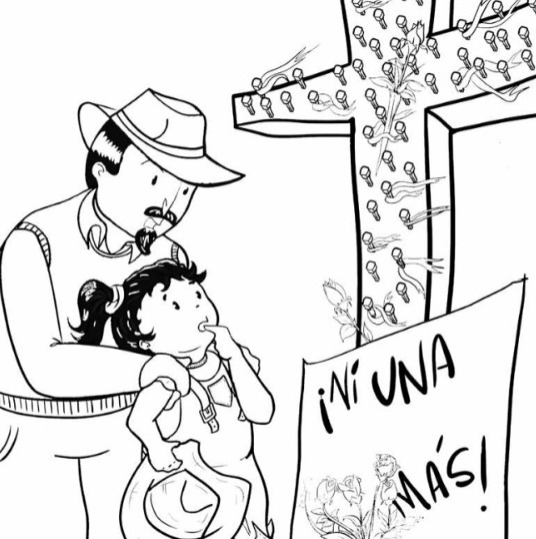
A pink cross placed outside the State Attorney General’s Office in Juárez, representing a woman victim of femicide/ Staff
The report of the Executive Secretary also indicated that the state of Chihuahua is in seventh place in terms of femicides, with a total of 33 so far this year.
The state ranks fifth nationally in femicides per 100,000 women, with an average of 1.67, while the national average is 0.93. In addition, Chihuahua is in fourth place in homicides of women, with 161 victims registered in 2023.
In response to these data, last Friday, the state attorney general, César Jáuregui Moreno, suggested that the increase in complaints could be contributing to the apparent increase in femicide and homicide records.