Desde el año pasado, en Ciudad Juárez se observó un un aumento en los casos de discriminación en los entornos educativos, especialmente en relación con los estudiantes con algún tipo de discapacidad.
Así lo dio a conocer Marisa Lizeth Flores Orozco, coordinadora de Atención a Personas con Discapacidad del Municipio.
Dijo que una de las situaciones más comunes es cuando las madres intentan inscribir a sus hijos en escuelas regulares, pero se enfrentan a situaciones de discriminación, principalmente debido al “bullying” o a la falta de atención por parte de los maestros.
También enfatizó la importancia de tomar medidas adecuadas para garantizar un entorno educativo inclusivo para todos los estudiantes, lo que implica canalizar los casos de discriminación de manera adecuada, buscando alternativas que se adapten a las necesidades específicas de cada alumno.
Mencionó que la falta de recursos y la falta de conciencia sobre la importancia de la inclusión pueden ser barreras significativas para muchos estudiantes con discapacidad.
Con motivo del 2 de abril, Día Mundial de la Concientización sobre el Autismo, cabe recordar que el pasdo 31 de marzo del 2022, el grupo parlamentario del PAN presentó ante la Cámara de Diputados una iniciativa para reformar la Ley para la Atención y Protección a Personas con la Condición del Espectro Autista.
En el documento se indicó que en el estado de Chihuahua se estima existen alrededor de 13 mil 565 personas menores de 22 años que viven con autismo, según una fórmula basada en la prevalencia del trastorno y el número de nacimientos desde el año 2000 hasta 2021.
Sin embargo, aún hace mucha falta que se tome conciencia en la sociedad para garantizar los derechos fundamentales para niños y niñas con autismo y el derecho a la educación, recalcó Marisa Flores.
Desde agosto del año pasado, la industria maquiladora registró una serie de recortes que concluyeron en la pérdida de 30 mil empleos, lo que simboliza la pérdida de alrededor de casi 400 millones de pesos para las familias fronterizas.
Jesús Manuel Salayandía Lara, mejor conocido como Thor Salayandía, presidente del Bloque Empresarial Fronterizo (BEF), expuso que desde agosto del año pasado las empresas del sector industrial han ido a la baja en cuanto a las contrataciones.
Explicó que la industria maquiladora paga en promedio un sueldo de 13 mil pesos mensuales por cada trabajador, lo que arrojaría un estimado de 390 millones de pesos que dejaron de pagarse.
El empresario señaló que el sector industrial se ha mantenido en los mismos números desde hace varios años, pues se estima que en esta frontera existen alrededor de 330 maquiladoras.
Sin embargo, la mayoría son empresas extranjeras, principalmente estadounidenses, seguidas de los continentes asiático y europeo, pero no son mexicanas.
Dijo que una estimación sugiere que del total de maquiladoras existentes en Ciudad Juárez, solo el 1 por ciento serían de capital nacional, lo que significa que las ganancias se van fuera del país.
«Estamos con los mismos datos de 330 maquiladoras, pero todas son de capital extrajero. Yo creo que un 1 por ciento serían mexicanas. Todas las demás que no están catalogadas como maquilas o que no son IMMEX, son pequeñas y medianas empresas, proveedores industriales», comentó.
Expuso que de esos 30 mil empleos formales que se recortaron, «si nos va bien» se reubican en otros sectores como el comercio, alimentos y servicios.
«Por toda la ciudad hemos visto naves industriales que se están contruyendo, pero están paradas. En los últimos siete meses, en Ciudad Juárez se han perdido más de 30 mil empleos. Eso nos quiere decir que está lento y no hay nuevos proyectos. Los nuevos proyectos que hay están detenidos», dijo.
El empresario mencionó que incluso hasta marzo de este 2024 en Ciudad Juárez sólo se logró recuperar poco más de 800 nuevos empleos, distribuidos en diferentes áreas, de acuerdo con datos del Instituto Mexicano del Seguro Social (IMSS).
Cortesía BEF
Dólar y elecciones impactan economía
El empresario expuso que uno de los factores que han impactado es la incertidumbre, debido a las próximas elecciones, tanto de México como de Estados Unidos.
Además, agregó que a pesar de que sí hay empleo en el sector maquilador, las empresas no están contratando.
Ciudad Juárez es un urbe que se nutre en un 60 por ciento del sector maquilador, así como el 99 por ciento de las empresas son de origen extranjero, por lo que la caída del dólar durante los últimos meses también afectó la economía local.
Mencionó que a las industrias les cuesta cada vez más mantenerse, pues en un comparativo, si anteriormente los gastos de operaciones de una empresa eran de 20 mil dólares, con la baja del dólar el costo se incrementó hasta 30 mil dólares.
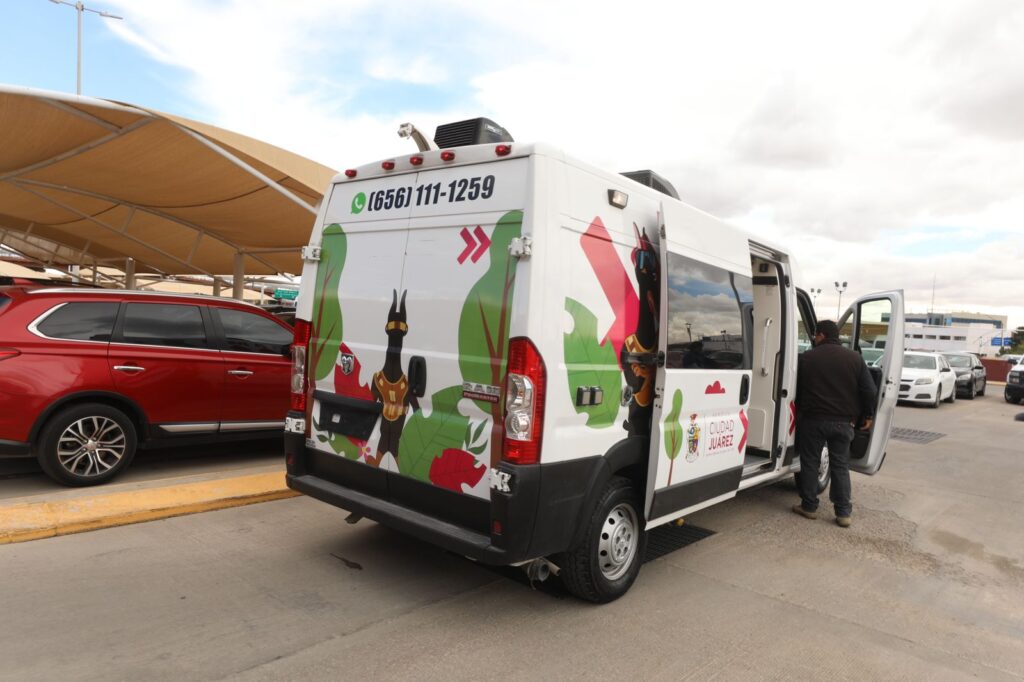
Con el propósito de disminuir la proliferación de perros y gatos callejeros, una unidad de «Ambulancia Canina» circulará a partir del próximo lunes en esta frontera, para realizar esterilizaciones en las colonias.
Expuso que la «Ambulancia Canina» se dedicará principalmente a la esterilización de perros y gatos, comenzando con los machos, debido a su rápida recuperación y menor costo en comparación con las hembras.
El funcionario indicó que esta estrategia busca controlar la población de mascotas y reducir la cantidad de animales abandonados en las calles.
El programa ya contempla 200 esterilizaciones para la próxima semana / Foto: Cortesía Municipio
También que el programa se desplegará en diferentes colonias, respondiendo a las solicitudes de los residentes.
Además, se atenderán casos urgentes en centros comerciales y tiendas, donde resulta complicado llevar a los animales a un centro comunitario.
Las personas interesadas en recibir los servicios de la «Ambulancia Canina» pueden comunicarse a través del número de WhatsApp 656 111-12-59.
La unidad iniciará operaciones en las colonias Acacias y Melchor Ocampo, la cual está equipada con boiler y baño para asear a los animalitos, planta de luz, refrigerador para guardar los medicamento y mesas para esterilizar a las mascotas.
El personal de Ecología indicó que ya cuentan con una lista de 200 mascotas que requieren ser esterilizadas.
Hijos de madres trabajadoras de Ciudad Juárez manifiestan conductas desadaptativas, como depresión, ansiedad, autolesiones, sobre todo en las niñas, y en casos extremos el suicidio, de acuerdo con un estudio realizado en estancias infantiles del DIF Municipal.
La doctora María del Consuelo Cervantes Muñoz, docente de la Maestría en Psicoterapia Humanista y Educación para la Paz de la Universidad Autónoma de Ciudad Juárez (UACJ), lideró el proyecto como parte de su trabajo de tesis de Doctorado en Psicología.
Además se contó con la colaboración del doctor José Rubén Parra Cardona, de la Universidad de Texas en Austin, quien es experto en prácticas de crianza.
La doctora María del Consuelo Cervantes Muñoz busca realizar un postdoctorado en el mismo tema / Foto: UACJ
El estudio se realizó en las Estancias Infantiles o Centros de Atención Infantil del Desarrollo Integral de la Familia (DIF) municipal, donde incluso algunos de los niños pasan hasta 12 horas al día, mientras las madres tienen largas jornadas laborales en la industria local, principalmente en empresas maquiladoras.
Cervantes Muñoz dijo que estas madres trabajadoras por lo general deben cumplir una triple jornada laboral diariamente, pues además de realizar un trabajo en la industria deben hacerse cargo del trabajo doméstico en su hogar y, además, educar a sus hijos.
La doctora indicó que, además de conocer la salud mental de los niños, era también importante comprender la situación en las madres, pues no basta con conocer los efectos, sino que es necesario conocer la raíz de las prácticas de crianza desadaptativas para erradicarlas.
La investigadora expresó que las madres trabajadoras en Ciudad Juárez enfrentan fuertes presiones laborales en la industria maquiladora, donde la productividad es lo que importa, según demostró el diagnóstico sobre la salud mental y las prácticas de crianza.
Expuso que Ciudad Juárez ocupa el primer lugar en maltrato laboral hacia la mujer, lo que genera estrés, una desregulación emocional con manifestaciones de enojo y reacciones explosivas, así como tienen experiencias de crianza desadaptativas, pues nadie les enseña a ser madres.
Imagen ilustrativa de madre trabajadora y niños / Foto: INDEX Juárez
Mencionó que las prácticas de crianza controladoras generan síntomas de depresión y ansiedad, además de otras conductas como las autolesiones, como provocarse cortadas y golpearse con los puños.
Mientras que las prácticas de crianza permisivas generan conductas disruptivas, como la rebeldía y prácticas de bullying.
Estas prácticas de crianza desadaptativas están generando un aumento en el deterioro de la salud mental de los niños y en situaciones extremas, se dan casos de suicidio, señaló la especialista.
«Se ha notado en Ciudad Juárez que la edad de los suicidas se está acortando, pues antes eran personas mayores y nuestro interés es atender la sintomatología que está surgiendo para prevenir este problema», indicó Cervantes Muñoz.
Mencionó que para este propósito se diseñaron talleres dirigidos a las madres trabajadoras, que se impartieron en las Estancias Infantiles del DIF para mejorar las condiciones de la salud mental de estas mujeres, así como puedan manejar el estrés con ejercicios físicos y de respiración.
Además se les brindaron talleres de comprensión a sí mismas, para hacerles ver que están haciendo lo mejor que pueden con lo que tienen, comentó.
Estancia infantil del DIF Ciudad Juárez / Foto: Gobierno Municipal
Otro aspecto de los talleres se centró en promover prácticas de crianza más adaptativas para beneficiar la salud mental de los niños, con la participación de mujeres entre los 18 y 60 años que son madres o abuelas cuidadoras, mencionó.
Sin embargo, también se logró la participación de algunos padres de familia que han comprendido la importancia de la presencia de la figura paterna en el desarrollo de los hijos y que no basta con proporcionarles alimentación y vestido, sino que importa la convivencia de padres e hijos.
Los talleres, que también se impartieron a las encargadas de las Estancias Infantiles, tuvieron un impacto en más de mil personas y se pretende que tengan un seguimiento, para que sea mayor el número de madres y padres de familia el que participe.
La doctora dijo que tiene el objetivo de realizar un posdoctorado para continuar trabajando con este mismo tema y con el apoyo del doctor Parra Cardona, quien ha trabajado con grupos latinos, afroamericanos y sajones en Estados Unidos.
Indicó también que una alumna de la Maestría en Psicoterapia Humanista y Educación para la Paz en Nuevo Casas Grandes inició un proyecto con el mismo tema de las prácticas de crianza y salud mental en las madres.
En las últimas semanas se registró un incremento en la llegada de personas migrantes a la frontera de Ciudad Juárez y El Paso, por lo que autoridades de ambas naciones aumentaron la seguridad en el bordo.
Claudio Herrera, vocero de la Patrulla Fronteriza en el área de El Paso (CBP por sus siglas en inglés), declaró que este aumento alcanzó niveles alarmantes, generando preocupación entre las autoridades encargadas de la seguridad en la frontera.
Expuso que durante el último mes se registraron un promedio de 980 encuentros o deportaciones de personas diarias.
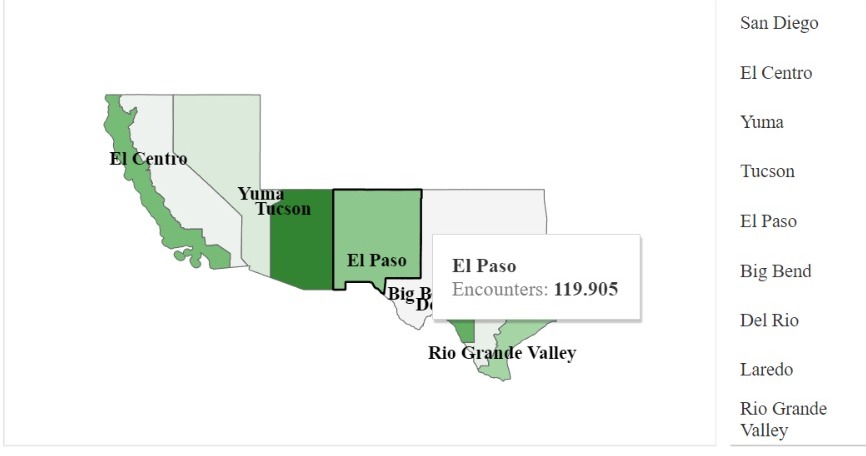
Según el portavoz de la Patrulla Fronteriza, el flujo constante de personas que intentan ingresar al país de manera ilegal ha sido notable, con cifras que superan las 119 mil 900 llegadas de migrantes tan solo por la frontera de Ciudad Juárez y El Paso.
Distribución de encuentros en la frontera sur de Estados Unidos / Captura de Pantalla
Mientras que las cifras oficiales del portal de CBP indican que durante febrero se registraron 189 mil 922 encuentros de personas migrantes en la frontera sur de Estados Unidos y México, sumando un total de un millón 151 mil 448 deportaciones en lo que respecta al año fiscal 2024.
El funcionario indicó que uno de los principales problemas identificados por las autoridades es la desinformación que tienen muchos migrantes, quienes creen erróneamente que el área fronteriza es un punto de entrega voluntaria para solicitar asilo político.
Sin embargo, esta percepción equivocada ha contribuido al aumento en la cantidad de personas que intentan cruzar la frontera de forma irregular, lo que representa un desafío adicional para las autoridades locales.
Mencionó que ante esta situación, el sector del paso fronterizo intensificó sus esfuerzos para abordar la creciente afluencia de migrantes, en donde colaboran la oficina del fiscal de distrito y otras agencias como la Oficina de Aduanas y Protección Fronteriza (CBP) y la Oficina de Inmigración y Aduanas (ICE), para implementar medidas.
Sobre los recientes incidentes registrados durante la semana pasada, en donde migrantes rompieron la malla ciclónica que divide el territorio mexicano de Estados Unidos, dijo que algunas personas migrantes fueron detenidas por estos hechos.
ESCUCHA NUESTRA COLABORACIÓN CON PLATAFORMA INFORMATIVA
Agregó que las autoridades enfatizan la importancia de que los migrantes sigan los canales legales establecidos para solicitar asilo político y respeten las leyes de inmigración de Estados Unidos.
Así como el incumplimiento de estas normas puede acarrear consecuencias legales graves, por lo que se insta a los migrantes a informarse adecuadamente y seguir los procedimientos adecuados para evitar enfrentar problemas legales en su intento de ingresar al país.
Albergues al 50 por ciento
Actualmente, los tres refugios administrados por el gobierno municipal se encuentran entre el 50 y el 60 por ciento de su capacidad de ocupación, refirió Santiago González Reyes, director de Derechos Humanos del Municipio.
Expuso que se sigue una curva natural que se repite anualmente, con una disminución de migrantes a principios de año, seguida de un aumento hacia mediados de año.
Explicó que este comportamiento se ha observado de manera regular desde el 2018, a pesar de los eventos políticos y de seguridad que puedan ocurrir en los lugares de origen, los cuales podrían generar flujos migratorios extraordinarios.
Mencionó que el refugio más reciente, Felipe Ángeles, hasta el momento ha recibido a un número limitado de familias, aproximadamente entre 70 y 80, lo que representa una ocupación por debajo de su capacidad total de 300 personas.
El funcionario agregó además que Ciudad Juárez es una localidad de paso y retorno para muchos migrantes que tienen como destino Estados Unidos, por lo que la mayoría no se establece permanentemente.
El Observatorio sobre Discurso de Odio y Desinformación (ODOD) tiene como objetivo monitorear, verificar y analizar el discurso sexista y de odio que puedan recibir aspirantes mujeres y de la diversidad sexual durante la contienda electoral en México 2024.
Nuestra intención es centrarnos en candidaturas de alto impacto para exponer cómo los sectores más históricamente desfavorecidos son víctimas de violencia digital mediante el uso de discurso peligroso, y cómo este tiene una base importante en desinformación arraigada en estereotipos.
Queremos exponer las desinformaciones que derivan en discurso de odio, así como a las personas y organizaciones que desinforman y propagan discurso de odio.
En nuestro país, existe una deuda histórica con relación a las mujeres y la diversidad sexual en cuanto a derechos políticos electorales; si bien la paridad es norma constitucional, los partidos políticos siguen enviando mujeres a las candidaturas en estados, municipios o distritos donde las posibilidades de ganar son casi nulas, y con poco apoyo humano y económico para hacer una campaña política.
En el caso de la diversidad sexual, las acciones afirmativas son recientes y se han enfrentado a problemáticas como la solicitud de «reserva de datos personales», o utilizando este recurso de manera engañosa para hacer pasar hombres cis por mujeres transexuales en los registros electorales.
Cuando las mujeres y personas de la diversidad sexual consiguen llegar a una contienda electoral, viven violencias diferenciadas en la esfera digital, como lo explica el último informe Candidaturas Paritarias y Violencia Digital en México, realizado por el Programa de las Naciones Unidas para el Desarrollo en 2021.
Al realizar un monitoreo en tiempo real, podemos actuar de inmediato en la verificación de esa información o en la contra narrativa adecuada, realizando contenidos periodísticos que colaboren en llenar vacíos informativos sobre estos temas.
La violencia política de género y el discurso de odio son un obstáculo para la democracia debido a que generan miedo e impiden que las personas de grupos sociales vulnerables puedan participar libremente en procesos democráticos.
Mediante el Observatorio sobre Discurso de Odio y Desinformación, Verificado y aliados tienen como objetivo monitorear, verificar y analizar el discurso sexista y de odio que puedan recibir candidaturas que representan sectores que hayan sido históricamente desfavorecidos como las mujeres o los miembros de la comunidad de la diversidad sexual.
¿Qué es la violencia política de género?
Laviolencia política de género es una forma de violencia que busca anular o desvalorizar el ejercicio de los derechos de mujeres involucradas en la política. Se manifiesta de diversas maneras entre las que destacan las agresiones verbales, simbólicas, patrimoniales, económicas, sexuales, psicológicas e incluso físicas.
Cabe destacar que no toda violencia política tiene elementos de género. Una violencia política se categoriza como de género cuando se dirige a una mujer por ser mujer o cuando tiene un impacto diferenciado en las mujeres, además también debe considerarse otros elementos como la intención de la acción y el contexto de género.
¿Qué es el discuros de odio?
Se le denomina discurso de odio a cualquier tipo de comunicación ofensiva o que incluye lenguaje discriminatorio en referencia a una persona o grupo. Suele estar basado en religión, etnia, nacionalidad, raza, color, ascendencia, género u otros rasgos de la identidad.
En distintas ocasiones se suele decir que combatir el discurso de odio es coartar la libertad de expresión, sin embargo, la Organización de las Naciones Unidas indica que combatir el discurso de odio es impedir la incitación hacia la violencia por lo que no es prohibir la libertad de expresión.
“Combatir el discurso de odio no significa limitar o prohibir la libertad de expresión. Se trata de impedir la escalada de dicha incitación al odio hacia algo más peligroso, en particular, instigando a la discriminación, la hostilidad y la violencia, lo cual está prohibido según el derecho internacional”, explicó el Secretario General de las Naciones Unidas, Antonio Guterres.
¿Cuáles son las formas de discurso de odio?
Tomando en cuenta los grupos vulnerables con más presencia en México, se pueden destacar algunos tipos principales de discurso de odio como:
Antisemitismo: Prejuicio y discriminación a las personas de origen judío como grupo étnico, cultural o religioso.
Antiarabismo: Prejuicio y discriminación a las personas de origen árabe, como grupo étnico, cultural o religioso.
Aporofobia: Rechazo de las personas sin recursos o sin hogar.
LGBTfobia: Discriminación hacia las personas lesbianas, gays, bisexuales, trans, intersexuales y demás personas de la diversidad sexogenérica.
Racismo: Creencia de que; por motivo de la raza, el color de piel, el idioma, la religión, la nacionalidad, y/o el origen étnico, se justifica el desprecio hacia un grupo de personas. Se basa en un principio de supremacía racial, es decir, se cree que una “raza” es superior a las demás.
Sexismo: Discriminación de las personas por razón de sexo. Como consecuencia de la desigual relación de poder entre hombres y mujeres en la sociedad, la forma más común de sexismo es la misoginia, el rechazo, odio o discriminación hacia las mujeres.
Xenofobia: Rechazo contra personas migrantes o provenientes de otros países y culturas.
Clasismo: Es una forma de discriminación basada en la clase social de una persona.
Edadismo: Discriminación por edad. Se puede presentar hacia personas adultas mayores, es decir, quienes pertenecen a la cuarta y tercera edad o menores de edad.
¿Cómo puedo apoyar al Observatorio?
Garantizar una democracia libre de violencia y discurso de odio es responsabilidad de todas, todos y todes. Si bien en Verificado nos comprometemos a monitorear y evidenciar este tipo de agresiones, el apoyo de nuestra comunidad es fundamental.
Puedes ayudarnos reportando discurso de odio en nuestras redes sociales (@Verificado_Mx) o enviándolo por nuestra línea de WhatsApp +52 81 32 819184 (o da clic en https://bit.ly/WAVerificado)
Esta publicación es original de Verificado Mx la cual puedes consultar aquí