El aroma del cempasúchil se vuelve más intenso, el clima frío anuncia la proximidad de los difuntos y la prisa se apodera de quienes preparan los altares.
Este es un día único en el que los seres queridos que fallecieron regresan de entre los muertos y el camino debe estar iluminado para que no se pierdan.
Se trata de una tradición profundamente arraigada en la cultura mexicana, una fecha en la que se cree que los difuntos regresan de entre los muertos para visitar a sus familiares.
Pero además, no es solo una celebración, sino también una oportunidad para recordar y mantener viva la memoria de quienes ya no están físicamente con nosotros.
Esta tradición mexicana es una costumbre para Bryan y su familia, quienes año tras año, levantan su altar con velas, una biblia, un rosario, los platillos favoritos del difunto y el típico pan de muerto.
Bryan y su madre durante una visita al panteón / Cortesía
Mientras que cada vela, cada pan de muerto y cada flor son gestos que expresan el profundo cariño que sienten por Don René, quien falleció hace tres años.
Entonces, cada 2 de Noviembre, él y su familia visitan el panteón San Rafael, ubicado a las afueras de Ciudad Juárez, a donde acuden para honrar a su padrastro.
En este lugar, limpian su tumba, la adornan con flores y le cuentan que aún lo tienen presente en sus corazones.
“Lo recuerdo como una buena persona muy alegre, pero de carácter fuerte; un poquito enojón, pero siempre de un gran corazón. Una muy buena persona que dio todo lo que pudo dar, sin esperar nada a cambio”, contó Bryan.
En este lugar descansa el señor René desde hace 3 años / Foto: Cortesía
El joven platicó que esta fecha la considera una ocasión especial, ya que les permite recordar y sentir la cercanía de su ser querido, aunque también conlleva un sentimiento de tristeza.
“Tenerlo aquí con su fotografía, flores veladoras, pan de muerto y agua, todo lo necesario para que mi familiar fallecido se siga sintiendo querido, en el altar o en el panteón”, dijo.
La fotografía de Don René se encuentra siempre presente en la casa de Bryan / Foto Cortesía
Para muchas familias fronterizas, el Día de Muertos es una fecha que mezcla el amor, la alegría, la nostalgia, el miedo y el dolor. Sin embargo, los panteones, lejos de ser lugares lúgubres, se llenan de vida.
En muchas tumbas se pueden ver personas que contratan tríos musicales para tocar guitarras y entonar canciones que solían gustarle al difunto.
También hay algunos en donde cientos de comerciantes colocan sus negocios, donde se pueden encontrar puestos de comida, aguas, artesanías, entre otros, pero además flores y adornos para ponerle a los muertos.
Hace 33 meses, 19 migrantes fueron asesinados por policías mexicanos, quienes dispararon contra ellos y luego prendieron fuego a sus cuerpos, en Camargo, Tamaulipas. 16 eran guatemaltecos. De manera histórica, el caso llegó a sentencia. Después de este hecho, muchas cosas han cambiado, otras no. Por un lado la migración sigue, pero ahora hay un motivo para confiar en la justicia. La Red Jesuita con Migrantes los acompañó en este trayecto y cuenta a Plaza Pública las complejidades de este caso.
Este 30 de octubre de 2023, después de más de dos años de suspensiones y retrasos, el juez unitario de enjuiciamiento del Supremo Tribunal de Justicia del Estado de Tamaulipas, Patricio Lugo, sentenció a 11 policías estatales mexicanos a cumplir 50 años de prisión por su participación en la masacre que cobró la vida de 19 personas el 22 de enero de 2021.
Entre los fallecidos, 16 provenían de Guatemala, uno de El Salvador y dos de México. Según información de la Fiscalía, dos de ellos eran personas encargadas de llevar a los migrantes a territorio estadounidense.
Para el sistema de justicia mexicano lograr este fallo fue posible debido a que uno de los policías que participó en los hechos, Ismael Vázquez, se acogió al criterio de oportunidad y confesó lo sucedido ese día. Por su colaboración en el caso, fue el único condenado a 19 años.
Presentaron más de 60 testimonios y pruebas documentales para demostrar la culpabilidad de los 12 sindicados. Las acusaciones fueron: 11 señalados de homicidio calificado, los 12 de abuso de autoridad —delitos cometidos en el desempeño de funciones administrativas— y uno por el delito de informes falsos dados a una autoridad.
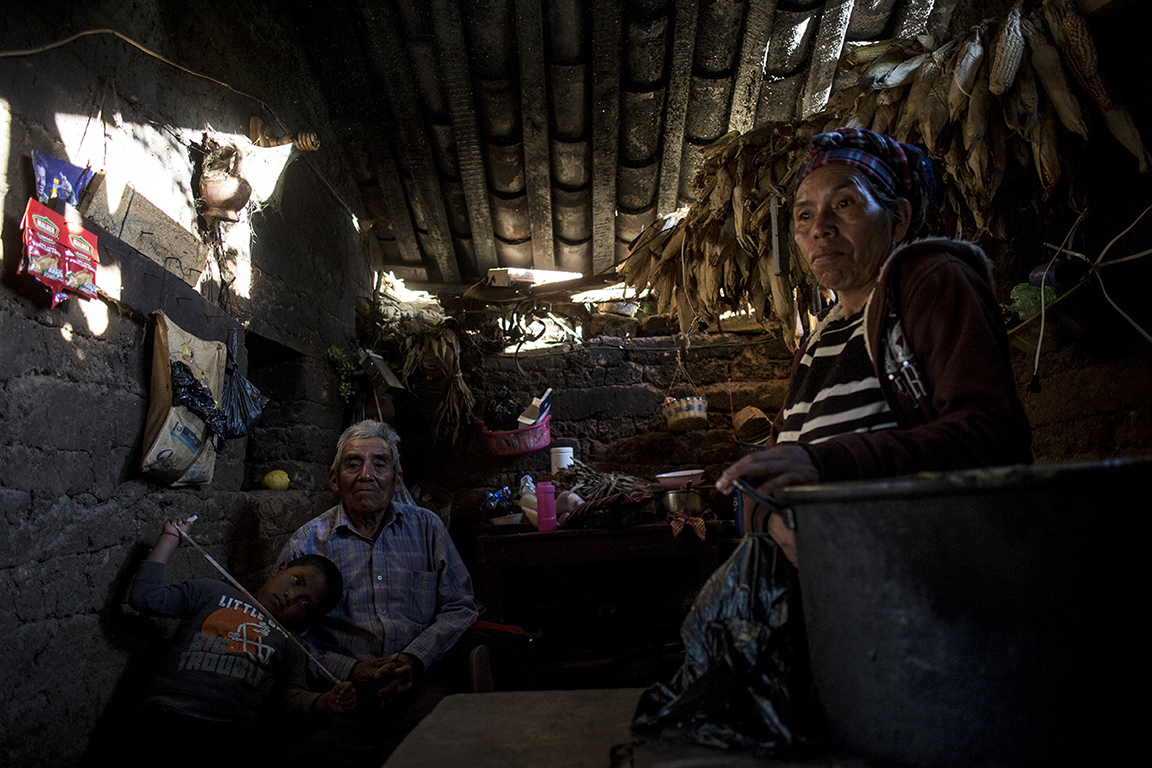
Ángela López, 52, madre de Marvin Alberto Tomás López, en la cocina de su casa, en Comitancillo, en compañía del padre, Hipólito Mauricio, 78, y el nieto Aldo Mateo, en marzo de 2021 cuando sucedió el entierro. / Simone Dalmasso.
Tanto para México como para Guatemala, esta sentencia es emblemática e histórica pues se trata de la primera condena a elementos del Estado por una masacre de migrantes.
Desde Guatemala, el abogado de la Red Jesuita con Migrantes (RJM), Ángel Escalante, ha acompañado y asesorado legalmente a las familias de los 16 guatemaltecos fallecidos, en conjunto con la Fundación para la Justicia y el Estado Democrático de Derecho, con sede en México.
Según explica, luego del fallo condenatorio el juez escuchó el testimonio de las familias de las víctimas para determinar los detalles de la condena, así como las medidas de reparación que el Estado vecino deberá tomar en favor de las familias afectadas.
Una tragedia, hace dos años
María Marcelina Mauricio, madre de Anderson Marco Antulio Pablo, recuerda que sintió que le «arrancaron el alma» el día que confirmó que su hijo era una de las víctimas fallecidas en la tragedia de Camargo. Para entonces estaba embarazada de su hija menor. Sin embargo, el impacto de la noticia tuvo repercusiones en su estado físico y emocional, al punto de afectar también a la bebé.
La niña, le dijeron los médicos, no viviría mucho tiempo. «Sentí que mi vida ya no tenía sentido sin él, pero gracias a Dios a estas alturas sigo con vida. Es muy duro, muy doloroso poder explicar lo que sentimos, lo que hemos vivido durante todo este tiempo», recuerda ahora, más de dos años después de aquel acontecimiento.
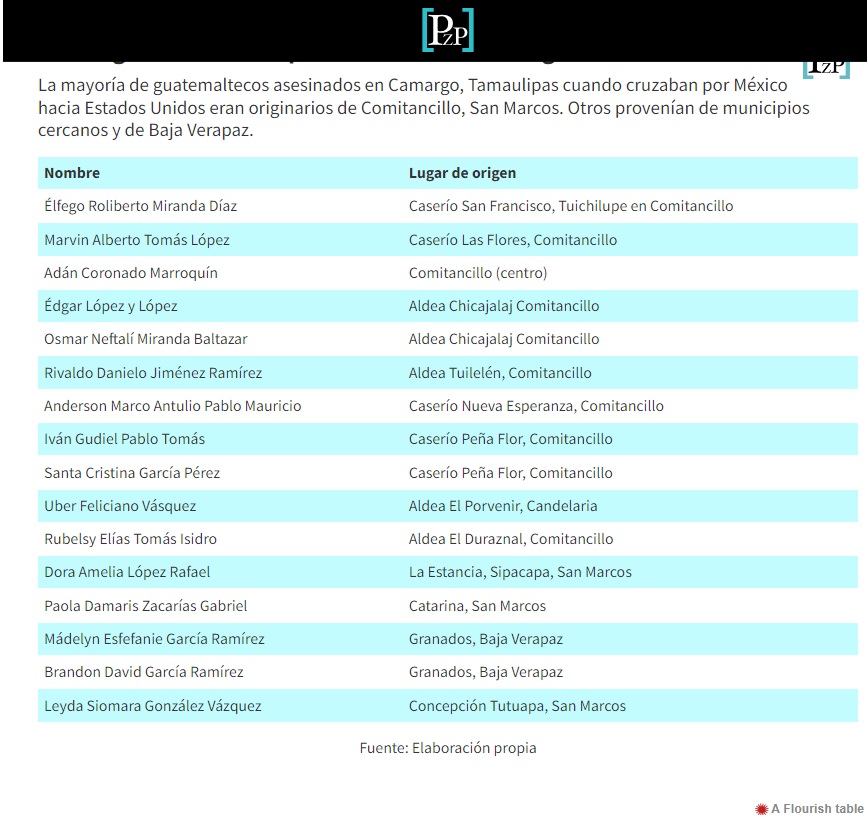
Anderson Marco Antulio tenía 16 años cuando emprendió el arriesgado viaje a Estados Unidos. Al igual que otras 15 personas guatemaltecas. En su mayoría no mayores de 35 años, hombres y mujeres jóvenes. Doce de ellos eran originarios de Comitancillo, dos más de municipios cercanos en San Marcos y otros dos provenían de Granados, Baja Verapaz.
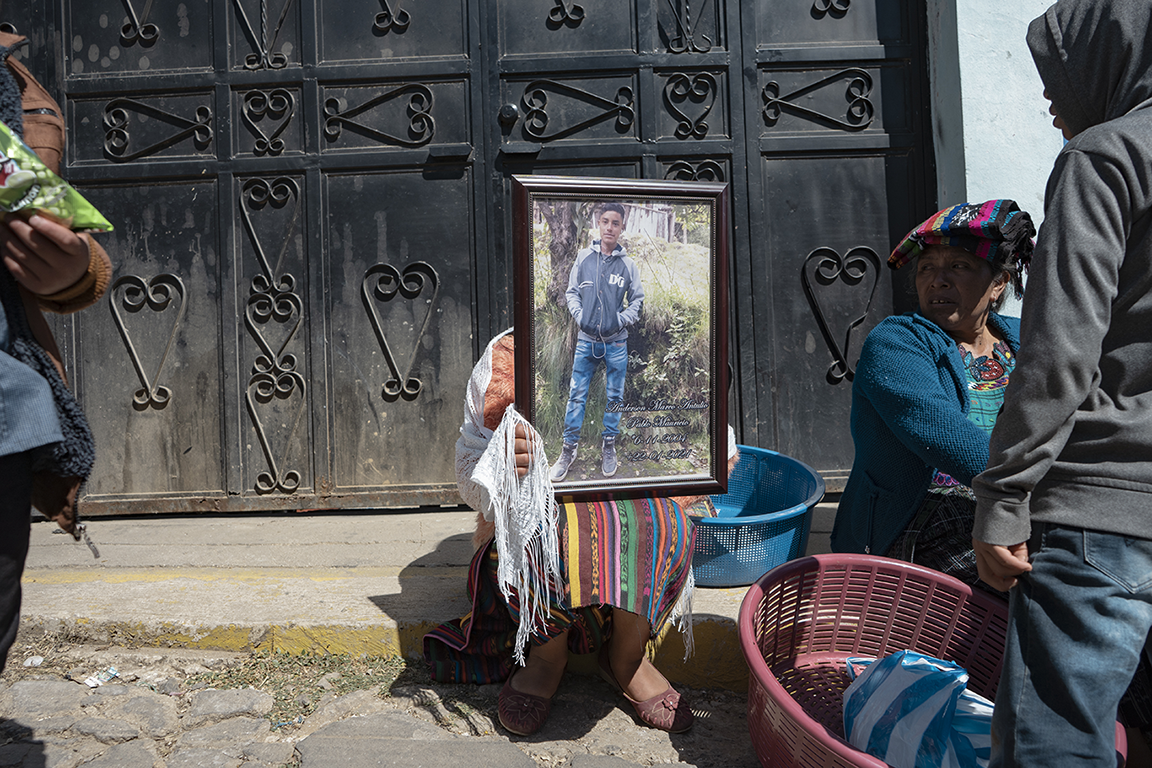
Hermana de Anderson Marco Antulio, con la fotografía de su hermano repatriado después de dos años, en Comitancillo, San Marcos. / Eduardo Say
Ante la falta de orientación y la necesidad de apoyo, los padres y familiares de los fallecidos pidieron la ayuda de la RJM, una organización que brinda apoyo a personas en tránsito y que además de este caso brinda acompañamiento a más familias de migrantes guatemaltecos que han fallecido en condiciones inhumanas. Por ejemplo, la ocasión en que murieron más de 50 personas encerradas en un furgón que fue abandonado en Texas, o en el incendio ocurrido en una estación migratoria de Ciudad Juárez.
Lo primero que las familias les pidieron, recuerda José Luis González, el sacerdote jesuita coordinador de la Red, fue una oración.
«Marco Antulio Pablo nos llamó para ver si lo podíamos apoyar a él y demás familias. Le dijimos que sí y además le pedimos confirmar si se trata de sus hijos ¿Por qué están ustedes tan seguros de que son ellos? Después supimos por qué», relata.
Tanto Marco Antulio como otros de los familiares habían estado en comunicación con sus hijos, hermanos, padres que iban rumbo a Estados Unidos. Algunos recibieron llamadas y audios minutos antes de lo ocurrido. Eran mensajes que relataban lo que estaba sucediendo, cómo fueron atacados a balazos y cómo habían sido perseguidos, algunos de ellos se comunicaron mientras se ocultaban en matorrales.
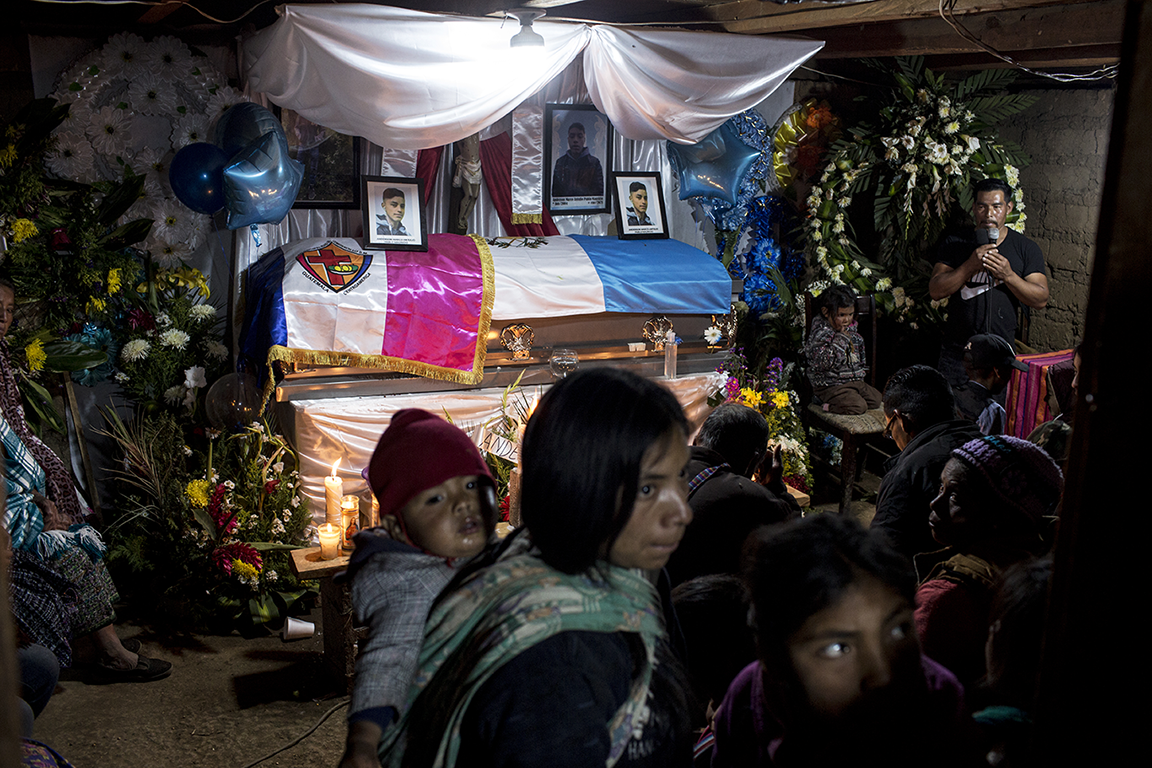
El velorio de Anderson Marco Antulio Pablo, en el caserío La Nueva Esperanza. / Simone Dalmasso
El proceso judicial que se lleva a cabo desde Tamaulipas, México, confirma que, a groso modo, lo que ocurrió ese día fue que el grupo de migrantes que viajaba en una camioneta fue perseguido por policías, quienes dispararon contra ellos más de cien veces y posteriormente quemaron los cuerpos.
Luego volvieron al lugar para recoger los casquillos e intentar alterar la escena. Para sustentar esta cronología, se escucharon y tomaron en cuenta distintos medios de prueba. Los dispositivos móviles de los policías, por citar un ejemplo, demostraron mediante el sistema GPS que todos estaban presentes en el lugar de la tragedia en el momento en que las víctimas murieron.
Aunque se conocen los hechos de aquel día, lo que aún se desconoce es la razón que motivó a los policías a actuar de esa forma. En la Fiscalía de Tamaulipas existe una investigación abierta en contra de los autores intelectuales; sin embargo, aún no hay mayores detalles de este caso.
Olvidados por el Estado
Comitancillo es uno de los municipios del país en donde las estadísticas y condiciones de vida arrojan la conclusión de que allá, a 250 km de la capital, el Estado no ha invertido nunca.
Según el Instituto Nacional de Estadística (INE), en el área rural del municipio nueve de cada 10 personas viven en condiciones de pobreza. Además, el municipio presenta el Índice de Desarrollo Humano más bajo de todo el departamento de San Marcos.
Las tierras son montañosas y en ellas se cultivan alimentos como frijoles, maíz, durazno, manzana, entre otros. Pero más allá de eso, las alternativas económicas son limitadas.
Por ejemplo, cuenta González, desde hace muchos años las comunidades han pedido un instituto para que por medio de carreras técnicas los jóvenes puedan desarrollar habilidades y trabajar en su lugar de origen. Sin embargo, sus peticiones no son atendidas y más allá del trabajo de campo, no hay muchas oportunidades de desarrollo.
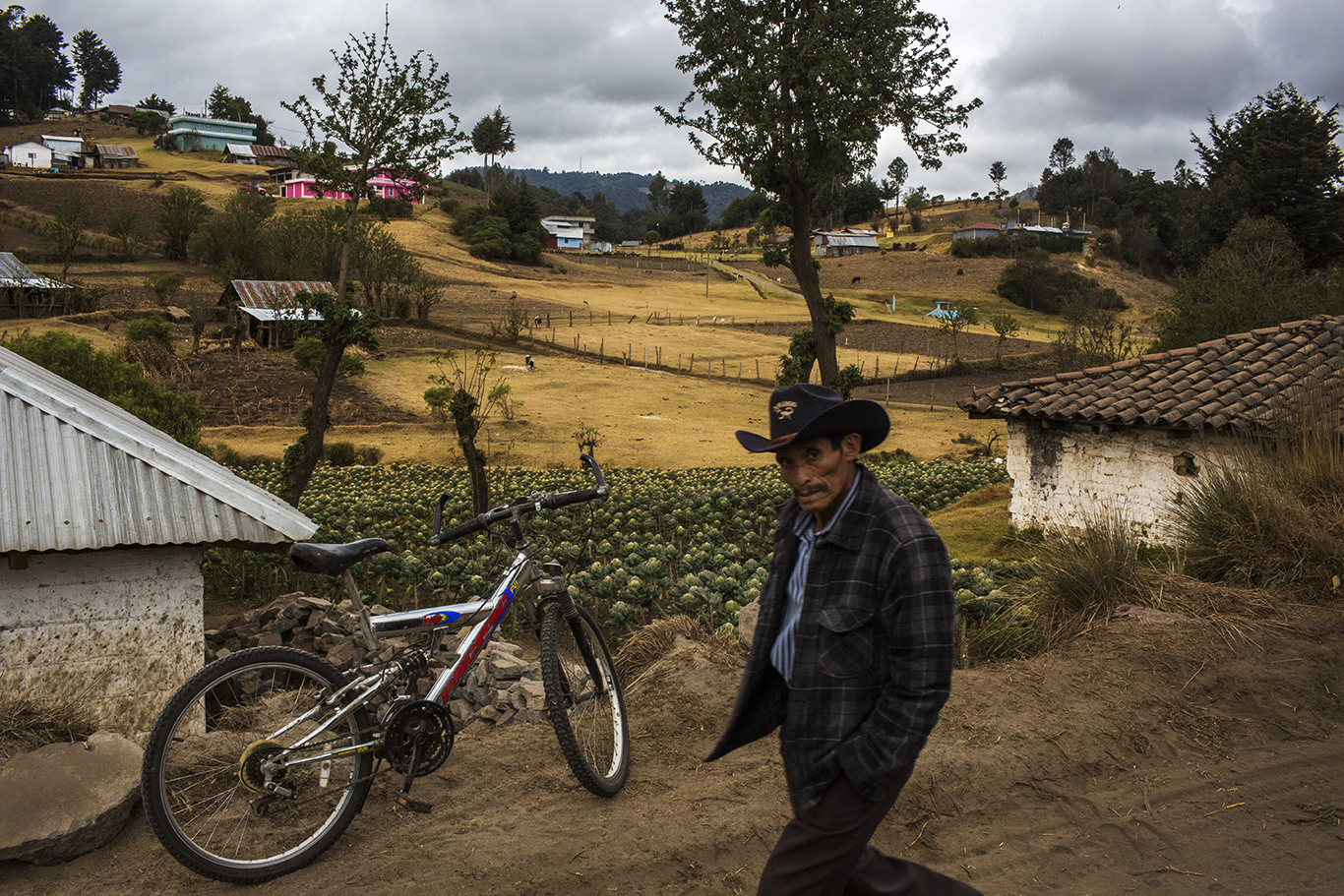
El área rural del departamento de San Marcos, que se caracteriza por su florida producción de trigo, coles de brusela y papa. / Simone Dalmasso
«La masacre no frenó la migración de Comitancillo. Casi todas las familias de las víctimas tienen hermanos que en estos dos años y medio, a pesar de la tristeza que les provocaba a sus papás y mamás y el miedo de que pudiera pasar otra cosa parecida, han viajado y ya están allá en Estados Unidos, han logrado pasar», explica el sacerdote jesuita, con la propiedad de quien durante más de dos años ha estado de cerca de las 16 familias de los migrantes asesinados.
Una de las madres que lloró la muerte de su hijo en Camargo emprendió la misma travesía dos años después de lo ocurrido. La migración en los últimos años, dice González, ha sido salvaje y la masacre no la ha detenido.
En Comitancillo las familias tienen al menos seis miembros. Y la mayoría de personas solamente alcanza cinco años de escolaridad, según datos oficiales.
En la lista de las víctimas de la tragedia en Camargo, la mayoría eran pobladores de Comitancillo. Cuatro de ellos provenían de los municipios de Catarina y Concepción Tutuapa, San Marcos; y Granados, Baja Verapaz. Lugares similares en cuanto a limitaciones de desarrollo.
Otilia Agustín Pérez, psicóloga de la RJM, se acercó a las familias de los fallecidos para acompañarlos en su proceso de duelo y observó las implicaciones emocionales en ellas, fruto de la falta de oportunidades de crecimiento en esa región.
«Vemos que los papás manejan mucha culpabilidad por haberles dado permiso o por no tener las condiciones económicas para poderlos apoyar en sus estudios o en algún emprendimiento, por ejemplo. Entonces es la realidad, no solo de Comitancillo sino de otros lugares», explica.
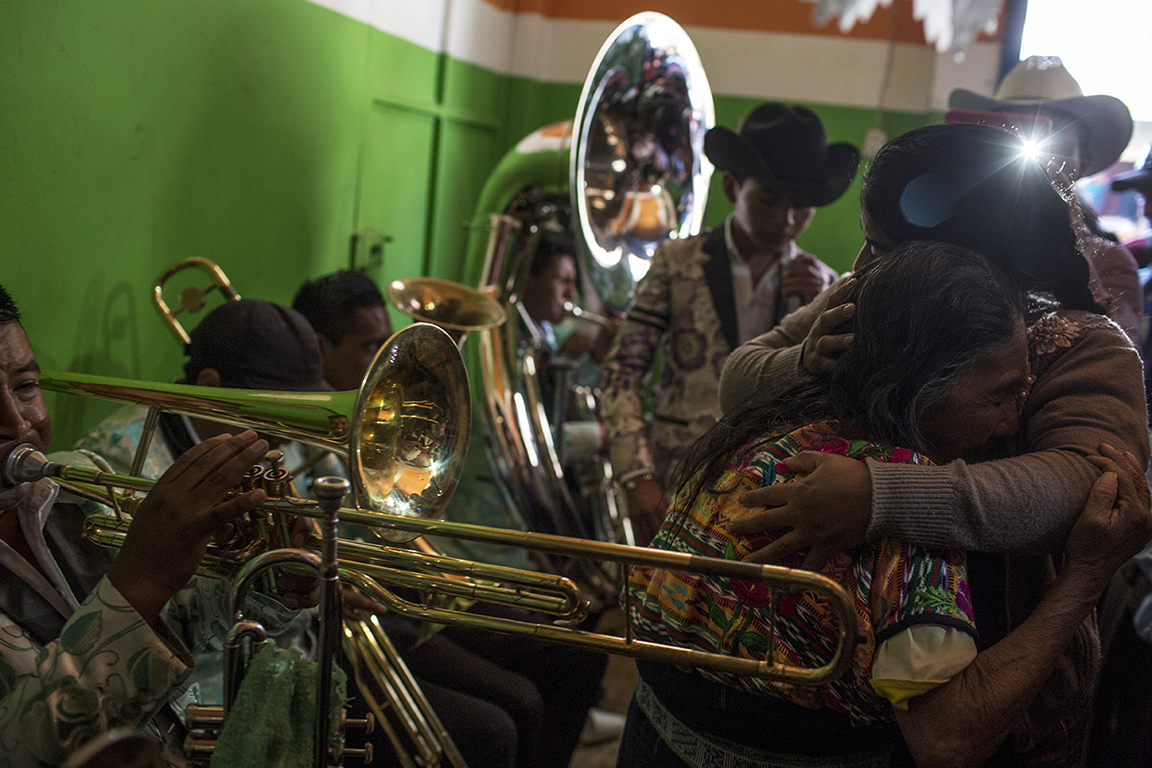
María Morán, 74, recibe consuelo de una vecina, durante el velorio de Adan Coronado Marroquín, en Comitancillo. / Simone Dalmasso
La tendencia en los jóvenes de Comitancillo, así como de otros lugares del país, es que parte primordial de sus proyectos de vida radica en migrar para poder ayudar económicamente a sus familias. Este deseo se incrementa cuando se dan cuenta de lo mucho que mejora la vida de sus vecinos o familiares que ya han migrado.
Sin embargo, el sueño no solo se limita a tener bienes materiales sino al deseo de vivir en condiciones dignas y tener acceso a servicios básicos como la salud. Santa Cristina García Pérez, por ejemplo, de 20 años, fue una de las víctimas en Camargo y su principal motivación para dejar Guatemala era buscar un trabajo con el cual poder costear una operación para corregir el labio leporino de su hermana menor.
Detrás de estos proyectos truncados, opina González, existe una gran responsabilidad del Estado por no garantizar que existan condiciones para un desarrollo adecuado.
Dos años en busca de justicia y resiliencia
Los últimos 33 meses fueron para las 16 familias una lucha por ser escuchados y tener acceso a un sistema de justicia que no está preparado para incluirlos adecuadamente en estos procesos. Los padres, madres e incluso hermanos han podido mantenerse informados y al tanto de los avances para identificar a los responsables de lo ocurrido gracias al acompañamiento legal brindado por la RJM en Guatemala y la Fundación para la Justicia y el Estado Democrático de Derecho, la cual trabaja desde México.
Desde el Estado de Guatemala, ni el Ministerio de Relaciones Exteriores ni alguna otra entidad les brindó este servicio, pese a que en 2021, el presidente Alejandro Giammattei realizó una serie de ofrecimientos a las familias y aseguró que recibirían acompañamiento del gobierno.
Pero ese apoyo recibido duró sólo unos meses. «Su ayuda fue básicamente con el traslado de los cuerpos a sus comunidades para los entierros, pero después hubo cosas muy curiosas. Por ejemplo, en un taller que realizamos con las familias, el Ministerio de Agricultura intervino para hablar con los familiares y entregarles una bolsita de semillas, que cabía en la mano de cada uno. Ellos se quedaron muy sorprendidos», relata González.
Ante la ausencia del Estado, fue la solidaridad de los pobladores de Comitancillo, e incluso el apoyo económico de migrantes radicados en Estados Unidos, lo que impulsó a las familias hacia mejores condiciones en los últimos años. Gracias a eso, todas han recibido ayuda para construir viviendas y mejorar su calidad de vida. La hermana de Santa Cristina, por ejemplo, fue operada después de la tragedia, cuando la noticia llegó a oídos de profesionales de la salud.
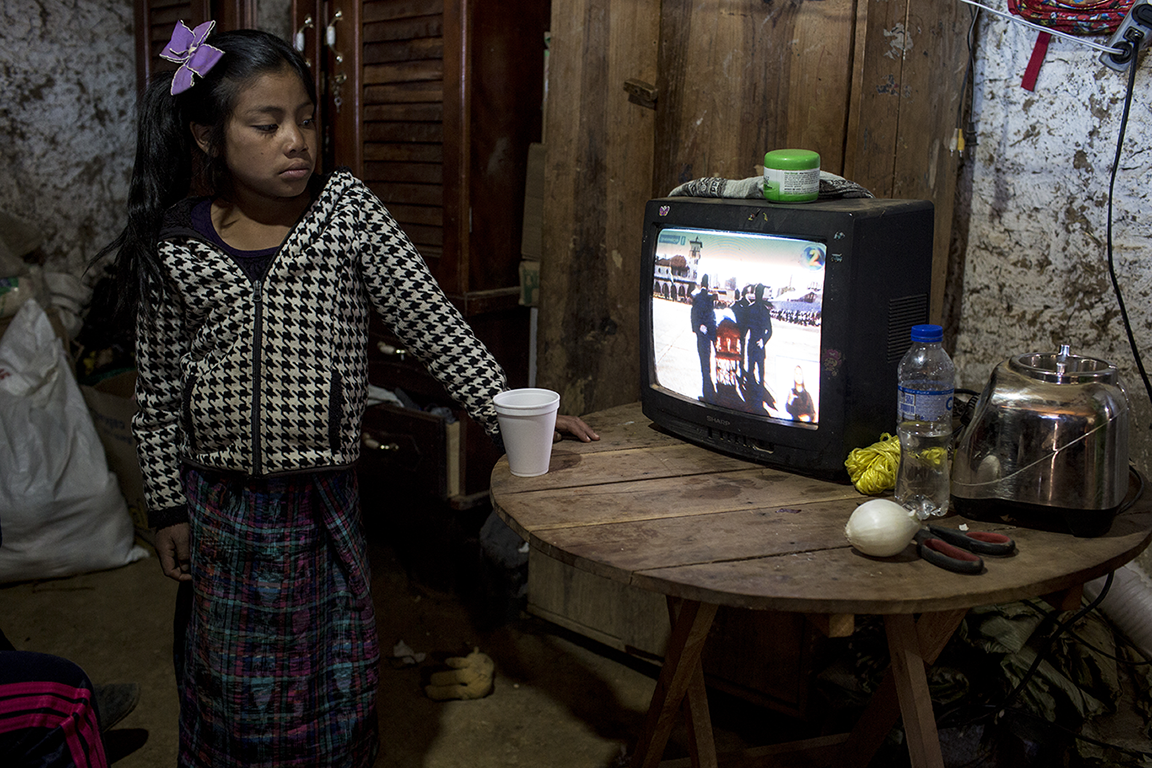
La hermana de Santa Cristina García Pérez observa en el televisor de la casa las imágenes de la llegada de los ataúdes en la fuerza aérea guatemalteca, en Ciudad de Guatemala. / Simone Dalmasso
Desde lo ocurrido, en México se iniciaron investigaciones para deducir responsabilidades por estos asesinatos. En Guatemala, en cambio, el Ministerio Público (MP) se desligó de la investigación aduciendo que debido a que los hechos ocurrieron en otro territorio, no era competencia de la entidad investigar. Sin embargo, realizaron operativos para identificar a los «coyotes» que trabajan en el territorio de Comitancillo.
Tener acceso al proceso judicial fue el primer gran desafío que enfrentaron las familias. Muchos de ellos son personas cuyo principal idioma no es el español, además de que no tenían experiencia previa o conocimiento de un proceso de este tipo. La primera reacción de los familiares ante lo ocurrido fue la resignación y la desidia. Solamente querían recibir los restos de sus seres queridos, darles una digna sepultura e intentar seguir con su vida.
Otros pocos sí insistieron en la importancia de esclarecer lo sucedido para evitar que algo como esto volviera a pasar.
Sumado a eso, debido a que a nivel nacional la cultura de denuncia no es la que predomina, vecinos y demás parientes cuestionaban la necesidad de «desgastarse» en un juicio para alcanzar justicia. «Se sentían desmotivados porque en su comunidad les decían: “¿Por qué tiene que seguir usted ese proceso que es muy cansado? Ya deje a su familiar en paz, no lleve ese proceso porque le va generar muchas enfermedades”», cuenta la psicóloga que les acompaña hasta la fecha.
También hubo temor a que la resolución del caso no fuese favorable para las víctimas y hubiera represalias para los familiares. «Los papás pensaban que si perdían el caso y los policías quedaban libres, iban a venir por ellos. En ese proceso manejaron mucha angustia y ansiedad, horas y noches sin poder dormir», relata González.
Depresión, desintegración familiar, alcoholismo, estrés e incluso problemas de salud les afectaron. El caso de Marcelina es una muestra de ello. Al nacer su hija menor no había muchas expectativas de vida para ella. Devolverle la salud no fue fácil; sin embargo, hoy es una niña de dos años que juega y ríe mientras sus padres, Marcelina y Marco Antulio Pablo, recuerdan lo duro que fue el trayecto hacia una sentencia condenatoria.
«Recordar esta tragedia nos pone nostálgicos —dice Marco Antulio—, el migrar no es un delito, es un derecho, pero lamentablemente las personas se sienten dueñas de un país, no lo somos».
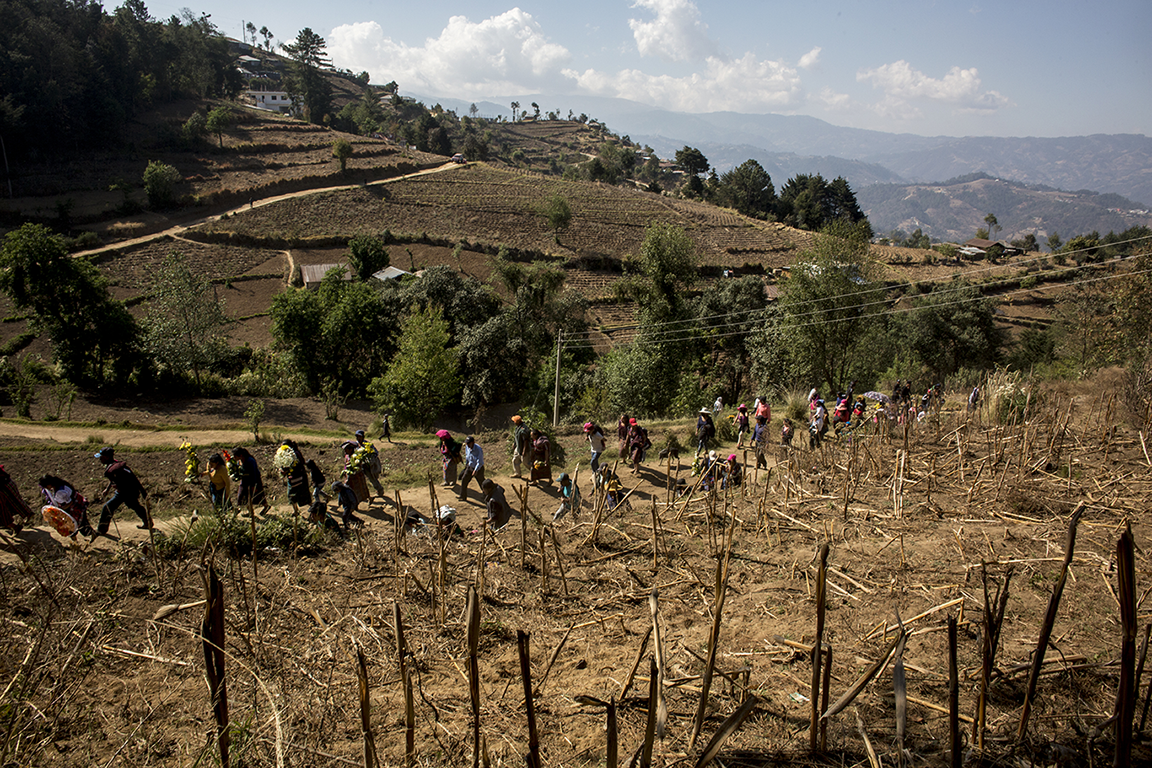
El cortejo fúnebre acompaña a Santa Cristina García Pérez durante el largo recorrido desde la casa de sus padres hasta el cementerio. / Simone Dalmasso
En el juicio desde México, como constantemente sucede también en Guatemala, hubo una serie de retrasos para entrampar el proceso. Debido a que las audiencias se llevaban a cabo en Tamaulipas, el juez a cargo autorizó que las familias pudieran participar de ellas por medio de videoconferencias.
De esa forma podían estar al tanto de los avances. El abogado Escalante relata que no fue el Estado el que facilitó un espacio y recursos para que las familias pudieran conectarse a dichas audiencias, sino la RJM, quienes se convirtieron en los asesores legales de las familias desde los primeros días después de la tragedia, con apoyo de la Fundación para la Justicia.
En numerosas ocasiones, las audiencias fueron suspendidas o interrumpidas por distintas razones. Debido a la precariedad de los caminos, los cuales son de terracería, en montañas muy alejadas del casco urbano, para las familias movilizarse desde sus casas hasta el centro de Comitancillo implicaba una inversión importante de tiempo y recursos.
Asistir a las audiencias virtuales, por lo tanto, era sacrificar una jornada de trabajo y gastar en transporte. Por esas razones, explica Marco Antulio, este proceso se sintió como una lucha cuesta arriba, en donde todo parecía estar en contra de las familias.
«Las distancias y carencias económicas de las familias eran tan evidentes que para trasladarse algunas personas al lugar donde se eligió para las audiencias viajaban de dos a cuatro horas, otras debían pagar un vehículo particular que los llevase al centro de Comitancillo, que representaba un gasto entre 100 y 300 quetzales por persona. Además perder un día completo de trabajo implica no recibir unos 50 o 100 quetzales por persona», explica el abogado del caso.
No obstante, en ese vaivén, las familias formaron entre sí un grupo de apoyo para no desmotivarse y entender juntos las etapas del juicio. También entendieron la importancia de alcanzar una sentencia, con el único fin de obtener justicia y sobre todo evitar que esto se repita.
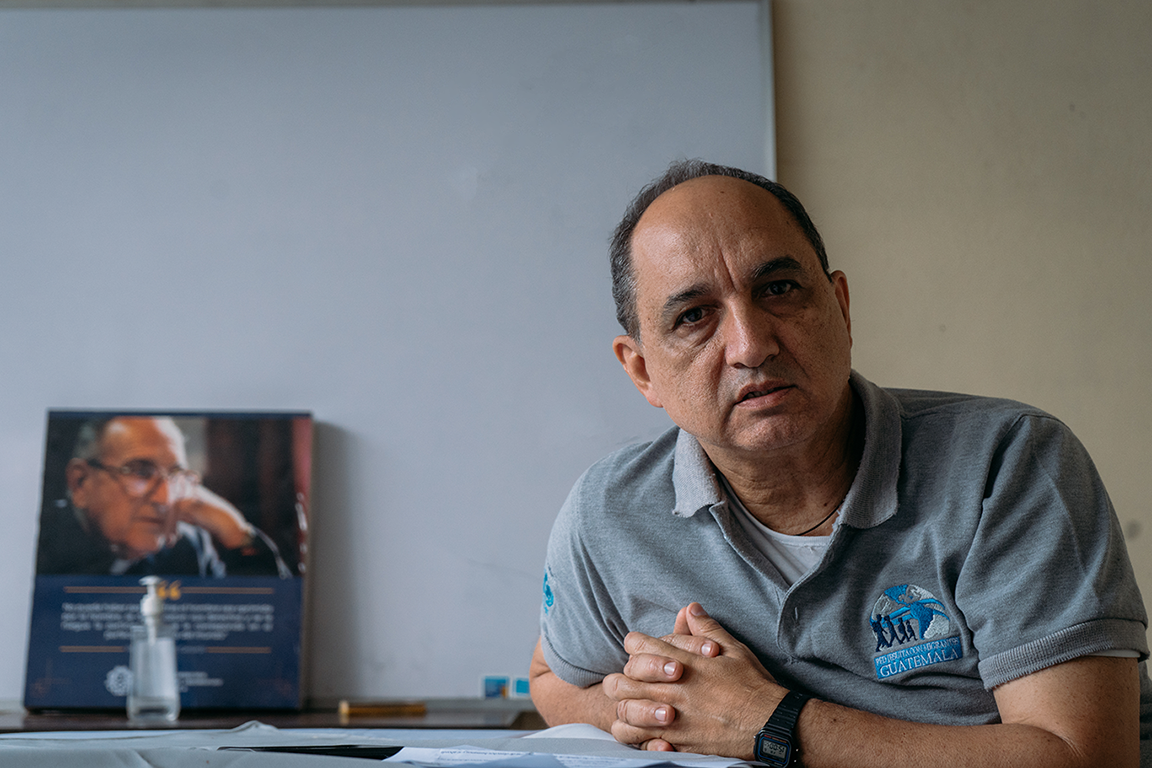
José Luis González, el sacerdote jesuita coordinador de la Red Jesuita con Migrantes de Guatemala. / Laura Garcia
«Hoy creo que pueden hablar del caso y percibo mucha resiliencia. Uno de ellos me dijo en una ocasión: “Yo ya he perdonado, no me alegra saber que los policías van a estar encerrados tantos años porque me imagino que ellos también tienen hijos, pero entiendo que tienen que pagar. El proceso es por justicia, no es una venganza”», dice González.
Una sentencia parteaguas
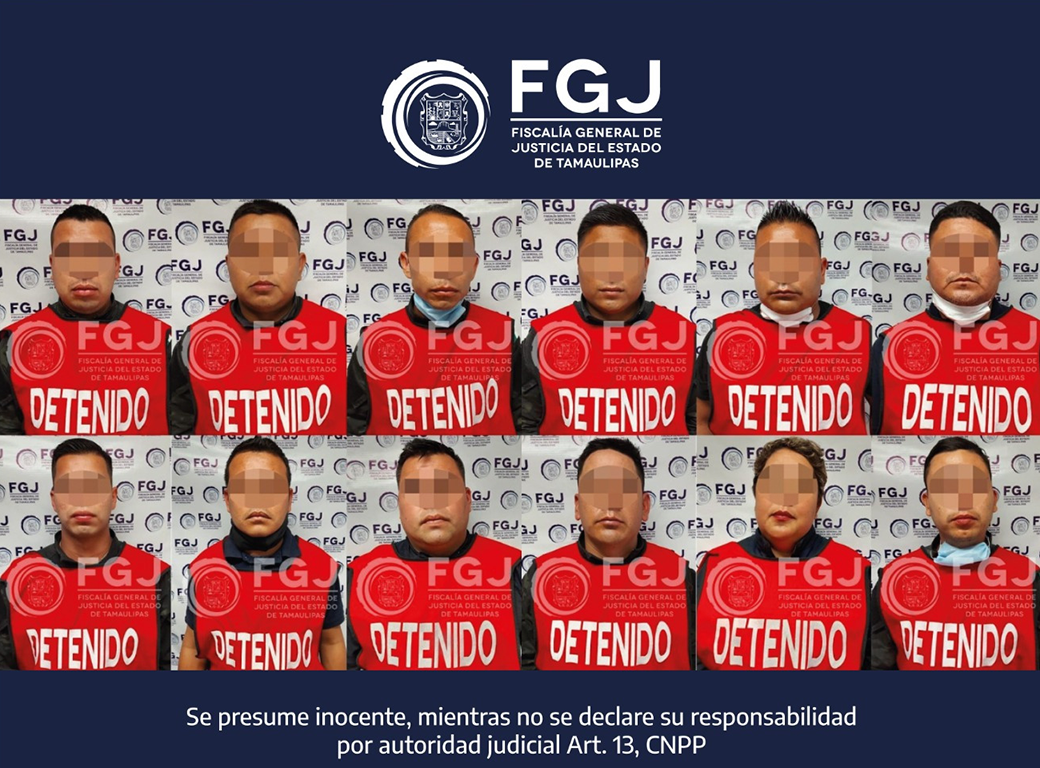
En horas de la mañana del 30 de octubre, el juez Patricio Luego leyó y explicó su sentencia final. De los 12 policías implicados, 11 fueron sentenciados a 50 años de prisión por homicidio, abuso de autoridad y delitos en el desempeño de funciones administrativas. Una de las acusadas, Mayra Vázquez, también fue sentenciada por falsedad de informes dados a la autoridad. Ella fue quien realizó el informe policial, el cual tenía una serie de inconsistencias. En México, la fiscalía solicitó una pena de 50 años por cada víctima; sin embargo, la legislación del país establece esa cifra como pena máxima.
El agente Ismael Vázquez, de 28 años, fue la pieza clave de la investigación pues sus declaraciones desmintieron los informes falsos y testimonios de sus compañeros.
El 30 de octubre fue emitida la sentencia de los 12 policías implicados, por homicidio, abuso de autoridad y delitos en el desempeño de funciones administrativas. / Fiscalía General de Justicia del Estado de Tamaulipas
En la sentencia, la cual consta de poco más de 1,000 páginas, se detalla como medida de reparación a las familias el pago de 335,709 pesos mexicanos —unos 145,000 quetzales— por cada víctima. Además, los sentenciados quedaron inhabilitados de poder ejercer cargos públicos por ocho años. A partir de hoy, los abogados defensores cuentan con diez días para presentar alegatos y pedir la reposición del juicio. Algunos de ellos ya han manifestado intención de hacerlo.
No existe un registro exacto de cuántos guatemaltecos mueren en su camino hacia Estados Unidos, debido a las condiciones infrahumanas en las que viajan, ataques de parte del crimen organizado, abusos policiales, secuestros o asaltos, entre otras circunstancias. En los últimos años, no dejan de registrarse tragedias de esta magnitud. Pero ninguna de estas muertes se ha esclarecido y, mucho menos, llegar a una sentencia condenatoria.
«De todas las masacres, —explica González—, esta es la primera sentencia y eso indica que la justicia llega pero que hay que tener una alianza de organizaciones como gobiernos, justicia y, sobre todo, tener una unidad entre familiares de las víctimas que creemos que ha sido lo más importante de este proceso». Fue en parte, una coincidencia que la mayoría de las víctimas sea originaria del mismo municipio, Comitancillo, y esto facilitara cierta unidad entre los familiares.
Esta sentencia se considera un logro histórico que deja un precedente importante para no permitir más impunidad en estos casos.
En esta tragedia, añade González, los autores fueron policías y por tanto el Estado está implicado, es responsable de lo ocurrido. Esto también lo vuelve un caso emblemático.
A partir de este hecho, muchas cosas han cambiado en Comitancillo. Otras siguen igual.
Por un lado, la migración no se detiene, ni siquiera ha disminuido. Pero hoy no respira el mismo aire, hoy aquellos que fueron escépticos y cuestionaron el esfuerzo de las familias, de buscar justicia y asumir el desgaste de un juicio de este nivel, tienen un motivo para confiar en que no puede haber impunidad por la muerte de migrantes.
«Solamente con haber logrado el fallo ya cambió algo muy importante para Guatemala y toda la región, no se puede permitir que estos casos queden en impunidad. Hace unos meses era impensable un fallo así, porque ha habido masacres anteriores que aún están en espera de una resolución», explica el coordinador de la RJM.
Antes, las familias renegaron del tiempo perdido entre audiencias suspendidas. Hoy, aseguran que su presencia y persistencia fue importante para llegar a esta etapa final.
«Ha cambiado mucho la concepción de justicia en las familias y en la comunidad. Las personas que les decían que para qué iban y no iban a lograr nada ahora tienen un motivo para creer en la justicia», reflexiona Otilia Agustín.
Pese a que autoridades estatales y municipales han declarado que los homicidios dolosos van a la baja, hasta el 31 de octubre de este año, en Ciudad Juárez documentaron 973 casos, según el seguimiento realizado por este medio.
Mientras que, de acuerdo con datos de la Fiscalía General del Estado, hasta octubre del 2022, las autoridades reportaron un total de 919 asesinatos en esta frontera.
Lo anterior representa un incremento del 6.12 por ciento, con relación al año pasado.
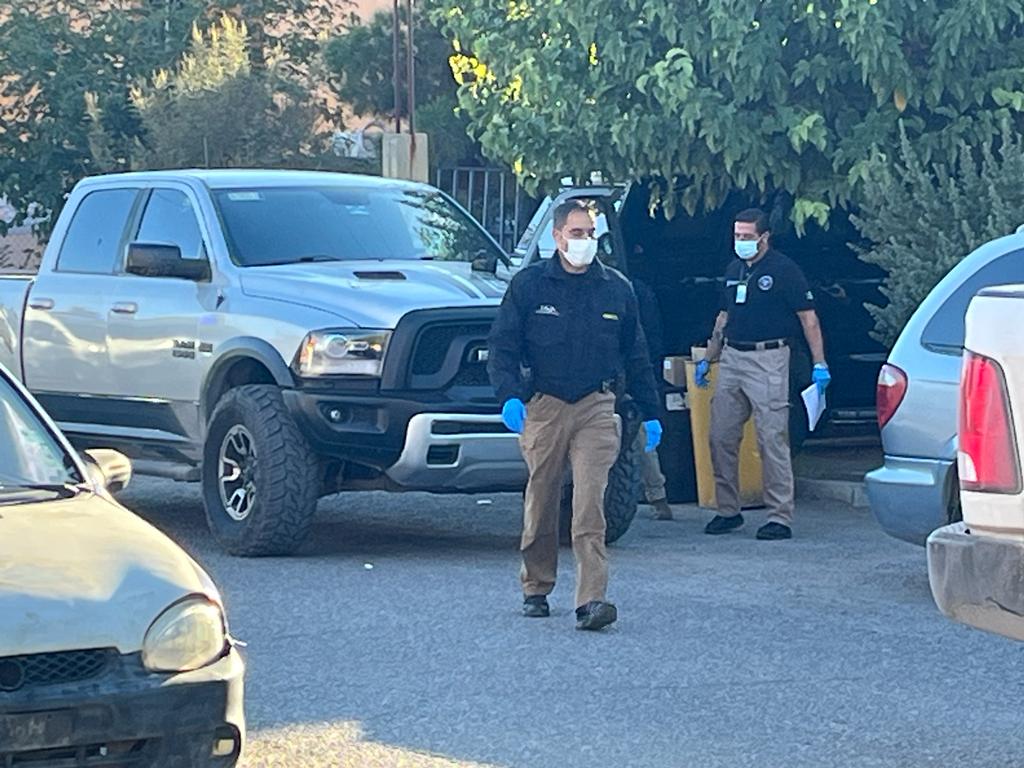
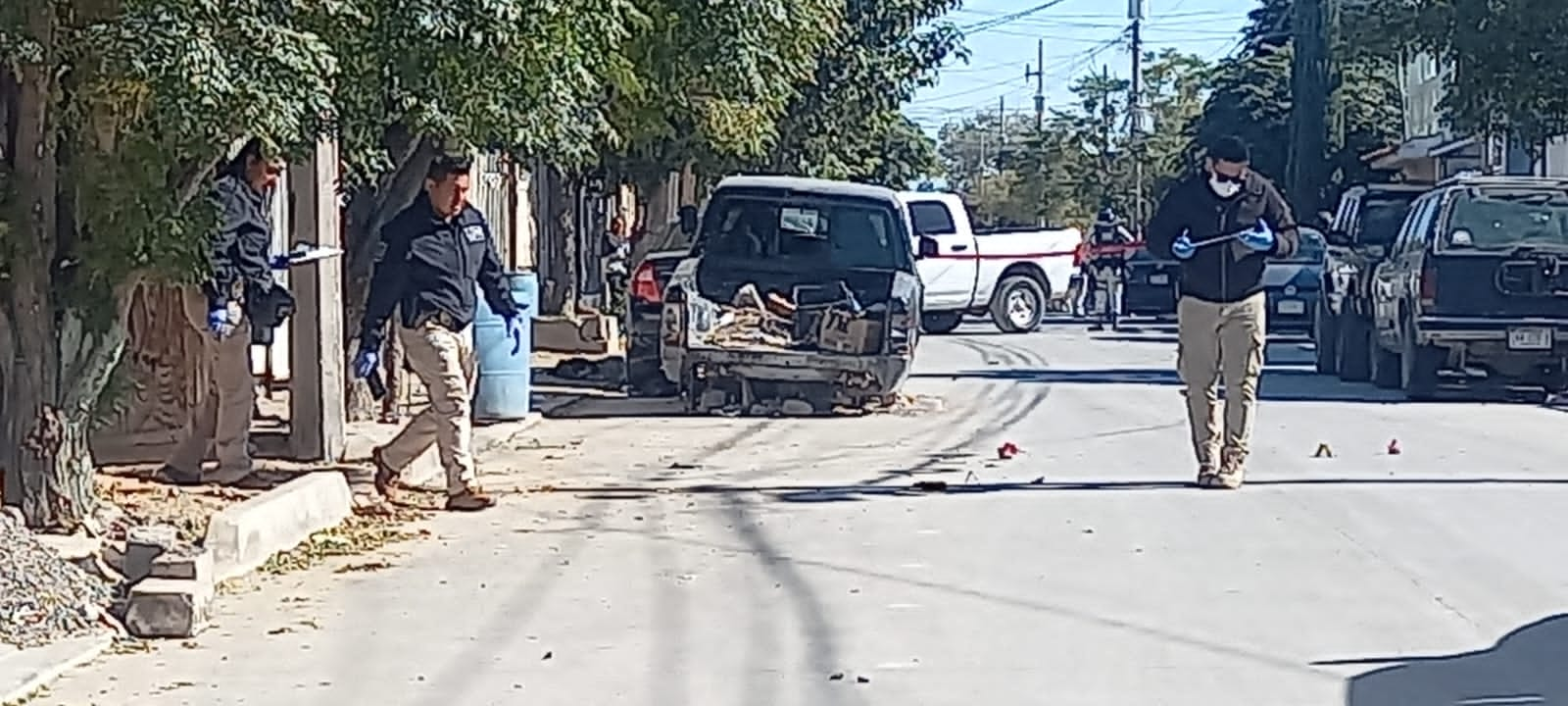
Agentes ministeriales resguardaron la zona donde un hombre fue ejecutado, en la avenida Plutarco E. Calles cruce con Hermanos Escobar / Foto: Redacción
Cabe resaltar que durante septiembre de este año se realizó también el descubrimiento de nueve esqueletos dentro de una vivienda localizada en la colonia Portal del Valle.
Sin embargo, en el conteo global del 2023 no se consideraron a las 40 personas migrantes que fallecieron en el incendio registrado el 27 de marzo dentro del Instituto Nacional de Migración (INM); incluyendo estos datos, la cifra se elevaría a mil 13 homicidios hasta el 31 de octubre de este año.
De acuerdo con el seguimiento realizado por este medio, de enero a mayo el número de homicidios dolosos superó a los registraron en el mismo periodo del 2022, pues en este 2023 se registraron 492 asesinatos en este periodo, frente a los 401 del año pasado.
Mientras que los meses más violentos en este año han sido mayo con 110, julio con 101, agosto con 109, septiembre con 100.
Un hombre fue asesinado dentro de una vivienda ubicada en las calles Fray Antonio de Tabares y Refugio de la Libertad, en la colonia Fray García de San Francisco / Foto: Redacción
Despite the fact that state and municipal authorities have declared that intentional homicides are on the decline, as of October 31 of this year, 973 cases were documented in Ciudad Juárez, according to the monitoring carried out by this media.
Meanwhile, according to data from the State Attorney General’s Office, as of October 2022, authorities reported a total of 919 murders on this border.
This represents an increase of 6.12 percent compared to last year.
Ministerial agents guarded the area where a man was executed, on Plutarco E. Calles Avenue at the intersection with Hermanos Escobar / Photo: Staff
It is worth mentioning that during September of this year, nine skeletons were also discovered inside a house located in the Portal del Valle neighborhood.
However, the overall count for 2023 did not include the 40 migrants who died in the fire that took place on March 27th inside the National Migration Institute (INM); including this data, the figure would rise to 1013 homicides as of October 31st of this year.
Check out this article, it might catch your interest
According to the monitoring carried out by this media, from January to May the number of intentional homicides surpassed those registered in the same period of 2022, since in this 2023 there were 492 murders in this period, compared to 401 last year.
While the most violent months this year have been May with 110, July with 101, August with 109, September with 100.
A man was murdered inside a house located on the streets Fray Antonio de Tabares and Refugio de la Libertad, in the Fray García de San Francisco neighborhood / Photo: Staff
Thirty-three months ago, 19 migrants were killed by Mexican police, who shot at them and then set their bodies on fire, in Camargo, Tamaulipas. Sixteen were Guatemalans. In a historic way, the case was sentenced. After this event, many things have changed, others have not. On the one hand, migration continues, but now there is a reason to trust in justice. The Jesuit Network with Migrants accompanied them on this journey and tells Plaza Pública about the complexities of this case.
This October 30, 2023, after more than two years of suspensions and delays, the unit trial judge of the Supreme Court of Justice of the State of Tamaulipas, Patricio Lugo, sentenced 11 Mexican state police officers to serve 50 years in prison for their participation in the massacre that took the lives of 19 people on January 22, 2021.
Among the deceased, 16 were from Guatemala, one from El Salvador and two from México. According to information from the Attorney General’s Office, two of them were in charge of taking the migrants to U.S. territory.
For the Mexican justice system, this ruling was possible because one of the police officers who participated in the events, Ismael Vázquez, took advantage of the opportunity criterion and confessed to what happened that day. For his collaboration in the case, he was the only one sentenced to 19 years.
More than 60 testimonies and documentary evidence were presented to prove the guilt of the 12 accused. The accusations were: 11 accused of aggravated homicide, 12 of abuse of authority – crimes committed in the performance of administrative functions – and one for the crime of false reports given to an authority.
Ángela López, 52, mother of Marvin Alberto Tomás López, in the kitchen of her home in Comitancillo, in the company of his father, Hipólito Mauricio, 78, and grandson Aldo Mateo, in March 2021 when the burial took place / Simone Dalmasso.
For both México and Guatemala, this sentence is emblematic and historic as it is the first conviction of state agents for a massacre of migrants.
From Guatemala, the lawyer of the Jesuit Network for Migrants (RJM), Ángel Escalante, has accompanied and provided legal advice to the families of the 16 Guatemalans who died, in conjunction with the Foundation for Justice and the Democratic Rule of Law, based in México.
As he explains, after the conviction the judge listened to the testimony of the families of the victims to determine the details of the sentence, as well as the reparation measures that the neighboring State should take in favor of the affected families.
A tragedy, two years ago
María Marcelina Mauricio, mother of Anderson Marco Antulio Pablo, recalls that she felt her «soul was ripped out» the day she confirmed that her son was one of the victims killed in the Camargo tragedy. At the time she was pregnant with her youngest daughter. However, the impact of the news had repercussions on her physical and emotional state, to the point of affecting the baby as well.
The child, doctors told her, would not live long. «I felt that my life no longer made sense without him, but thank God at this point I am still alive. It is very hard, very painful to be able to explain what we felt, what we have lived through all this time», she recalls now, more than two years after that event.
Anderson Marco Antulio was 16 years old when he undertook the risky journey to the United States. So were 15 other Guatemalans. Most of them not older than 35, young men and women. Twelve of them were originally from Comitancillo, two more from nearby municipalities in San Marcos and another two came from Granados, Baja Verapaz.
Sister of Anderson Marco Antulio, with the photograph of her brother repatriated after two years, in Comitancillo, San Marcos / Eduardo Say
Given the lack of orientation and the need for support, the parents and relatives of the deceased requested the help of RJM, an organization that provides support to people in transit and that in addition to this case provides accompaniment to more families of Guatemalan migrants who have died in inhumane conditions. For example, on the occasion when more than 50 people died locked in a van that was abandoned in Texas, or in the fire that occurred in a migrant station in Ciudad Juárez.
The first thing the families asked for, recalls José Luis González, the Jesuit priest who coordinates the Network, was a prayer.
«Marco Antulio Pablo called us to see if we could support him and other families. We said yes and also asked him to confirm if they were his children. Why are you so sure it is them? We later found out why», he says.
Both Marco Antulio and other family members had been in communication with their children, siblings and parents who were on their way to the United States. Some of them received calls and audios minutes before what happened. They were messages telling what was happening, how they were attacked with bullets and how they had been chased, some of them communicated while they were hiding in bushes.
The wake of Anderson Marco Antulio Pablo, in the hamlet La Nueva Esperanza / Simone Dalmasso
The judicial process being carried out from Tamaulipas, México, confirms that, roughly speaking, what happened that day was that the group of migrants traveling in a pickup truck was chased by police, who shot at them more than a hundred times and subsequently burned the bodies.
They then returned to the scene to pick up the shell casings and attempt to alter the scene. To support this chronology, various pieces of evidence were heard and taken into account. The mobile devices of the police officers, to cite one example, proved through the GPS system that they were all present at the scene of the tragedy at the time the victims were killed.
Although the facts of that day are known, what is still unknown is the reason that motivated the police officers to act in that manner. The Tamaulipas Prosecutor’s Office has an open investigation against the intellectual authors; however, there are still no further details on this case.
Forgotten by the State
Comitancillo is one of the municipalities in the country where statistics and living conditions show that there, 250 km from the capital, the State has never invested.
According to the National Institute of Statistics (INE), in the rural area of the municipality, nine out of 10 people live in poverty. In addition, the municipality has the lowest Human Development Index in the entire department of San Marcos.
The lands are mountainous and grow food crops such as beans, corn, peaches, apples, among others. But beyond that, economic alternatives are limited.
For example, González says, for many years the communities have been asking for an institute so that through technical careers young people can develop skills and work in their place of origin. However, their requests go unheeded and beyond field work, there are not many opportunities for development.
The rural area of the department of San Marcos, characterized by its flourishing production of wheat, brussels sprouts and potatoes / Simone Dalmasso
«The massacre did not stop the migration from Comitancillo. Almost all the families of the victims have siblings who in these two and a half years, in spite of the sadness that it caused to their parents and the fear that something similar could happen, have traveled and are already in the United States, they have managed to pass», explains the Jesuit priest, with the property of someone who for more than two years has been close to the 16 families of the murdered migrants.
One of the mothers who mourned the death of her son in Camargo undertook the same journey two years after the event. Migration in recent years, González says, has been savage and the massacre has not stopped it.
In Comitancillo, families have at least six members. And most people have only five years of schooling, according to official data.
In the list of the victims of the tragedy in Camargo, the majority were residents of Comitancillo. Four of them came from the municipalities of Catarina and Concepción Tutuapa, San Marcos; and Granados, Baja Verapaz. Similar places in terms of development limitations.
Otilia Agustín Pérez, RJM psychologist, approached the families of the deceased to accompany them in their mourning process and observed the emotional implications of the lack of growth opportunities in the region.
«We see that the parents feel a lot of guilt for having given them permission or for not having the economic conditions to be able to support them in their studies or in some entrepreneurship, for example. So this is the reality, not only in Comitancillo but also in other places», he explains.
María Morán, 74, receives comfort from a neighbor, during the wake of Adan Coronado Marroquín, in Comitancillo / Simone Dalmasso
The tendency among young people in Comitancillo, as well as in other parts of the country, is that a fundamental part of their life projects is to migrate in order to help their families economically. This desire increases when they realize how much better life is for their neighbors or relatives who have already migrated.
However, the dream is not only limited to having material goods but also to the desire to live in dignified conditions and have access to basic services such as health care. Santa Cristina García Pérez, for example, 20 years old, was one of the victims in Camargo and her main motivation for leaving Guatemala was to look for a job with which to pay for an operation to correct her younger sister’s cleft lip.
Behind these truncated projects, González believes, there is a great responsibility of the State for not guaranteeing the conditions for adequate development.
Two years in search of justice and resilience
The last 33 months have been a struggle for the 16 families to be heard and to have access to a justice system that is not prepared to adequately include them in these processes. The fathers, mothers and even siblings have been able to stay informed and kept abreast of progress in identifying those responsible for what happened thanks to the legal accompaniment provided by RJM in Guatemala and the Foundation for Justice and the Democratic Rule of Law, which works from México.
From the State of Guatemala, neither the Ministry of Foreign Affairs nor any other entity provided them with this service, despite the fact that in 2021, President Alejandro Giammattei made a series of offers to the families and assured that they would receive accompaniment from the government.
But that support received lasted only a few months. «Their help was basically with the transfer of the bodies to their communities for burials, but afterwards there were very curious things. For example, in a workshop we held with the families, the Ministry of Agriculture intervened to talk to the family members and gave them a small bag of seeds, which fit in each one’s hand. They were very surprised», says González.
In the absence of the State, it was the solidarity of the people of Comitancillo, and even the economic support of migrants living in the United States, which helped the families to improve conditions in recent years. Thanks to this, they have all received help to build houses and improve their quality of life. Santa Cristina’s sister, for example, underwent surgery after the tragedy, when the news reached the ears of health professionals.
The sister of Santa Cristina García Pérez watches on the television at home the images of the arrival of the coffins at the Guatemalan air force in Guatemala City / Simone Dalmasso
Since the events, investigations have been launched in Mexico to determine responsibility for these murders. In Guatemala, on the other hand, the Public Prosecutor’s Office (MP) disassociated itself from the investigation, arguing that since the events occurred in another territory, it was not within its competence to investigate. However, they did carry out operations to identify the «coyotes» working in the Comitancillo territory.
Having access to the judicial process was the first major challenge faced by the families. Many of them are people whose main language is not Spanish, in addition to the fact that they had no previous experience or knowledge of such a process. The first reaction of the families to what happened was resignation and apathy. They only wanted to receive the remains of their loved ones, give them a dignified burial and try to move on with their lives.
A few others insisted on the importance of clarifying what happened to prevent something like this from happening again.
In addition to that, due to the fact that at a national level the culture of denunciation is not the predominant one, neighbors and other relatives questioned the need to «wear themselves out» in a trial to achieve justice.
«They felt discouraged because in their community they were told: «Why do you have to go through this very tiring process? Leave your family member in peace, don’t go through this process because it will lead to many illnesses,» says the psychologist who has accompanied them to date.
There was also fear that the resolution of the case would not be favorable for the victims and that there would be reprisals for the family members. «The parents thought that if they lost the case and the police went free, they would come after them. In this process they had to deal with a lot of anguish and anxiety, hours and nights without being able to sleep», González said.
Depression, family disintegration, alcoholism, stress and even health problems affected them. Marcelina’s case is an example of this. When her youngest daughter was born, there were not many life expectations for her. Bringing her back to health was not easy; however, today she is a two-year-old girl who plays and laughs while her parents, Marcelina and Marco Antulio Pablo, remember how hard the journey to a conviction was.
«Remembering this tragedy makes us nostalgic, says Marco Antulio, migrating is not a crime, it is a right, but unfortunately people feel they are the owners of a country, we are not».
The funeral procession accompanies Santa Cristina García Pérez during the long journey from her parents’ house to the cemetery / Simone Dalmasso
In the trial from México, as constantly happens also in Guatemala, there were a series of delays to entrap the process. Because the hearings were being held in Tamaulipas, the judge in charge authorized the families to participate in them by videoconference.
That way they could keep abreast of the progress. Attorney Escalante relates that it was not the State that provided the space and resources for the families to connect to the hearings, but the RJM, who became the legal advisors of the families from the first days after the tragedy, with the support of the Foundation for Justice.
On numerous occasions, the hearings were suspended or interrupted for various reasons. Due to the precariousness of the roads, which are dirt roads in mountains far away from the urban center, for the families to travel from their homes to the center of Comitancillo implied a significant investment of time and resources.
Attending the virtual hearings, therefore, meant sacrificing a day’s work and spending money on transportation. For these reasons, explains Marco Antulio, this process felt like an uphill struggle, where everything seemed to be against the families.
«The distances and economic shortages of the families were so evident that some people had to travel two to four hours to get to the place chosen for the hearings, others had to pay for a private vehicle to take them to the center of Comitancillo, which represented an expense of between 100 and 300 quetzales per person. In addition, losing a full day’s work meant not receiving 50 to 100 Quetzals per person», explains the lawyer on the case.
However, in this back-and-forth, the families formed a support group among themselves so as not to become discouraged and to understand the stages of the trial together. They also understood the importance of reaching a sentence, with the sole purpose of obtaining justice and above all to prevent this from happening again.
José Luis González, the Jesuit priest and coordinator of the Jesuit Migrant Network in Guatemala / Laura Garcia
«Today I think they can talk about the case and I perceive a lot of resilience. One of them told me on one occasion: ‘I have already forgiven, I am not happy to know that the policemen are going to be locked up for so many years because I imagine that they also have children, but I understand that they have to pay. The process is for justice, it is not revenge», says González.
A landmark sentence
In the morning hours of October 30, Judge Patricio Luego read and explained his final sentence. Of the 12 police officers involved, 11 were sentenced to 50 years in prison for homicide, abuse of authority and crimes in the performance of administrative duties.
One of the defendants, Mayra Vázquez, was also sentenced for falsification of reports given to the authority. She was the one who made the police report, which had a series of inconsistencies. In México, the prosecution requested a sentence of 50 years for each victim; however, the country’s legislation establishes that figure as the maximum sentence.
Agent Ismael Vázquez, 28 years old, was the key piece of the investigation because his statements disproved the false reports and testimonies of his colleagues.
On October 30, the 12 police officers involved were sentenced for homicide, abuse of authority and crimes in the performance of administrative duties / Tamaulipas State Attorney General’s Office
In the sentence, which is a little over 1,000 pages long, the families were ordered to pay 335,709 Mexican pesos -about 145,000 quetzales- for each victim. In addition, the sentenced persons were disqualified from holding public office for eight years. As of today, the defense attorneys have ten days to present pleadings and request the reinstatement of the trial. Some of them have already expressed their intention to do so.
There is no exact record of how many Guatemalans die on their way to the United States, due to the subhuman conditions in which they travel, attacks by organized crime, police abuses, kidnappings or assaults, among other circumstances. In recent years, tragedies of this magnitude have not ceased to be recorded. But none of these deaths has been solved, much less resulted in a conviction.
«Of all the massacres, -explains González-, this is the first sentence and that indicates that justice arrives but that it is necessary to have an alliance of organizations such as governments, justice and, above all, to have unity among relatives of the victims, which we believe has been the most important of this process». It was partly a coincidence that most of the victims are from the same municipality, Comitancillo, and this facilitated a certain unity among the relatives.
This sentence is considered a historic achievement that leaves an important precedent for not allowing any more impunity in these cases.
In this tragedy, González adds, the perpetrators were police officers and therefore the State is implicated, it is responsible for what happened. This also makes it an emblematic case.
Since this event, many things have changed in Comitancillo. Others have remained the same.
On the one hand, migration does not stop, it has not even diminished. But today it is not breathing the same air, today those who were skeptical and questioned the effort of the families, to seek justice and assume the wear and tear of a trial of this level, have a reason to trust that there can be no impunity for the death of migrants.
«Just by having achieved the ruling, something very important has changed for Guatemala and the entire region, these cases cannot be allowed to go unpunished. A few months ago such a ruling was unthinkable, because there have been previous massacres that are still awaiting a resolution», explains the RJM coordinator.
Before, the families complained about the time lost between suspended hearings. Today, they assure that their presence and persistence was important to reach this final stage.
«The conception of justice in the families and in the community has changed a lot. People who used to tell them that why go and they would not achieve anything now have a reason to believe in justice», reflects Otilia Agustín.
The aroma of cempasúchil becomes more intense, the cold weather announces the proximity of the deceased and the rush takes over those who prepare the altars.
This is a unique day when our deceased loved ones return from the dead and the path must be illuminated so they do not get lost.
It is a tradition deeply rooted in Mexican culture, a date on which it is believed that the dead return from the dead to visit their relatives.
It is not only a celebration, but also an opportunity to remember and keep alive the memory of those who are no longer physically with us.
This Mexican tradition is a custom for Bryan and his family, who year after year, raise their altar with candles, a bible, a rosary, the favorite dishes of the deceased and the typical pan de muerto.
Bryan and his mother during a visit to the cemetery / Courtesy
While every candle, every pan de muerto and every flower are gestures that express the deep affection they feel for Don René, who passed away three years ago.
So, every November 2, he and his family visit the San Rafael cemetery, located on the outskirts of Ciudad Juarez, where they go to honor their stepfather.
There, they clean his grave, decorate it with flowers and tell him that they still have him in their hearts.
«I remember him as a good person, very cheerful, but with a strong character; a little bit angry, but always with a big heart. A very good person who gave everything he could give, without expecting anything in return,» said Bryan.
Mr. René has been resting in this place for 3 years / Photo: Courtesy
The young man said that he considers this date a special occasion, since it allows them to remember and feel the closeness of their loved one, although it also brings with it a feeling of sadness.
«Having him here with his photograph, flowers, candles, pan de muerto and water, everything necessary for my deceased relative to continue feeling loved, on the altar or in the cemetery,» he said.
Don René’s photograph is always present in Bryan’s house / Photo Courtesy
For many border families, the Day of the Dead is a date that mixes love, joy, nostalgia, fear and pain. However, the cemeteries, far from being gloomy places, are full of life.
In many tombs you can see people hiring musical trios to play guitars and sing songs that the deceased used to like.
There are also some where hundreds of merchants place their businesses, where you can find food stalls, water, crafts, among others, but also flowers and ornaments to put on the dead.